Our professional service team works closely with customers to identify application requirements and solve drilling challenges efficiently.
From product selection to after-sales support, we ensure fast response and reliable solutions.

DTH Drill Pipes

DTH Drill Pipes

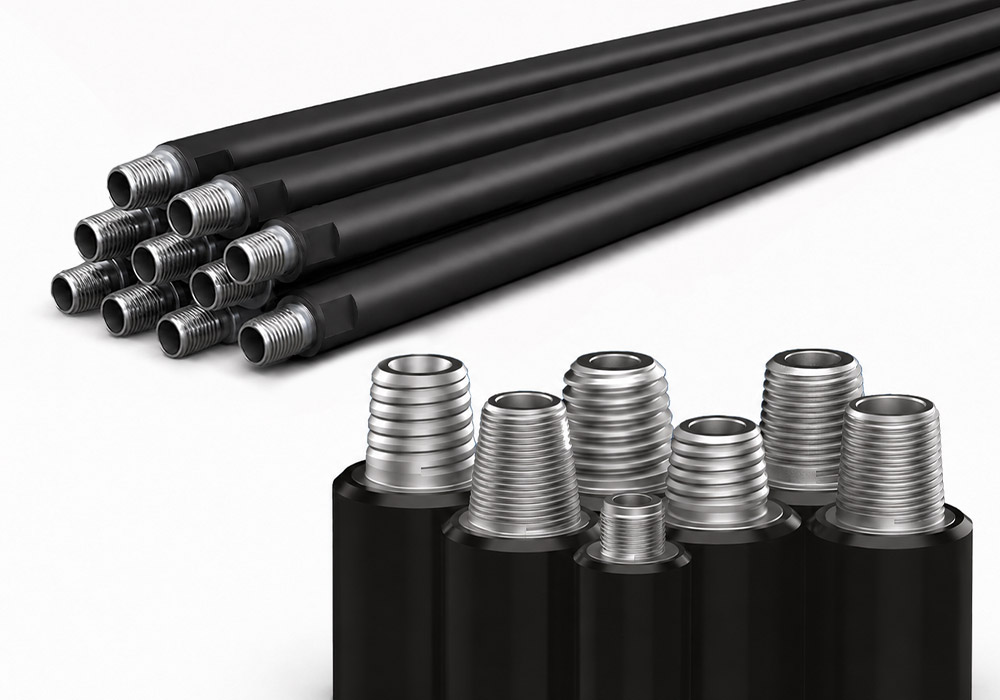
MSD DTH drill pipes feature high-strength alloy steel with advanced friction welding technology. Weld zone strength exceeds parent material. API REG and NC thread options. Full range from 76mm to 178mm OD. OEM quality at China factory price.

Product descriptions

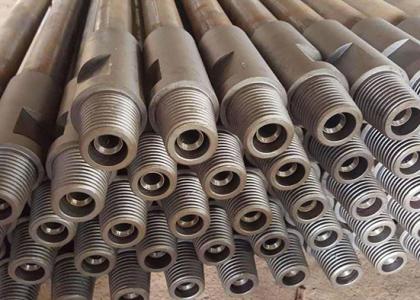
MSD manufactures DTH drill pipes with friction welded tool joints for maximum fatigue resistance. Available in hex body and round body configurations with API Reg thread connections (2 3/8", 3 1/2", 4 1/2"). Our computer-controlled friction welding fuses hardened threaded ends to tough pipe bodies at the molecular level — the weld zone is stronger than the parent metal itself. Large-diameter air passages ensure efficient flushing with minimal pressure loss. Wall thickness options for standard and heavy-duty applications. ISO 9001 certified. Trusted by 500+ drilling contractors worldwide.

drill-pipes-draft.jpg

DTH Drill Pipes - Complete Specifications

Diameter/ODWall ThicknessThread TypeFlushing Hole DiaWrenchFlatsLengthWeightPart No
76(3)6.5API 2 3/8REG325745300040D1-076A1-30065
76(3)8.5API 3 3/8REG325745300048D1-076A1-30085
89(3 1/2)6.5API 2 3/8REG327045300048D1-089A1-30065
89(3 1/2)8.5API 2 3/8REG327045300058D1-089A1-30085
89(3 1/2)6.5NC26407045300048D1-089N1-30065
89(3 1/2)8.5NC26407045300058D1-089N1-30085
102(4)6.5API 1 2REG458351300056D1-102A3-30065
102(4)8.5API3 1/2REG458351300067D1-102A3-30085
102(4)6.5NC31458351300056D1-102N2-30065
102(4)8.5NC31458351300067D1-102N2-30085
114(4 1/2)6.5API3 1/2REG459551300063D1-114A3-30065
114(4 1/2)8.5API3 1/2REG459551300076D1-114A3-30085
114(4 1/2)6.5NC35609551300063D1-114N4-30065
114(4 1/2)8.5NC35609551300076D1-114N4-30085
127(5)6.5API3 1/2REG4510851300086D1-127A3-30065
127(5)8.5NC386010851300086D1-127N4-30085
133(5 1/4)10API3 1/2REG45114513000102D1-133A3-300K0
140(5 1/2)9.2API3 1/2REG45121513000101D1-140A3-300Z2
146(5 3/4)10API4 1/2REG60127553000113D1-146A4-300K2
152(6)8.5API4 1/2REG60127553000113D1-146A4-300K0
168(6 5/8)10NC5060149553000132D1-168N8-300K0
178(7)10API4 1/2REG60159553000140D1-178A4-300K0


dth drill pipes.png

Table 1: DTH Drill Pipe Selection by Hammer Size

Hammer SizeRecommended Pipe ODThread TypeWall ThicknessBest Applications
3.5"–4" (DHD3.5, QL40, SD4)76 mm (3")API 2 3/8" REG6.5 mmSmall water wells, anchor drilling
4"–5" (DHD340, QL50, SD5)89 mm (3 1/2")API 2 3/8" REG / NC266.5–8.5 mmMedium water wells, blast holes
5"–6" (DHD350, QL60, SD6)102–114 mm (4"–4 1/2")API 3 1/2" REG / NC31 / NC356.5–8.5 mmProduction blast holes, quarry benches
6"–8" (DHD360, DHD380, QL80, SD8)127–146 mm (5"–5 3/4")API 3 1/2"–4 1/2" REG / NC388.5–10 mmMining production, large water wells
8"–10" (SD10, NUMA100)152–168 mm (6"–6 5/8")API 4 1/2" REG / NC508.5–10 mmDeep foundation piling, large-diameter wells
10"+ (DHD1120, SD12)178 mm (7")API 4 1/2" REG10 mmMajor infrastructure, shaft sinking

Rule of Thumb: Match pipe OD to hammer size to maintain optimal up-hole velocity. The drill pipe OD must be smaller than the hammer OD. If the pipe is too small, the annular space is too large, and cuttings won't flush out; if the pipe is too large, it restricts the upward flow and risks jamming in the hole.


Table 2: DTH Drill Pipe Selection by Thread Type

Thread TypeFlushing Hole DiaCompatible Pipe ODNotes
API 2 3/8" REG32 mm76–89 mmSmall hammers (3.5"–4"), most common for water well
API 3 3/8" REG32 mm76 mmAlternative for 3" pipes
NC2640 mm89 mmLarger air passage option for 3 1/2" pipes
API 3 1/2" REG45 mm102–140 mmMid-range hammers (5"–6"), most versatile
NC3145 mm102 mmAlternative for 4" pipes
NC3560 mm114 mmLarger air passage for 4 1/2" pipes
NC3860 mm127 mmHeavy-duty 5" applications
API 4 1/2" REG60 mm146–178 mmLarge hammers (6"–10"+)
NC5060 mm168 mmHeavy-duty 6 5/8" applications

Rule of Thumb: API REG threads are the industry standard for DTH drilling. NC threads offer higher torque capacity for deep-hole and rotary drilling applications. Verify your hammer's thread specification before ordering.


Table 3: Wall Thickness Selection

Wall ThicknessWeight ClassBest ForTrade-off
6.5 mmStandardGeneral drilling, shallow to medium depthLighter weight, lower cost, adequate for most applications
8.5 mmHeavy-dutyDeep holes, hard rock, high-torque drillingIncreased durability, higher weight and cost
9.2–10 mmExtra heavy-dutyLarge-diameter production, extreme depthsMaximum strength, heaviest weight

Rule of Thumb: For holes under 50 meters in stable formations, 6.5 mm wall thickness is sufficient. For holes exceeding 50 meters or in fractured/abrasive formations, upgrade to 8.5 mm or heavier to prevent fatigue failure.


Why MSD DTH Drill Pipes?

Friction Welded Joints — MSD DTH drill pipes feature computer-controlled friction welding that fuses hardened tool joints to tough pipe bodies at the molecular level. The weld zone is stronger than the parent metal itself.

Large Air Passage — Flushing hole diameters from 32–60 mm ensure efficient cuttings evacuation with minimal pressure loss, maintaining optimal hammer performance at depth.

Full Size Range — 76–178 mm OD covering all standard DTH hammer sizes from 3.5" to 10"+.

Dual Thread Options — API REG and NC thread types available for compatibility with any drilling system.

Multiple Wall Thickness — 6.5 mm, 8.5 mm, and 10 mm options to match application requirements and budget.

ISO 9001 Certified — Every pipe undergoes dimensional inspection, weld integrity testing, and thread gauge verification.

title-imgCASE STUDIES

PROVEN PERFORMANCE

service-img
Symmetrix Case Study: 100% Success Rate in South Africa Wate

MSD Concentric Casing System achieved 100% hole completion across 36 water wells in South

Read More
service-img
Thread Button Bit Case Study: 25% Faster Drilling at Austral

MSD T51-115mm thread button bit achieved 25% faster drilling and 30% longer life at Austra

Read More
service-img
DTH System Case Study: 24% Efficiency Boost at Brazil Iron M

MSD DTH hammer + drill pipe system achieved 24% faster drilling and 26% lower cost at Braz

Read More
service-img
QL60 DTH Bit Case Study: 70% Longer Life in Russian Iron Min

MSD QL60-178 DTH bit achieved 340m per bit and 35% lower drilling cost in Russian hard roc

Read More
service-img
500mm DTH Bit Case Study: Zero Failures in Taiwan Piling Pro

MSD custom 500mm DTH bit achieved zero structural failures and 40% efficiency gain in Taiw

Read More

DTH Drill Pipes: Friction Welded for Maximum Durability

MSD (Zhuzhou Jingde Machinery Co., Ltd.) is a China-based rock drilling tools manufacturer with 23+ years of experience. We produce DTH drill pipes in diameters from 76 mm to 178 mm, with API REG and NC thread connections, designed to match all standard DTH hammer sizes from 3.5" to 10"+.


Function of DTH Drill Pipes

DTH drill pipes serve three critical functions in the drilling system:

Torque Transmission — The pipe transfers rotation from the drill rig to the DTH hammer and bit, enabling the bit to cut rock as it rotates.

Air Passage — Compressed air flows through the center bore of the pipe to power the DTH hammer. The flushing hole diameter directly affects air delivery efficiency — undersized passages create backpressure that reduces hammer performance.

Weight on Bit — The drill string provides downward force (weight on bit) that keeps the bit in contact with the rock face. Heavier pipes provide more WOB but require more powerful rigs to handle.

Unlike top hammer drill rods that must withstand direct percussion, DTH drill pipes primarily handle rotation and axial loading. However, the threaded connections experience significant stress during make-and-break cycles and must resist fatigue cracking over thousands of joints.


Friction Welding: The Manufacturing Difference

The threaded tool joints on a DTH drill pipe require different material properties than the pipe body: Tool joints need extreme hardness and wear resistance to survive repeated threading cycles, while pipe bodies need high toughness and fatigue resistance to handle rotation and bending stress.

A single steel grade cannot optimize both properties. MSD DTH drill pipes use computer-controlled friction welding to join specially hardened tool joints to high-toughness pipe bodies. This solid-state welding process creates a molecular bond at the interface — the weld zone is actually stronger than the parent metal on either side.

Benefits of friction welded construction: No weld-point failures; Optimized material properties (hard threads and tough body); Consistent quality through computer-controlled processes; Full traceability for each weld.

Rule of Thumb: For deep holes exceeding 30 meters, always specify friction welded pipes. Integral pipes may cost less but fail faster under sustained torque and fatigue loading.


Air Passage Design

The center bore (flushing hole) of a DTH drill pipe must deliver sufficient air volume to power the hammer while evacuating rock cuttings from the hole bottom. MSD DTH drill pipes feature optimized flushing hole diameters: 32–40 mm for 76–89 mm OD pipes; 45 mm for 102–127 mm OD pipes; and 45–60 mm for 133–178 mm OD pipes.

A larger flushing hole reduces pressure drop across the drill string, delivering more air pressure to the hammer. However, larger holes require larger pipe OD to maintain wall thickness and structural integrity.

Rule of Thumb: If your hammer is underperforming at depth, check the flushing hole diameter. A 10% reduction in delivered air pressure can cause 20–30% reduction in penetration rate.


Wall Thickness Selection

MSD offers DTH drill pipes in three wall thickness classes:

Standard (6.5 mm) — Suitable for general drilling in stable formations at shallow to medium depths. Lighter weight reduces handling effort and rig wear.

Heavy-duty (8.5 mm) — Recommended for deep holes, hard rock, and high-torque drilling where standard pipes may fatigue.

Extra heavy-duty (9.2–10 mm) — Required for large-diameter production drilling at extreme depths where pipe failure is unacceptable.

The trade-off is straightforward: thicker walls mean heavier pipes and higher cost, but longer service life and greater safety margin.


Thread Types: API REG vs NC

MSD DTH drill pipes are available with two thread families:

API REG (Regular) — The industry standard for DTH drilling. API 2 3/8", 3 1/2", and 4 1/2" REG threads are compatible with virtually all DTH hammers and drill rigs worldwide.

NC (Numbered Connection) — Originally developed for rotary drilling, NC threads offer higher torque capacity than API REG of similar size. NC26, NC31, NC35, NC38, and NC50 are used for maximum rotational power.

Both thread types are precision-machined on CNC equipment and verified with calibrated gauges to ensure perfect fit with mating components.


Proven Field Performance

South African Water Well Project (114 mm Pipe Durability): A Mpumalanga drilling contractor deployed MSD 114 mm DTH drill pipes (8.5 mm wall, API 3 1/2" REG) on a 36-well rural water supply project. Drilling through dolomite and quartzite formations at depths averaging 80 meters, the friction welded pipes completed all 36 wells with zero joint failures. The contractor reported equivalent performance to premium European pipes at 35% lower procurement cost.


Why Choose MSD DTH Drill Pipes

Friction Welded Construction — Computer-controlled friction welding creates weld zones stronger than the parent metal, eliminating joint failures.

Large Air Passage — Flushing hole diameters from 32–60 mm ensure efficient air delivery and cuttings evacuation at any depth.

Complete Size Range — 76–178 mm OD with 6.5–10 mm wall thickness options covering all standard DTH hammer sizes.

Dual Thread Options — API REG and NC threads available for compatibility with any drilling system.

Standard 3-Meter Length — 3,000 mm length matches industry standard for efficient rod handling and storage.

ISO 9001 Certified — Full quality traceability from raw material to finished product.

Trusted by 500+ Drilling Contractors — MSD DTH drill pipes are operating in 40+ countries across water well, mining, quarrying, and construction applications.

Technical content reviewed by MSD Engineering Team. | About MSD: Zhuzhou Jingde Machinery Co., Ltd. — 23+ years of DTH drilling tools manufacturing expertise | ISO 9001 Certified | Serving 500+ contractors in 40+ countries

title-img products title-img

Complete Your DTH System

faq & answer

Frequently Asked
Questions

A DTH drill pipe connects the drill rig to the DTH hammer, transmitting rotation and delivering compressed air to power the hammer. Unlike top hammer drill rods that must withstand direct percussion impact, DTH drill pipes primarily handle rotation and axial loading. DTH pipes have larger diameters (76–178 mm) and feature a large center bore (32–60 mm) for air passage, while top hammer rods are solid or have smaller flushing holes. MSD manufactures both product lines — contact our engineers to confirm which product suits your drilling system.
Select a pipe OD that is smaller than your hammer's OD but large enough to ensure sufficient stiffness. The annular space between the pipe and the borehole wall is critical for cuttings evacuation. For example, use 76mm pipes with 3.5"–4" hammers, 89–114mm pipes with 5"–6" hammers, and 127mm+ pipes with 8"+ hammers. Also, verify that the thread type matches your hammer and rig. Provide your hammer model and required depth, and our engineers will provide a precise recommendation.
Friction welding joins hardened tool joints to tough pipe bodies at the molecular level, creating a weld zone stronger than the parent metal itself. This allows each component to be optimized for its function — hard threads for wear resistance, tough body for fatigue resistance. The result is zero weld-point failures under normal drilling conditions, even in deep holes where pipes experience sustained torque and bending stress. For holes exceeding 30 meters, MSD recommends friction welded pipes over integral construction.
For holes under 50 meters in stable formations, 6.5 mm wall thickness is sufficient and most cost-effective. For holes exceeding 50 meters, hard rock, or high-torque drilling, upgrade to 8.5 mm for extended service life. For large-diameter production drilling (6"+ hammers) at extreme depths, 10 mm extra heavy-duty pipes provide maximum safety margin. The trade-off is weight and cost — thicker pipes are heavier and more expensive but last longer in demanding conditions.
API REG (Regular) threads are the industry standard for DTH drilling, compatible with virtually all DTH hammers and drill rigs worldwide. NC (Numbered Connection) threads offer higher torque capacity and are used in applications requiring maximum rotational power, such as deep-hole drilling with high-torque rotary rigs. Both thread types are available from MSD with precision CNC machining and gauge verification. If you're unsure which to specify, API REG is the safe default choice for most DTH applications.

Technical content reviewed by MSD Engineering Team.

title-img GET IN TOUCH

Send Us Your Inquiry