

What Is a Foot Valve for Drill Bits? Function, Design, and Maintenance Explained
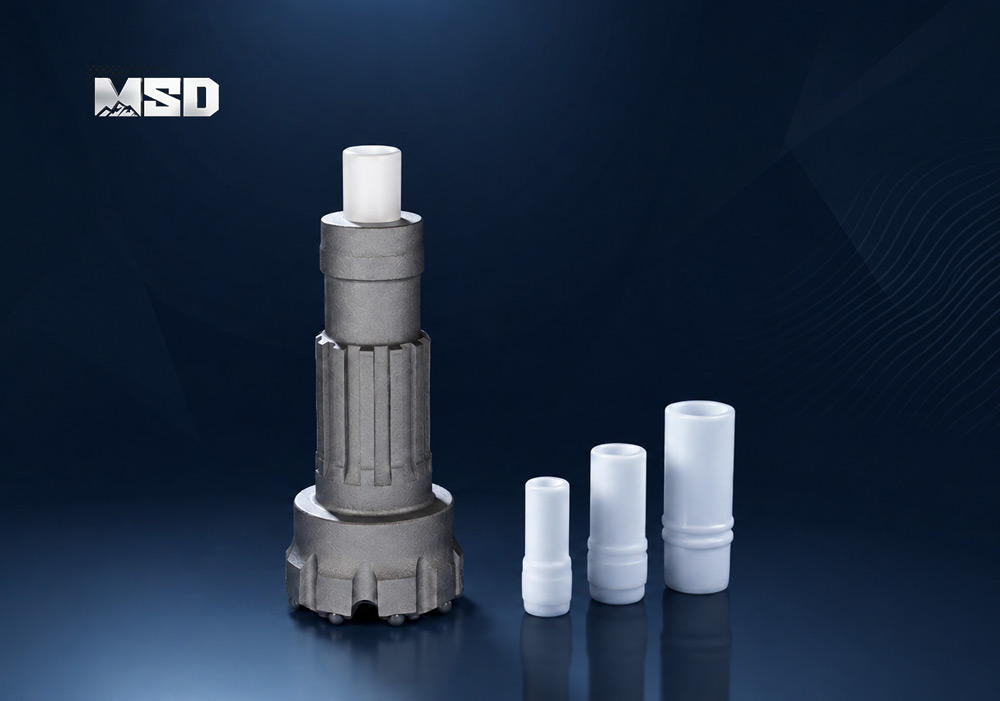
What Is a Foot Valve in DTH Drilling?
Definition and Core Function
A DTH foot valve is a disc-shaped or cylindrical check valve machined from hardened alloy steel, installed inside the lower section of a DTH hammer body. Its primary function is directional air control — allowing compressed exhaust air to pass downward through the down the hole bit flushing channels while blocking the reverse flow of water, slurry, and fine rock particles back into the hammer's internal cylinder.
The foot valve operates passively. It opens and closes in response to pressure differentials created by the piston's reciprocating motion — no external actuation, electronics, or hydraulic controls are involved. This simplicity makes it reliable, but also means that when it wears, performance degrades gradually rather than failing suddenly.
Where Is the Foot Valve Located Inside the Hammer?
The foot valve sits at the bottom of the DTH hammer's internal cylinder, positioned between the piston (above) and the chuck or bit retainer mechanism (below). In a fully assembled hammer, the foot valve is not visible from the outside — it can only be accessed by disassembling the hammer body.
To understand the foot valve's position, consider the DTH hammer's five primary internal zones from top to bottom:
Backhead — the top sub with API threaded connection to DTH drill pipes
Cylinder / outer casing — the main body housing all internal components
Piston — the reciprocating mass that delivers impact energy
Foot valve — the check valve controlling air exhaust direction
Chuck / bit retainer — the mechanism holding the drill bit via a splined shank and cold-press interference fit retaining ring
The foot valve's position at the very bottom of the air path is critical. It serves as the final gatekeeper between the hammer's precision-machined internal surfaces and the hostile drilling environment below — a zone filled with pressurized water, abrasive rock fines, and mud.
How Does a Foot Valve Work? The DTH Air Cycle Explained
The Pneumatic Cycle Step by Step
The foot valve's function becomes clear when examined within the context of the complete DTH hammer pneumatic cycle. Compressed air — typically supplied at 10–25 bar (150–360 psi) depending on hammer size and formation hardness — drives a four-phase reciprocating cycle:
Phase 1 — Power Stroke (Piston Descends): Compressed air enters through the backhead and is directed above the piston. Air pressure forces the piston downward at high velocity. During this phase, the foot valve remains closed, maintaining pressure integrity in the cylinder.
Phase 2 — Impact: The piston strikes the top of the drill bit's splined shank, transferring percussive energy directly into the rock face through the bit's buttons. Impact frequency typically ranges from 1,200 to 2,800 blows per minute depending on hammer model and operating pressure.
Phase 3 — Exhaust and Flushing (Foot Valve Opens): Immediately after impact, the pressure differential reverses. The foot valve opens, allowing spent exhaust air to pass downward through the dth button bit flushing channels and face-discharge holes. This high-velocity air blast serves a critical function — it clears freshly broken rock cuttings from the hole bottom, preventing re-grinding and allowing the bit to engage fresh rock on the next strike.
Phase 4 — Return Stroke (Foot Valve Closes): Air is redirected beneath the piston, lifting it back to the top of the cylinder for the next power stroke. The foot valve snaps closed during this phase, creating a seal that prevents water, mud, and abrasive fines from being drawn upward into the cylinder by the piston's suction effect.
This cycle repeats continuously at frequencies exceeding 1,000 cycles per minute. The foot valve must open and close reliably through millions of cycles under extreme temperature, pressure, and abrasive conditions.
Why Air Flow Control Matters for Drilling Performance
Proper foot valve function directly impacts three measurable drilling outcomes: penetration rate, borehole quality, and hammer service life.
When the foot valve seals correctly, exhaust air is forced efficiently through the bit face at high velocity. This creates effective borehole flushing — rock cuttings are lifted away from the cutting face and carried up the annular space between the drill string and borehole wall. Clean hole bottom means the bit's buttons engage fresh, unbroken rock on every strike.
When the foot valve is worn or damaged, two problems emerge simultaneously. First, exhaust air leaks backward past the valve instead of being directed through the bit, reducing flushing velocity. Second, water and abrasive fines enter the cylinder, accelerating piston and seal wear.
Rule of Thumb: If exhaust air is not efficiently directed through the bit face, cuttings accumulate at the hole bottom — reducing penetration rate by up to 30% and accelerating gauge button wear due to re-grinding of cuttings against the borehole wall.
Foot Valve vs. Valveless DTH Hammer Designs
How Valveless Hammers Differ
Not all DTH hammers use a foot valve. Valveless hammer designs achieve air distribution control through precision-machined porting channels built directly into the piston itself, rather than relying on a separate valve component. In a valveless DTH drilling hammer, the piston's geometry alternately covers and uncovers air ports in the cylinder wall as it reciprocates, directing compressed air above or below the piston without any check valve.
The key engineering trade-off is straightforward. Valveless designs eliminate one wear part (the foot valve) but require a significantly more complex and precisely machined piston. The piston in a valveless hammer must serve dual duty — as both the impact mass and the air distribution mechanism.
When to Choose Each Design
The choice between foot valve and valveless hammer designs depends on drilling conditions, maintenance capability, and operational priorities. The following comparison summarizes the key decision factors:
| Factor | Foot Valve Design | Valveless Design |
|---|---|---|
| Internal parts count | More (valve is a separate component) | Fewer moving parts |
| Piston complexity | Simpler piston — impact function only | Complex piston with precision air porting |
| Maintenance ease | Valve is replaceable separately at low cost | Piston replacement required for air control issues |
| Water/debris resistance | Strong — valve seals against backflow | Depends on piston seal quality and port tolerances |
| Typical applications | General-purpose, water well drilling, wet conditions | High-frequency production drilling in dry conditions |
| Replacement part cost | Low (valve is an inexpensive component) | Higher (piston is the most expensive internal part) |
MSD manufactures DTH hammers in both configurations across its full product range — including DHD, MISSION, QL, SD, COP, and NUMA series. Foot valve designs are generally recommended for mining drilling and quarrying operations, and for any application where the borehole intersects water-bearing formations. Valveless designs are typically favored for high-production drilling in predominantly dry, hard-rock conditions where maximum blow frequency is prioritized.
What Happens When a Foot Valve Fails? Symptoms and Diagnosis
Common Failure Symptoms
Foot valve failure rarely occurs as a sudden, catastrophic event. Instead, performance degrades progressively as the valve seat erodes, making early detection critical. Experienced drillers watch for these field-observable symptoms:
Reduced or erratic penetration rate — the most common first indicator, often mistakenly attributed to dull bit buttons rather than valve wear
Water or slurry visible inside the hammer cylinder when the hammer is pulled and disassembled for inspection
Abnormal hammer cycling sound — irregular striking rhythm or "double-bouncing" instead of a clean, consistent percussion pattern
Premature piston wear or seal damage — a secondary consequence that appears weeks or months after the initial valve degradation begins
Poor borehole flushing — cuttings not clearing efficiently, visible as increased back-pressure or slow chip return at the collar
Root Causes of Foot Valve Failure
Understanding why foot valves fail helps drilling teams implement preventive measures rather than reactive repairs. The five primary failure mechanisms are:
Erosion from abrasive fines. In formations containing high quartz content or fine silica particles, abrasive-laden water passes across the valve seat during each cycle. Over millions of cycles, this erodes the sealing surface. This is the most common failure mode in hard-rock mining and quarrying applications.
Corrosion from acidic groundwater. Certain geological formations produce groundwater with low pH levels that chemically attack the valve's steel surfaces, weakening the seal before mechanical wear would normally cause failure.
Impact damage from oversized debris. If a dth drill bit loses a button or if large rock fragments enter through damaged flushing holes, these particles can physically damage the foot valve seat.
Normal wear exceeding service life. Even under ideal conditions, foot valves have a finite operational life. The valve opens and closes over 1,000 times per minute — accumulating millions of cycles during a single drilling shift.
Operating beyond recommended air pressure. Excessive air pressure increases the velocity and force of air passing across the valve seat, accelerating erosion. Always operate within the hammer manufacturer's specified pressure range.
Field Diagnosis Checklist
When penetration rate drops unexpectedly or hammer cycling becomes irregular, MSD's field service team recommends this three-step diagnostic sequence before assuming the bit or piston is at fault:
Check air pressure at the hammer inlet. Verify that supply pressure falls within the hammer's rated operating range. Overpressure accelerates all internal wear — including foot valve erosion.
Pull the hammer and inspect the foot valve seat. Look for visible erosion grooves, cracking, pitting, or material loss on the sealing surface. Any groove deeper than the manufacturer's specified tolerance indicates replacement is needed.
Perform a hand-blow test. Apply shop air (approximately 6–8 bar) through the hammer's backhead connection. Air should flow freely downward through the bit's flushing holes. If air leaks backward past the valve or flow is weak, the foot valve seal is compromised.
Based on MSD's field experience across thousands of hammer service events, foot valve wear accounts for approximately 15–20% of all hammer performance complaints — yet it is frequently the last component checked because it requires full disassembly to inspect.
Foot Valve Maintenance and Replacement Best Practices
Recommended Maintenance Intervals
The most effective maintenance strategy for foot valves is simple: inspect the foot valve every time the hammer is pulled for a bit change. Since bit changes already require partial disassembly, extending the process by a few minutes to visually inspect the foot valve adds minimal downtime but prevents costly secondary damage to the piston and cylinder.
In standard hard-rock drilling conditions with clean air supply, foot valves typically last through 3–5 bit changes before requiring replacement. In wet drilling conditions, formations with high silica content, or applications where water table is encountered, MSD recommends shortening inspection intervals to every 1–2 bit changes.
Rule of Thumb: Replace the foot valve proactively when any visible erosion groove on the sealing surface exceeds 0.5 mm depth — do not wait for performance symptoms to appear, as secondary piston damage is far more expensive than a replacement valve.
Matching Foot Valves to Your Hammer
Foot valves are not universal components. Each DTH hammer model requires a foot valve manufactured to specific dimensional tolerances, material hardness specifications, and sealing geometry. Installing an incorrectly sized or non-specification foot valve compromises the air seal, accelerates piston wear, and preserves manufacturer warranty and performance guarantees.
MSD manufactures and supplies replacement foot valves precisely matched to all major DTH hammer series — including DHD, MISSION, QL, SD, COP, and NUMA configurations. Every MSD foot valve is produced under ISO 9001 certified quality management to ensure dimensional accuracy and material consistency.
When ordering replacement foot valves, always provide the complete pneumatic DTH hammer model designation and serial number. MSD's engineering team can cross-reference the correct valve specification and confirm compatibility before shipment — eliminating the risk of field-fitting errors that damage both the valve and the hammer.
Frequently Asked Questions About DTH Foot Valves
Q: What is the purpose of a foot valve in a DTH hammer?
A: The foot valve controls compressed air exhaust direction inside the DTH hammer, ensuring spent air passes downward through the drill bit's flushing holes to clear rock cuttings from the borehole bottom. Simultaneously, it acts as a check valve that prevents water, mud, and abrasive rock fines from flowing backward into the hammer cylinder, protecting the piston and internal seals from contamination damage.
Q: Is a foot valve necessary for DTH drilling?
A: Not all DTH hammers require a foot valve — valveless designs use precision-machined piston porting to control air distribution instead. However, foot valve designs provide superior protection against water and debris ingress, making them the preferred choice for water well drilling, exploration drilling, and any application where the borehole intersects water-bearing formations or encounters wet debris.
Q: What does a DTH foot valve look like?
A: A DTH foot valve is a small, disc-shaped or short cylindrical check valve component, typically 40–120 mm in diameter depending on hammer size. It is machined from hardened alloy steel with a precision-ground sealing surface. The foot valve sits inside the hammer body between the piston and the bit chuck and is only visible when the hammer is fully disassembled.
Q: What happens if a foot valve fails during drilling?
A: Foot valve failure allows water, mud, and rock fines to enter the hammer cylinder, causing accelerated piston and seal wear, erratic hammer cycling, reduced penetration rate, and poor borehole flushing. If not addressed promptly, secondary damage to the piston and cylinder bore can result in catastrophic hammer failure requiring full rebuild — far more expensive than a simple valve replacement.
Q: Does MSD supply replacement foot valves for all hammer series?
A: Yes. MSD manufactures replacement foot valves compatible with all major DTH hammer series including DHD, MISSION, QL, SD, COP, and NUMA. All foot valves are produced under ISO 9001 certified quality management. Contact MSD's engineering team with your hammer model and serial number for the correct valve specification and fast cross-reference.
Technical content reviewed by MSD Engineering Team. | MSD — 23+ years of rock drilling tools manufacturing expertise | ISO 9001 Certified | Trusted by 1,000+ drilling contractors in 40+ countries