Surface Set Diamond Core Bits for Exploration Core Drilling
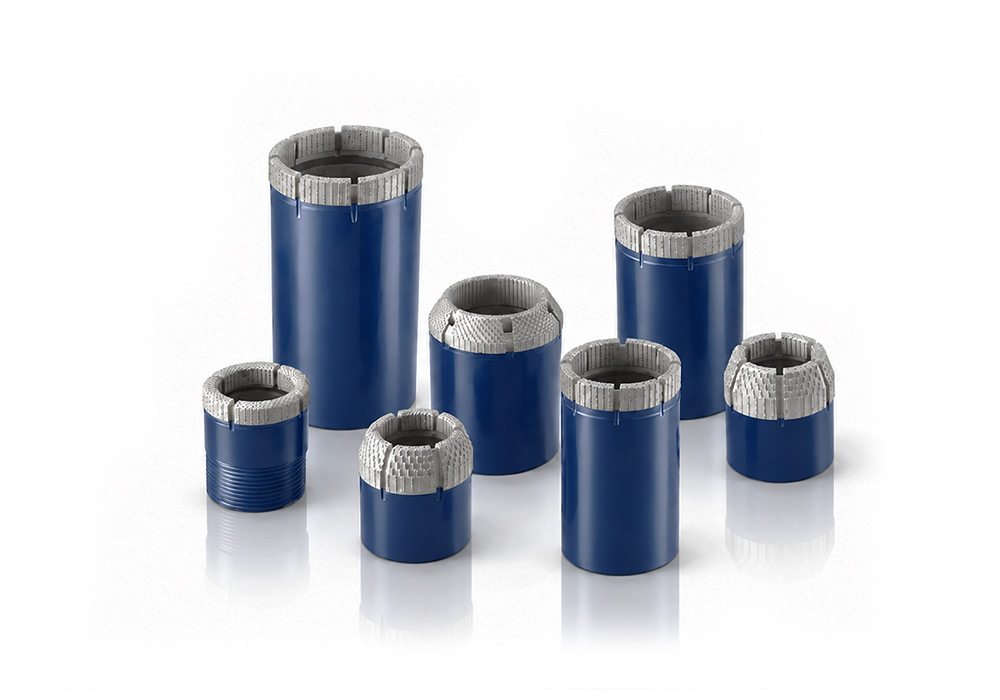
MSD supplies surface set diamond core bits for mineral exploration, geological exploration, mining exploration, wireline core drilling, and geotechnical core drilling.
A surface set diamond core bit uses exposed diamonds positioned on the cutting face of the crown. Natural diamonds can be used in this type of design, and diamond size, distribution, and exposure influence how the bit engages the formation and maintains its cutting action.
Surface set core bits are commonly considered for particular softer to medium-hard formations and operating conditions, but they should not be selected from rock hardness alone. Formation structure, abrasiveness, available rotational speed, flushing conditions, core-barrel system, and the required core diameter also affect the choice.
How a Surface Set Diamond Core Bit Cuts
The exposed diamond points on a surface set diamond core bit contact the rock as the drill string rotates. Their placement across the crown face supports cutting, gauge control, and the movement of cuttings toward the available flushing paths.
Diamond exposure must provide cutting contact while retaining sufficient support around each stone. Diamond size and distribution therefore need to be reviewed together with crown geometry, formation characteristics, flushing, RPM, and the applied operating load.
This cutting concept differs from an impregnated bit, where synthetic diamonds are distributed through a matrix and become exposed as the matrix wears. The distinction is useful for selection, but it does not create an absolute surface-set-for-soft-rock and impregnated-for-hard-rock rule; actual suitability depends on formation and operating conditions.
Formation and Diamond Selection
The current product parameters identify the listed configurations for soft to medium-hard formations. This is an application range for those specifications rather than a universal boundary for every surface set drill bit.
Selection should consider rock hardness, abrasiveness, competency, fracturing, grain structure, and changes between drilling intervals. Available RPM, flushing performance, crown contact, diamond exposure, and overall drilling stability can alter how a particular configuration behaves in the same nominal hardness range.
Diamond size may be specified by SPC, meaning the number of stones per carat; it is separate from the Diamond Quality field. The current parameter table retains SPC values of 20/25 and 30/50 and the existing Diamond Quality value “S.” These entries should be treated as product specifications and confirmed against the required size and formation without assigning a new proprietary meaning to “S.”
Wireline Systems, Crown Profiles and Flushing
The current range includes Standard Wireline configurations in BQ, NQ, HQ, and PQ and Triple Tube configurations in NQ3, HQ3, and PQ3. These names are size and system designations; the hole diameter, core diameter, formation, SPC, Diamond Quality, and flush type should be checked in the parameter table for the selected configuration.
The existing Standard Wireline rows list CF as the flush type, while the Triple Tube rows list FD. The appropriate flushing arrangement must still be reviewed with ground condition, water delivery, cuttings removal, core recovery requirements, and the matching core-barrel system.
Crown profile affects initial contact, tracking, stability, and the way flushing reaches the cutting face. MSD can review an available configuration according to the formation and drilling system, but no single crown or flushing arrangement is suitable for every project.
Surface Set Core Bit Selection and Technical Review
A suitable wireline surface set core bit should match the core-barrel system and target dimensions first. Formation description, expected variability, abrasiveness, competency, fracturing, and grain structure then provide the basis for reviewing diamond size, crown contact, and flushing.
Operating information is also necessary. Rig capability, rotational speed, weight on bit, water flow, drilling depth, and observed downhole behavior influence cutting efficiency and bit wear. RPM, load, and flushing should be adjusted together rather than treated as independent settings.
An unsuitable combination can result in poor cutting response, unstable torque, inadequate cuttings removal, premature diamond loss, or inconsistent core recovery. Final configuration should therefore be confirmed from the available formation and equipment data instead of relying only on a general product name.
MSD is a China-based rock drilling tools manufacturer supplying exploration drilling products and technical selection support. Standard requirements, replacement configurations, and non-standard requests can be reviewed before quotation and order confirmation.
Contact MSD for Surface Set Diamond Core Bits
For a recommendation or quotation, provide the required system and size, target hole and core diameters, formation hardness, abrasiveness, competency, fracturing, grain structure, drilling depth, rig information, available RPM, flushing conditions, and required quantity.
For replacement surface set diamond bits, also provide the existing bit markings, dimensions, thread or connection details, core-barrel information, photographs, drawings, and any observed wear or drilling issue. These details help verify compatibility and identify whether the existing configuration should be retained or reviewed.
For a non-standard requirement or an exploration surface set core bit for variable ground, send the available technical information to MSD for configuration review. Final selection remains subject to the confirmed drilling system, formation, and operating conditions.
Technical content reviewed by MSD Engineering Team. | MSD — 23+ years of rock drilling tools manufacturing expertise | ISO 9001 Certified | Exporting to 40+ countries


 APPLICATIONS