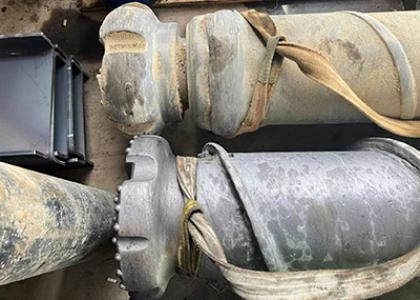
What Are Low Pressure DTH Bits?
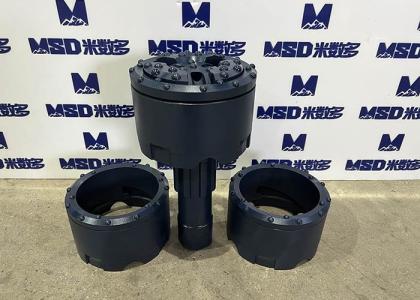
Low pressure DTH bits are the rock-cutting components used with compatible low pressure down-the-hole hammers. The hammer piston strikes the bit, and the carbide buttons transfer that impact to the rock. Rotation brings the buttons into contact with fresh rock while exhaust air passes through the bit to help clear the broken material.
The MSD range on this page is organized into CIR76, CIR90, CIR110, and CIR150 groups. The specification tables identify individual products by diameter, gauge-button configuration, front-button configuration, weight, and part number.
Also described as low pressure DTH hammer bits, these products must be selected for the intended hammer interface and drilling conditions. The low-pressure description alone does not establish compatibility or define the operating settings of a complete drilling system.
Bit Shank and Hammer Matching
Confirm the exact hammer manufacturer, model, and required bit shank before choosing a cutting diameter. The bit shank must match the hammer's driving, retaining, and air-passage arrangement. Similar outside diameters or CIR family names are not enough to confirm a replacement.
For an existing hammer, provide its full model designation together with the current bit markings, shank photographs, dimensions, or a drawing. Retain any model suffixes shown on the equipment and use the complete MSD part number when ordering.
A bit with another shank standard is not a substitute simply because it has the same cutting diameter. Likewise, changing compressor pressure does not make an incompatible bit suitable for the hammer. Hammer operating conditions and bit compatibility must be checked separately.
Bit Diameter and Part Number Selection
Select the nominal cutting diameter according to the required hole size, then check that the chosen bit is suitable for the exact hammer and drilling system. The current tables list individual diameters from 76 to 200 mm; not every diameter is available in every CIR group.
Diameter alone cannot identify the correct product. For example, CIR90A-110BVC6 and CIR110A-110BVC6 both list a 110 mm diameter but belong to different CIR groups. Use the complete part number and verify the shank instead of ordering only a "110 mm low pressure bit."
Listed bit sizes are not a universal operating range for every hammer in the same family. The selected diameter must also suit the hammer's confirmed drilling range, rig capability, and available flushing air. Actual hole size can be affected by gauge wear and ground conditions.
Button Configuration, Face Design and Formation
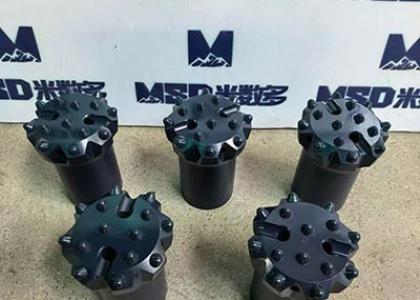
Gauge buttons work around the outer cutting edge, while front buttons break rock across the bit face. In the current tables, a gauge-button entry such as 5×Ø13 mm specifies five buttons with a diameter of 13 mm. Button quantity and diameter describe the listed configuration; they do not identify the carbide grade or button shape.
In general DTH drilling practice, spherical or domed buttons are often considered for hard, abrasive rock. More pointed profiles, such as ballistic buttons, may be considered for less abrasive formations, but their suitability changes with rock strength, fracturing, and impact conditions.
Flat, concave, and convex faces are common industry designs. Face geometry influences rock contact, drilling stability, and the space available for flushing. Selection should consider the complete face, button layout, and ground conditions rather than treating one face name as suitable for every formation.
The current MSD tables do not separately specify face profiles, button shapes, or flushing-hole configurations. Confirm these details for the selected part number before ordering; do not infer them from an unexplained part-number suffix. Previous bit wear, button damage, rock descriptions, and photographs can help the selection review.
Applications for Low Pressure DTH Bits
Low pressure down the hole bits can be considered for rock drilling in water wells, quarry blast holes, and construction or foundation projects where the CIR hammer, required diameter, and air supply are suitable.
When selecting water well DTH bits, review the rock intervals, planned depth, groundwater, and cuttings return as well as the hole diameter. Loose or collapsing layers may require casing or a different drilling arrangement; an ordinary button bit does not support the borehole wall by itself.
For quarrying and construction, describe the rock hardness, abrasiveness, fracturing, and hole requirements. The application name or low-pressure classification alone does not establish a maximum drilling depth or guarantee suitability for the formation.
Flushing, Hole Cleaning and Bit Care
Flushing passages direct air across the cutting face, helping move broken rock away from the buttons and into the return path around the drill string. Restricted passages or insufficient return airflow can leave cuttings at the bottom of the hole, increasing recutting and wear.
Check air pressure and flow against the matched hammer and the complete drilling arrangement. Bit diameter, drill-pipe diameter, hole depth, water, and leakage all affect hole cleaning. The bit specification table should not be treated as a compressor-sizing chart.
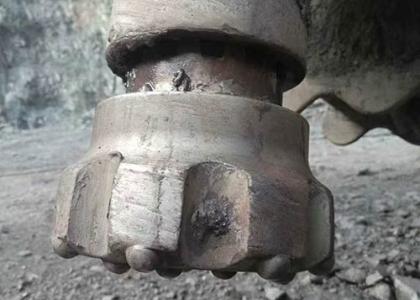
Keep flushing passages clear and inspect the buttons, gauge, bit body, and shank for wear or damage. Follow the matched hammer's lubrication and operating instructions. Stop and investigate abnormal vibration, damaged buttons, or a marked loss of cuttings return; have regrinding or repair assessed under the applicable maintenance guidance.
MSD Manufacturing and Selection Support
MSD is a China-based rock drilling tools manufacturer with 23 years of manufacturing experience, exporting drilling products to customers in 40+ countries.
For low pressure DTH button bits, the MSD team can review the hammer model, shank information, required diameter, button configuration, and working conditions. Existing drawings, samples, photographs, and previous order details help identify the required replacement and clarify configuration questions.
Selection support focuses on matching the bit to the drilling system and formation. Reviewing compatibility, wear conditions, and flushing requirements helps buyers consider overall cost per meter alongside the purchase price.
Contact MSD for Low Pressure DTH Bit Requirements
For a quotation, provide the complete part number if known, hammer manufacturer and model, required shank, bit diameter, and quantity. Include the existing gauge- and front-button configuration, preferred face or button profile, and any flushing requirements that need confirmation.
For selection assistance, also provide the drilling application, formation, planned hole depth, rig information, and compressor pressure and air volume. Send photographs of the bit face and shank, dimensions, drawings, or a sample where available so MSD can review the configuration before order confirmation.
MSD — 23+ years of rock drilling tools manufacturing expertise | ISO 9001 Certified | Exporting to 40+ countries


 APPLICATIONS