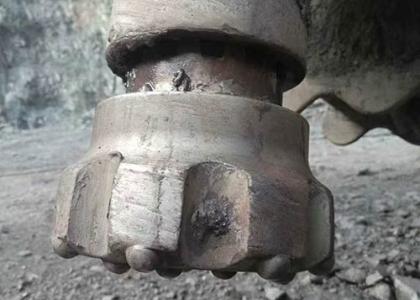
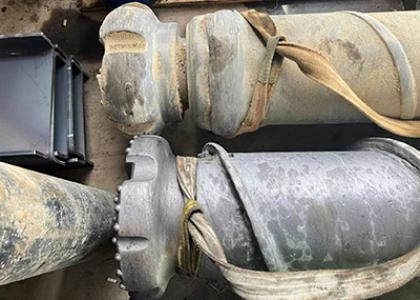
Our professional service team works closely with customers to identify application requirements and solve drilling challenges efficiently.
From product selection to after-sales support, we ensure fast response and reliable solutions.

DTH Back Hammers

DTH Back Hammers

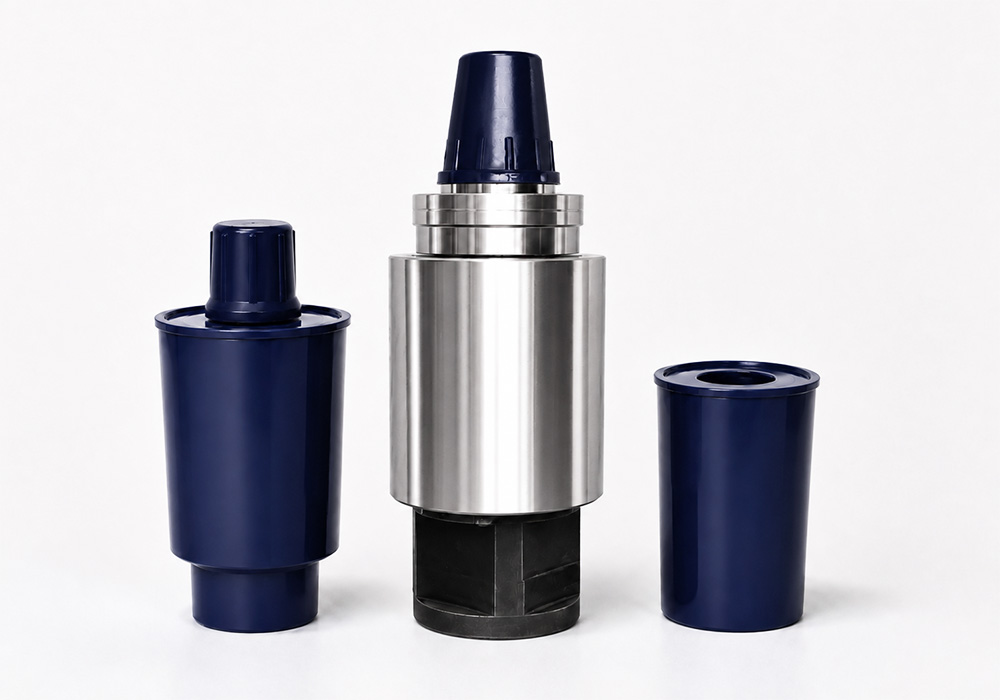
MSD supplies DTH back hammers for back hammer drilling and stuck drill-string recovery in 3–5, 5–6, and 8–12 inch ranges.

Product descriptions

MSD supplies DTH back hammers designed to generate reverse impact and vibration during stuck drill-string and DTH hammer recovery operations. The tool is installed between the rotation head and drill string, where it works together with the rig’s pullback force to support recovery under suitable borehole conditions. Available product ranges are 3–5 Inch, 5–6 Inch, and 8–12 Inch, with a maximum working pressure of 8 bar and listed 3-1/2 Inch API REG connections. Final selection should be based on the rig configuration, connection requirements, drill-string setup, stuck component, and actual recovery conditions.

DTH Back Hammer Specifications

Back Hammer RangeMax. Working PressureRear / Front ConnectionsSpanner SizeInstalled / Total LengthOutside DiameterWeight
3"–5"8 bar
(116 psi)
Rear: 3-1/2" API Reg., ext
Front: 3-1/2" API Reg., int
95 mm
(3-3/4")
Installed: 415 mm (1' 4-3/8")
Total: 510 mm (1' 8")
180 mm
(7-1/16")
31 kg
(68 lbs)
5"–6"8 bar
(116 psi)
Rear: 3-1/2" API Reg., ext
Front: 3-1/2" API Reg., int
120 mm
(4-3/4")
Installed: 445 mm (1' 5-1/2")
Total: 540 mm (1' 9-1/4")
200 mm
(7-7/8")
44 kg
(97 lbs)
8"–12"8 bar
(116 psi)
Rear: 3-1/2" API Reg., ext
Front: 3-1/2" API Reg., int
140 mm
(5-1/2")
Installed: 445 mm (1' 5-1/2")
Total: 540 mm (1' 9-1/4")
225 mm
(8-7/8")
63 kg
(139 lbs)

0

title-imgCASE STUDIES

PROVEN PERFORMANCE

service-img
Symmetrix Case Study: 100% Success Rate in South Africa Wate

MSD Concentric Casing System achieved 100% hole completion across 36 water wells in South

Read More
service-img
Thread Button Bit Case Study: 25% Faster Drilling at Austral

MSD T51-115mm thread button bit achieved 25% faster drilling and 30% longer life at Austra

Read More
service-img
DTH System Case Study: 24% Efficiency Boost at Brazil Iron M

MSD DTH hammer + drill pipe system achieved 24% faster drilling and 26% lower cost at Braz

Read More
service-img
QL60 DTH Bit Case Study: 70% Longer Life in Russian Iron Min

MSD QL60-178 DTH bit achieved 340m per bit and 35% lower drilling cost in Russian hard roc

Read More
service-img
500mm DTH Bit Case Study: Zero Failures in Taiwan Piling Pro

MSD custom 500mm DTH bit achieved zero structural failures and 40% efficiency gain in Taiw

Read More

What Is a DTH Back Hammer?

A DTH back hammer is a pneumatic recovery tool used when a DTH hammer, drill pipe, or another part of the drill string becomes stuck in the borehole. It generates reverse-directed impact and vibration while the drilling rig applies pullback force to the tool string.

The product may also be described as a DTH backhammer or down-the-hole back hammer. It is not a conventional DTH hammer for normal rock breaking. Its purpose is to support stuck-tool recovery under suitable drilling and borehole conditions.

The back hammer is installed between the rotation head and the drill string. Final installation and compatibility depend on the rig configuration, connections at both ends, drill-string layout, and the component being recovered.

How Back Hammer Drilling Supports Stuck-Tool Recovery

In back hammer drilling recovery work, compressed air operates the tool to produce reverse impact and vibration. At the same time, the drilling rig applies controlled pullback to the drill string. This combined action may help loosen a stuck DTH hammer or drill string so that recovery can be attempted.

The recovery result depends on the actual cause of the blockage. Accumulated cuttings, unstable formations, borehole collapse, tool-string deformation, damaged connections, or other downhole conditions may affect whether the stuck equipment can be released.

A DTH back hammer should therefore be selected as part of a complete recovery plan. Correct connection matching, available rig pullback capacity, borehole information, and the condition of the drill string must be reviewed before use.

Standard Size Ranges, Pressure, and Connections

MSD lists three DTH back hammer ranges: 3–5 Inch, 5–6 Inch, and 8–12 Inch. These are separate product ranges and should not be simplified as continuous coverage from 3 to 12 inches. The 5 Inch size appears in two adjacent ranges, so nominal size alone is not sufficient for final selection.

The listed maximum working pressure is 8 bar, and the current specifications show 3-1/2 Inch API REG connections. The exact front and rear connection requirements must still be checked against the rotation head, drill pipe, adapter arrangement, and complete drill-string configuration.

Outside diameter, installed length, total length, and net weight vary by product range. These listed dimensions should be checked against the available installation space, drill-string arrangement, lifting conditions, and handling requirements.

The operating air supply must be controlled within the confirmed maximum working pressure. Required air delivery and any non-standard connection requirement should be reviewed with MSD for the selected configuration.

Recovery Conditions and Operating Limits

A DTH back hammer can support recovery attempts, but it cannot guarantee that every stuck drill string or hammer will be released. Performance depends on the cause and severity of the blockage, borehole depth and condition, formation stability, tool-string condition, available pullback force, operating air supply, and recovery procedure.

Before using the tool, the drilling team should assess whether the drill string and threaded connections remain suitable for applying reverse impact and pullback. A damaged, deformed, or disconnected tool string may require a different recovery method.

Operation should be carried out by experienced personnel using an approved recovery procedure. This product information provides general selection guidance and does not replace the rig manual, site safety rules, or project-specific recovery plan.

Selection and Quotation Information

Final selection should be based on the drilling rig, rotation-head connection, drill-pipe thread, drill-string layout, stuck component, and actual recovery conditions rather than the nominal DTH hammer size alone.

For selection or a quotation, provide the rig brand and model, rotation-head connection, drill-pipe thread, DTH hammer model or drill-string size, component that is stuck, outside diameter of the relevant drill-string or stuck component where available, borehole diameter and depth, available working pressure, rig pullback capacity, suspected cause of the blockage, and required quantity.

Drawings, thread details, photographs of the existing connections, and information about the current drilling setup can help MSD review the required configuration. Non-standard connections or customized requirements remain subject to technical evaluation and production confirmation.

Technical content reviewed by MSD Engineering Team. | MSD — 23+ years of rock drilling tools manufacturing expertise | ISO 9001 Certified | Exporting to 40+ countries

title-img products title-img

Complete Your DTH System

faq & answer

Frequently Asked
Questions

A DTH back hammer is a pneumatic recovery tool used when a DTH hammer, drill pipe, or another part of the drill string becomes stuck. During back hammer drilling recovery work, it produces reverse-directed impact and vibration while the drilling rig applies pullback force. It may also be described as a DTH backhammer or down-the-hole back hammer.
A DTH back hammer is installed between the rotation head and the drill string. The required front and rear connections must match the rig, drill pipe, adapter arrangement, and complete drill-string configuration. Final installation should be confirmed before ordering.
MSD lists 3–5 Inch, 5–6 Inch, and 8–12 Inch DTH back hammer ranges. These are separate product ranges rather than continuous coverage from 3 to 12 inches. Because 5 Inch appears in two adjacent ranges, nominal size alone is not sufficient for final selection. The listed maximum working pressure is 8 bar, and the current specifications show 3-1/2 Inch API REG connections. Outside diameter, installed length, total length, and net weight vary by range, while exact front and rear connection requirements must be confirmed for the drilling system.
Provide the rig brand and model, rotation-head connection, drill-pipe thread, DTH hammer model or drill-string size, component that is stuck, outside diameter of the relevant drill-string or stuck component where available, borehole diameter and depth, available working pressure, rig pullback capacity, suspected cause of the blockage, required quantity, and any available drawings or photographs.
No. A DTH back hammer can support a recovery attempt, but the result depends on the cause and severity of the blockage, borehole condition, formation stability, drill-string condition, available pullback force, operating air supply, and recovery procedure. Some stuck-tool situations may require another recovery method.
title-img GET IN TOUCH

Send Us Your Inquiry

Privacy Preference Center
When you visit our website, it may store or retrieve information on your browser, mostly in the form of cookies. This information helps us make the site work as you expect and deliver a personalized experience.
Strictly necessary cookies
Always active
Functional cookies
Performance cookies
Targeting cookies
You have rejected optional cookies. Some site features may not work properly.