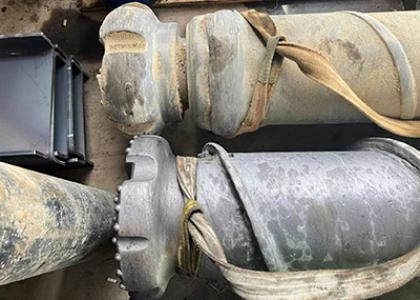
What Are RC Drill Pipes?
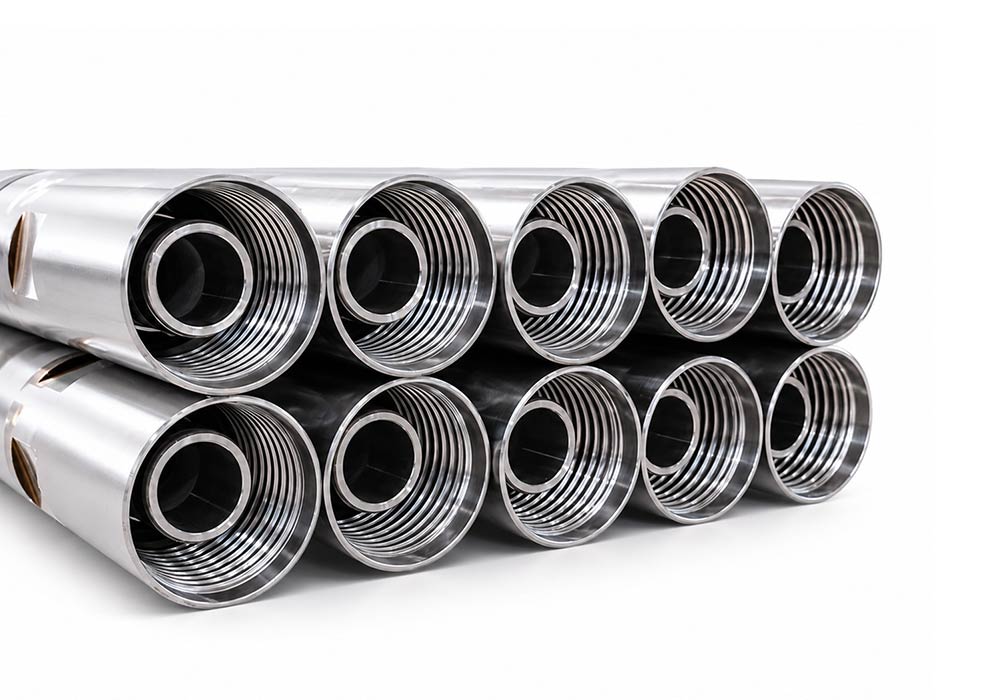
RC Drill Pipes (Reverse Circulation Drill Pipes) are dual-wall drill-string components used in reverse circulation drilling systems. A reverse circulation drill pipe combines an outer load-carrying pipe with an inner tube that forms the sample-return passage.
Also called RC drill rods or reverse circulation rods, these products serve mineral exploration and geological sampling. Conventional single-wall DTH drill pipes normally return cuttings outside the drill string; RC pipes provide an internal return path and require matching RC connections and components.
The current MSD models are MSD80/48, MSD89/38, MSD102/46, MSD108/46, MSD114/50, MSD127/60, and MSD146/75. Use the specification table to identify the model and its listed configuration.
How Dual-Wall RC Drill Pipes Work
In a typical air-powered RC hammer system, compressed air travels downward through the annular space between the outer pipe and inner tube. The matched hammer and bit break the formation, and returning air carries cuttings upward through the central sample passage to the surface collection equipment.
This dual wall drill pipe arrangement separates the air-supply passage from the sample-return passage. The outer pipe transmits rotation and axial loads, while the inner tube guides the returning material. Both passages must remain continuous through the connections, adapters, and hammer assembly.
At the surface, the return stream is commonly directed to a cyclone and sampling equipment. Keeping the return inside the drill string helps limit contact with the borehole wall, but sample quality still depends on sealing, ground conditions, circulation, and sampling procedures.
RC Hammer, RC Bit and Drill Pipe Matching
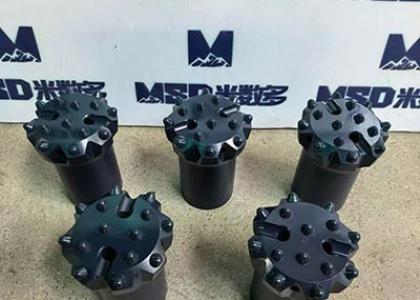
Match the pipe to the exact RC hammer connection and internal return arrangement, then confirm the bit shank and diameter for that hammer. A compatible bit shank does not establish pipe compatibility, and the same nominal pipe diameter does not establish a matching thread.
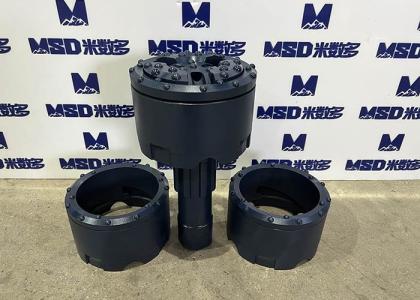
Review the complete assembly, including the rig connection, swivel, existing rods, adapters, hammer, and bit. Any adapter must accommodate both the mechanical connection and the air and sample passages. A conventional DTH adapter should not be assumed suitable for an RC assembly.
For replacements, provide the existing rod and hammer models, connection drawings, inner-tube end details, and photographs. Confirm each interface before mixing components from different systems.
Pipe Diameter, Length and Connection Selection
Review the Outer Pipe and Inner Pipe entries separately. Outer diameter affects rig handling and physical fit; the inner-tube bore is part of the sample-return passage. Keep OD, ID, and wall thickness distinct when exchanging drawings. Do not treat an inner-pipe size as its clear bore or calculate an unlisted ID from this page.
The table lists 1500–6000 mm lengths. Confirm the required individual rod length, its measurement basis, and compatibility with the rig mast and rod-handling equipment. The length entry does not establish which lengths are stocked.
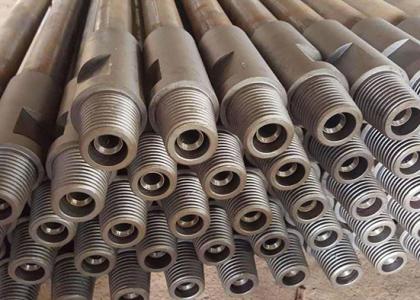
Connection entries include Buttress Thread and size-specific Remet/Metzke descriptions. Specify the exact required thread system, size, pin-and-box details, and inner-tube interface. A combined Remet/Metzke label is not confirmation that the two systems are interchangeable.
MSD146/75 lists its inner pipe as 75 mm without a wall-thickness value. Confirm the detailed drawing where bore or wall dimensions are needed. The table’s Recommended Depth entries are not a guaranteed operating depth for a complete RC hammer system; planned depth needs a separate equipment and ground-condition review.
Sample Return, Sealing and Pipe Care
The current table specifies Dual O-ring Radial sealing. Confirm the seal dimensions, material, mating surfaces, and assembly instructions for the selected configuration; the sealing description alone does not define a replacement seal.
Worn seals, damaged inner tubes, misaligned joints, or restricted passages can disrupt circulation and sample return. Inspect threads, shoulders, tube ends, and seals before assembly. Follow the confirmed connection instructions for lubrication and make-up; do not force mismatched joints.
Protect threads and tube ends during transport, support the pipes securely, and keep dirt out of both passages. Isolate and depressurize the system before inspection or disassembly, and investigate abnormal return flow under the equipment supplier’s procedures.
Applications in Reverse Circulation Drilling
Mineral exploration and mining exploration: RC drill pipes form part of a system that brings rock chips to the surface for geological logging and analysis.
Grade control drilling: a matched RC drill string supports collection of samples used to assess mineral distribution and guide mine planning.
Geological sampling: RC drilling provides cuttings rather than an intact core. The required sample type, formation, groundwater, and collection procedure should be reviewed before selecting the drilling arrangement.
MSD Manufacturing and Technical Support
MSD is a China-based rock drilling tools manufacturer supplying RC tooling and related drilling components. Manufacturing quality control includes dimensional inspection and final checks against confirmed product requirements.
The MSD team can review pipe dimensions, connections, inner-tube details, and matching hammer information before quotation and order confirmation. Drawings, samples, and previous order records help define the required configuration without assuming compatibility from a model name alone.
Contact MSD for RC Drill Pipe Requirements
For a quotation, provide the required MSD model if known, outer- and inner-pipe dimensions, individual rod length, exact connection, sealing details, and quantity. Include the rig model, RC hammer model, bit shank and diameter, and existing adapter information.
For system selection, also describe the formation, groundwater, planned drilling depth, air supply, and surface sample-collection arrangement. Send connection drawings, markings, photographs, or a sample where available, and identify any dimensions or interfaces that require confirmation.
MSD — 23+ years of rock drilling tools manufacturing expertise | ISO 9001 Certified | Exporting to 40+ countries


 APPLICATIONS