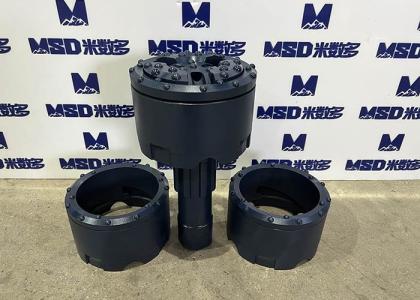
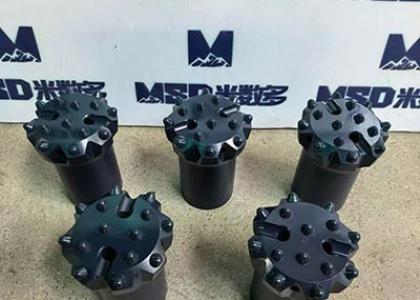
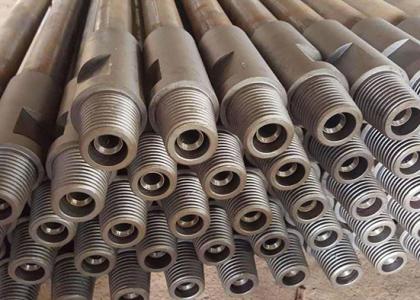
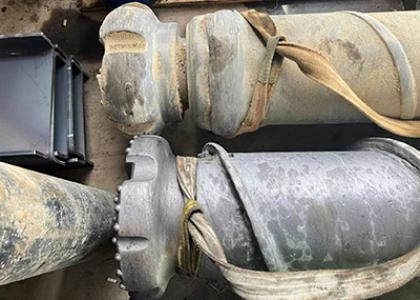
10–15 Inch DTH Hammers Overview
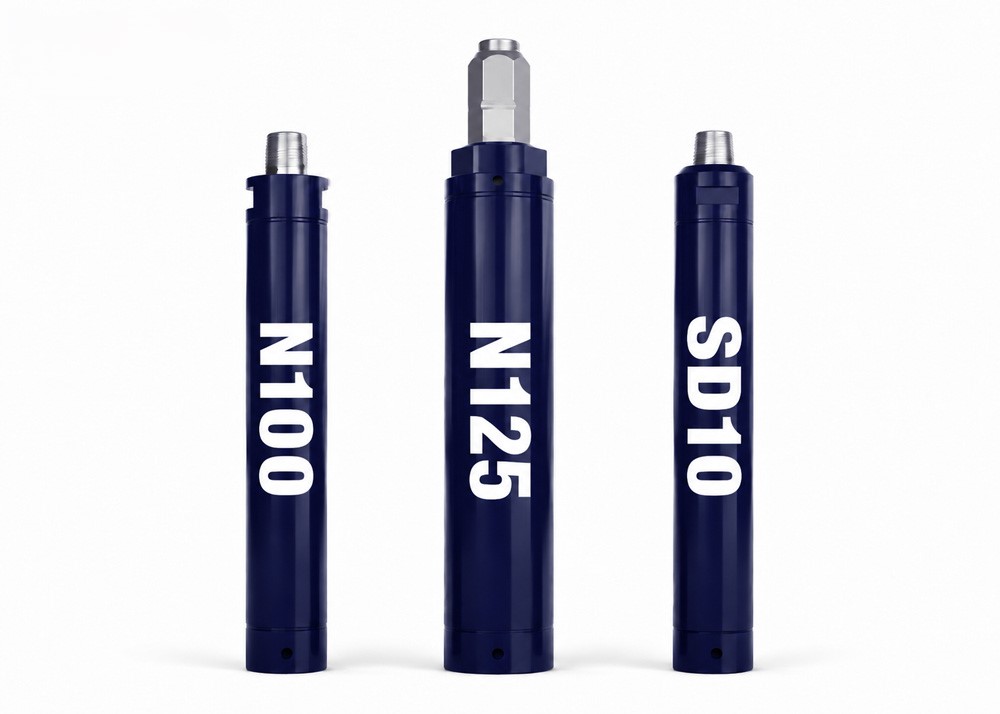
MSD offers five large-size DTH hammer configurations that collectively cover Ø254–400 mm drilling: N100, SD10, DHD1120, SD12, and N125. This collection supports buyers comparing 10 inch DTH hammer, 12 inch DTH hammer, and 15 inch DTH hammer options based on exact model parameters and drilling-system requirements.
The models are grouped on one page because they serve overlapping large-diameter drilling requirements, but they do not share the same hole range, outer diameter, top sub thread, bit shank, rotation-speed range, or air consumption.
All five models have a confirmed working pressure range of 1.5–3.3 MPa. Final selection should be based on the required hole diameter, hammer model, bit shank, top sub thread, drill-pipe connection, available rig capacity, compressor pressure, and compressor discharge capacity.
Choose the Model by Bit Shank
The bit shank is a primary selection point because the DTH hammer and drill bit must use the corresponding connection configuration.
N100 DTH Hammer — Uses a NUMA100 bit shank.
SD10 DTH Hammer — Uses an SD10 bit shank.
DHD1120 DTH Hammer — Uses a DHD1120 bit shank.
SD12 DTH Hammer — Uses an SD12 bit shank.
N125 DTH Hammer — Uses a NUMA125 bit shank.
A similar hole range or nominal size does not automatically confirm compatibility. The required bit shank should be identified from the selected drill bit or existing drilling system. The corresponding hammer model, body diameter, top sub thread, dimensions, and operating parameters should then be checked.
Model-Specific Hole Ranges
The five hammer models collectively cover Ø254–400 mm drilling, but each model has a different confirmed hole range.
N100 DTH Hammer — Ø254–311 mm
SD10 DTH Hammer — Ø254–311 mm
DHD1120 DTH Hammer — Ø295–400 mm
SD12 DTH Hammer — Ø295–400 mm
N125 DTH Hammer — Ø330–400 mm
The required hole diameter should be checked against the exact range of the selected model. For example, a project requiring a diameter between Ø254 mm and Ø294 mm falls within the confirmed ranges of N100 and SD10, but not within the listed ranges of DHD1120, SD12, or N125.
Where several models cover the same target diameter, selection should continue by comparing the required bit shank, hammer outer diameter, top sub thread, rig configuration, and available air supply.
Outer Diameter and Top Sub Thread
The five models use three hammer outer diameters and two top sub thread sizes.
Ø225 mm Hammer Bodies — N100 and SD10
Both models use an API 5 1/2" REG top sub thread.
Ø275 mm Hammer Bodies — DHD1120 and SD12
Both models use an API 6 5/8" REG top sub thread.
Ø305 mm Hammer Body — N125
The N125 also uses an API 6 5/8" REG top sub thread.
The top sub thread should be checked against the drill-pipe connection and any adapter used in the drill string. An API 5 1/2" REG configuration should not be treated as the same connection as an API 6 5/8" REG configuration.
Working Pressure and Rotation Speed
All five models have a confirmed working pressure range of:
Working Pressure — 1.5–3.3 MPa
The recommended rotation-speed range differs for the N125.
N100 — 25–50 r/min
SD10 — 25–50 r/min
DHD1120 — 25–50 r/min
SD12 — 25–50 r/min
N125 — 25–45 r/min
The rig should be able to operate within the recommended range of the selected hammer. The N125 should not be described as having the same 25–50 r/min range as the other four models.
Air Consumption and Compressor Matching
Air consumption varies by hammer model and operating pressure. Compressor selection should use the exact listed values rather than a general estimate based on nominal hammer size.
N100 — 40 m³/min at 1.8 MPa and 60 m³/min at 2.4 MPa
SD10 — 40 m³/min at 1.8 MPa and 60 m³/min at 2.4 MPa
DHD1120 — 50 m³/min at 1.8 MPa and 70 m³/min at 2.4 MPa
SD12 — 50 m³/min at 1.8 MPa and 70 m³/min at 2.4 MPa
N125 — 46 m³/min at 1.8 MPa and 58 m³/min at 2.4 MPa
The compressor should provide the required pressure and sufficient discharge capacity for the selected hammer's listed air consumption. Rated pressure and rated discharge capacity should be reviewed together, along with pressure losses in the hose, drill pipe, adapters, and complete air-delivery arrangement.
Air-consumption values should not be extrapolated beyond the confirmed pressure points. Two models with overlapping hole ranges may still require different compressor configurations.
Choosing Between 10 Inch, 12 Inch, and 15 Inch DTH Hammers
A selected 10, 12, or 15 inch configuration may be considered when the required hole diameter falls within the chosen model's confirmed range and the drilling equipment can support its connection, weight, rotation-speed, and air requirements.
Hole Diameter — Confirm that the required diameter falls within the selected model's exact range.
Bit Shank — Confirm the corresponding bit shank for the selected drill bit or existing drilling system.
Hammer Body — Check the hammer outer diameter and model weight against the rig and drill-string arrangement.
Top Sub Thread — Verify whether the system requires API 5 1/2" REG or API 6 5/8" REG.
Drill-String Connection — Check the drill-pipe connection and any adapter used.
Rotation Speed — Use the model-specific recommended range.
Working Pressure — Confirm the 1.5–3.3 MPa working-pressure requirement.
Air Supply — Check the listed air consumption against the compressor's rated discharge capacity.
Rig Capacity — Confirm that the drill rig can support the selected hammer size and weight.
Selection should not be based only on a nominal inch designation. The N100, SD10, DHD1120, SD12, and N125 have different physical and operating requirements even where their hole ranges overlap.
The confirmed 8 inch range extends to Ø254 mm, while the N100 and SD10 ranges begin at Ø254 mm. Projects at this boundary should be compared by bit shank, hammer body diameter, top sub thread, rig capacity, and compressor requirements.
For projects approaching the upper boundary of this collection, the selected model should be compared with the final confirmed parameters on the 18–24 Inch DTH hammer page. The boundary should not be calculated from a nominal-inch formula.
Common Application Directions
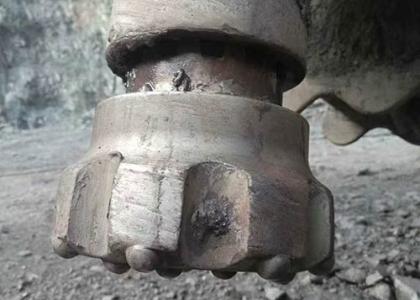
Depending on the selected model and drilling conditions, these large-diameter DTH hammers may support water-well drilling, construction drilling, foundation and piling work, quarry drilling, and selected mining projects requiring Ø254–400 mm holes.
Application suitability should be confirmed against the required hole diameter, formation, hole depth, drill-string arrangement, rig capacity, and available compressor output. The five models should not be assumed to suit the same applications simply because they are grouped on one page.
Why Choose MSD
MSD is a China-based manufacturer of rock drilling tools, supplying DTH hammers, DTH drill bits, drill pipes, casing systems, and related drilling products.
For this large-size DTH hammer collection, MSD supplies configurations for NUMA100, SD10, DHD1120, SD12, and NUMA125 bit-shank systems. The models include Ø225 mm, Ø275 mm, and Ø305 mm hammer bodies and two different top sub thread sizes.
Because these specifications affect the complete drilling assembly, MSD reviews the required hole diameter, hammer and bit connection, drill string, rig, compressor pressure, and compressor discharge capacity before confirming the configuration.
Information Required Before Ordering
To confirm the correct large-size DTH hammer configuration, provide the following information:
Hole Diameter — Required drilling diameter.
Hammer Model — Preferred hammer model, if already known.
Bit Shank — Required bit shank and current DTH bit model, if available.
Connections — Top sub thread, drill-pipe connection, and any adapter used in the drill string.
Drilling Equipment — Drill-rig model and capacity, compressor rated pressure, and compressor rated discharge capacity.
Working Conditions — Drilling application, rock formation, expected hole depth, and any current compatibility or operating problem.
MSD will use this information to check whether the selected hammer, drill bit, drill string, rig, connection arrangement, and compressor match the intended drilling conditions.
Technical content reviewed by MSD Engineering Team. | MSD — 23+ years of rock drilling tools manufacturing expertise | ISO 9001 Certified | Exporting to 40+ countries


 APPLICATIONS