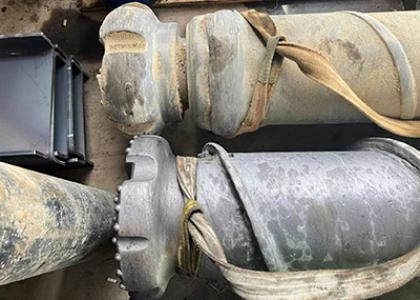
What Is a Low Pressure DTH Hammer?
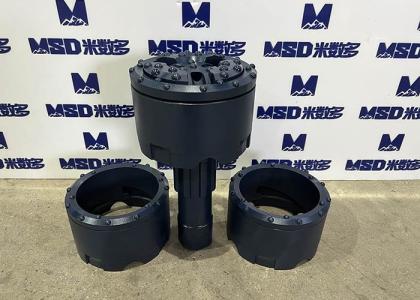
A low pressure DTH hammer is a pneumatic rock drilling tool installed directly behind the DTH drill bit. Compressed air drives the internal piston, which repeatedly strikes the bit while the drill string rotates. The impact breaks the rock at the bottom of the hole, and the exhaust air carries cuttings toward the surface.
The MSD CIR series models listed on this page operate at a working pressure of 0.5–1.0 MPa and cover approximately 50–178 mm hole diameters. Available configurations include CIR50, CIR76A, CIR90A, CIR90B, CIR110A, and CIR150A.
A low pressure down the hole hammer is normally considered when the drilling rig and compressor are configured for this pressure class and the required hole diameter falls within the available model range. It should not be selected from the pressure classification alone; air volume, connection, matching bit, formation, hole depth, and cuttings removal must also be reviewed.
How Low Pressure DTH Hammers Work
Compressed air travels through the drill pipe and enters the hammer. The internal air cycle moves the piston back and forth, allowing it to strike the rear of the drill bit repeatedly. At the same time, the drill string provides controlled rotation so that the bit buttons contact a new area of rock with each impact.
After powering the piston, the exhaust air passes through the bit and helps remove broken rock from the bottom of the hole. The air supply must therefore support both hammer operation and hole cleaning. A hammer may cycle, but drilling can still be unstable if the available air volume is insufficient to lift the cuttings through the annular space around the drill string.
Rotation speed, feed force, lubrication, air pressure, and air volume should be controlled according to the selected hammer, bit, rig, and actual drilling conditions. Operating settings should be adjusted when the formation, hole depth, water conditions, or cuttings return changes.
Low Pressure DTH Hammer Applications
Low pressure DTH hammers are commonly evaluated for water well drilling, small- and medium-diameter quarry or blast-hole drilling, construction drilling, foundation work, and other rock drilling projects using a compatible low-pressure compressor and drill rig.
A water well DTH hammer configuration may be suitable where the required bore diameter, formation, planned depth, compressor output, and cuttings-removal conditions match the selected CIR model. Water well projects can encounter changing layers, groundwater, or unstable return conditions, so the complete drilling system should be reviewed instead of selecting the hammer by diameter alone.
For quarrying and construction work, the formation structure, required hole diameter, hole depth, hole direction, production requirements, and available rig capacity should be confirmed. Hard, abrasive, fractured, water-bearing, or highly variable formations may require different operating settings or another hammer pressure class.
The suitability of a low air pressure DTH hammer depends on the actual project. A general application name does not confirm that every CIR model is suitable for every rig, compressor, formation, or drilling depth.
CIR Hammer Model and Size Selection
Start model selection with the required finished hole diameter. The current MSD range covers CIR50 for 50–60 mm holes, CIR76A for 76–80 mm holes, CIR90A and CIR90B for 90–130 mm holes, CIR110A for 110–135 mm holes, and CIR150A for 155–178 mm holes.
Some hole ranges overlap, particularly between CIR90A, CIR90B, and CIR110A. An overlapping diameter does not make the models interchangeable. Compare the hammer outer diameter, connection thread, length, weight, working pressure, impact rate, recommended rotation speed, and air consumption shown in the parameter table before confirming a model.
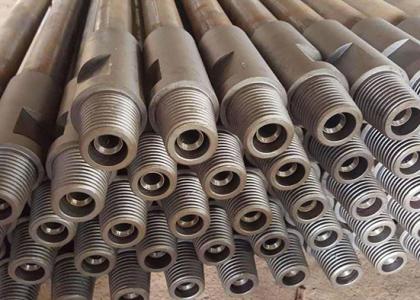
Connection arrangements also vary across the range. The current models use F32×8 PIN, F48×10 PIN, API 2 3/8" REG BOX, or F75×10 BOX connections according to the individual hammer specification. The drill pipe and any adapter or crossover sub must match the exact connection of the selected hammer.
For replacement orders, provide the complete existing hammer model and connection information. CIR90A and CIR90B, for example, have the same listed hole range and outer diameter but different lengths, weights, impact rates, and air-consumption values. The full model designation is therefore required.
Matching the Hammer, Bit, Rig and Air Supply
A low pressure downhole hammer should be treated as one component of the complete drilling system. The hammer, DTH bit, drill pipe, connection, drill rig, rotary head, feed system, compressor, and lubrication arrangement must work together.
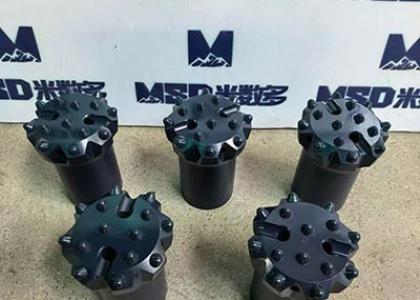
The DTH bit must match the selected CIR hammer interface and cover the required hole diameter. Nominal bit diameter alone does not confirm compatibility. When replacing an existing bit or hammer, provide the model markings, dimensions, photographs, drawings, or a sample where available.
Compressor selection must consider the hammer working pressure and the air-consumption values shown for the relevant model. The available flow should also support cuttings removal for the planned bit diameter, drill-pipe diameter, and hole depth. Larger holes and larger annular spaces can require more air for effective flushing.
Confirm the compressor output under the actual working conditions rather than relying only on its nominal rating. Hose condition, air leakage, altitude, hole depth, water in the hole, and the air-delivery arrangement can affect the pressure and volume reaching the hammer.
The drill rig must also have suitable rotation, feed, pullback, handling capacity, and connection arrangements for the hammer and drill string. The recommended rotation-speed range in the parameter table provides a model-specific reference, but the operating setting may still need adjustment according to the formation and bit behavior.
Formation, Operation and Maintenance Considerations
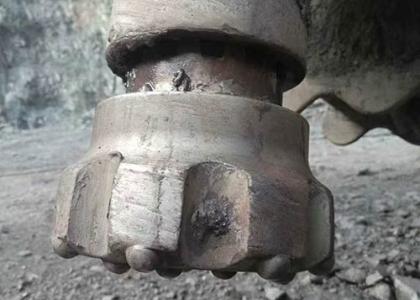
Rock strength is only one part of formation assessment. Abrasiveness, fracturing, clay content, water, voids, and changes between layers can influence penetration, bit wear, flushing, and hole stability. These conditions should be described before a hammer and bit configuration is confirmed.
During drilling, monitor the cuttings return, exhaust condition, penetration response, rotation behavior, air pressure, and lubrication supply. Poor cuttings return, an abnormal change in sound, unstable rotation, or reduced penetration may indicate a flushing, air-supply, bit, formation, or operating problem that should be checked before drilling continues.
Use suitable DTH hammer lubrication and keep the compressed-air system, drill pipes, and connections clean. Inspect threads, seals, the piston, cylinder, chuck, and other service parts according to the operating and maintenance requirements. Worn or damaged matching components should be reviewed before reuse.
Do not operate the hammer outside the confirmed pressure and air-supply conditions. Appropriate system matching, operating control, lubrication, and maintenance help reduce avoidable wear and support a more stable overall cost per meter.
Low Pressure DTH Hammer Manufacturer and Technical Support
MSD is a China-based rock drilling tools manufacturer with 23 years of manufacturing experience, exporting drilling products to customers in 40+ countries.
The MSD product range includes low pressure DTH hammers, high pressure DTH hammers, DTH drill bits, DTH drill pipes, casing systems, top hammer tools, and related drilling components.
The MSD team can review the required CIR hammer model, hole diameter, connection, matching bit, compressor information, drill-rig configuration, formation, and application before quotation. Replacement requirements can also be checked against existing model markings, photographs, drawings, dimensions, or samples.
This configuration review helps identify model, connection, bit, and air-supply mismatches before production and order confirmation. Special connections or non-standard requirements should be submitted separately for technical review.
Contact MSD for Low Pressure DTH Hammer Requirements
For a low pressure DTH hammer recommendation or quotation, provide the required hole diameter, hole depth, application, formation, existing or required hammer model, connection thread, matching bit information, drill-pipe information, drill-rig model, and required quantity.
Also provide the compressor working pressure and available air volume. For replacement products, include the complete existing model number, product markings, photographs, drawings, dimensions, or sample information where available.
MSD will review the supplied information against the available CIR series specifications before confirming the suitable product configuration.
Technical content reviewed by MSD Engineering Team. | MSD — 23+ years of rock drilling tools manufacturing expertise | ISO 9001 Certified | Exporting to 40+ countries


 APPLICATIONS