

Borehole Drilling Basics: Methods, Equipment & Step-by-Step Process
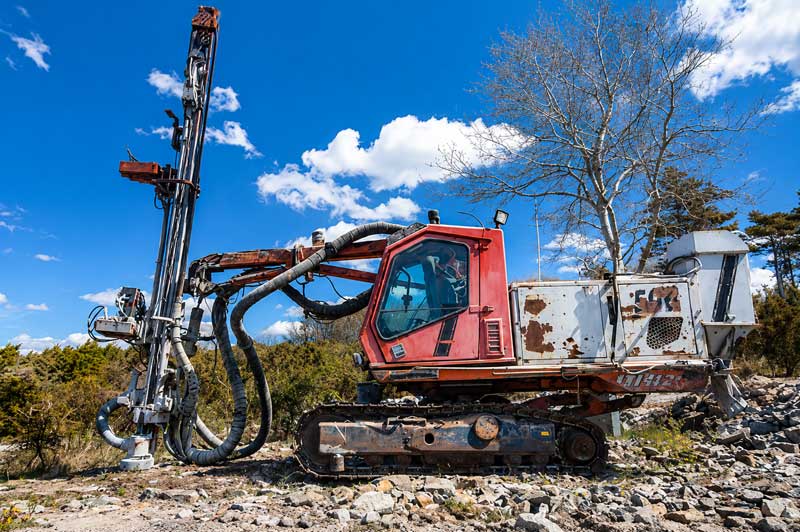
Borehole drilling is the process of creating a narrow, cylindrical hole into the earth using mechanical drilling equipment. Whether the goal is accessing groundwater, preparing blast holes for mining, or installing geothermal heat exchangers, the fundamental engineering challenge remains the same: selecting the right drilling method and tooling to match the geological formation you are drilling through.
This guide covers the core methods, equipment, geological considerations, and step-by-step workflow that every drilling contractor, project manager, and procurement officer should understand before starting a borehole project. The technical content draws on MSD's 23+ years of manufacturing and supplying rock drilling tools to over 1,000 drilling contractors across 40+ countries.
What Is Borehole Drilling?
Definition and Core Concept
Borehole drilling is the mechanical process of creating a cylindrical hole — typically 75 mm to over 1,000 mm in diameter and from 10 m to 1,000 m+ in depth — into subsurface rock or soil formations. The term "borehole" refers specifically to the hole itself. A "well" is a completed borehole that has been equipped with casing, screens, and a pump for water extraction or other fluid recovery.
The distinction matters for project planning. Drilling the borehole is only one phase of the total project. Completing it into a functional well requires casing installation, screen placement, development, and pump commissioning.
What Are Boreholes Used For?
Boreholes serve a wide range of industrial, municipal, and scientific applications far beyond simple water extraction. The most common uses include:
Water well drilling — domestic supply, agricultural irrigation, and municipal water systems
Mining exploration and production — blast holes for ore extraction, dewatering boreholes, and grade-control drilling
Quarrying — bench drilling for dimensional stone extraction and aggregate production
Construction — foundation piling, ground anchoring, soil investigation, and micropile installation
Geothermal energy — closed-loop and open-loop heat exchange boreholes
Geological and environmental investigation — soil sampling, contamination assessment, and aquifer monitoring
In our 23+ years of supplying rock drilling tools globally, MSD has equipped contractors across every one of these application sectors. From 200 m water wells in West African granite to 30 m blast holes in Russian iron ore mines, the tooling requirements differ dramatically — but the engineering fundamentals remain consistent.
Main Borehole Drilling Methods
Five principal methods exist for drilling boreholes, and each one is engineered for a specific combination of geological conditions, target depth, and required diameter. Choosing the wrong method for the formation is the single most expensive mistake in any drilling project.
Down-The-Hole (DTH) Drilling
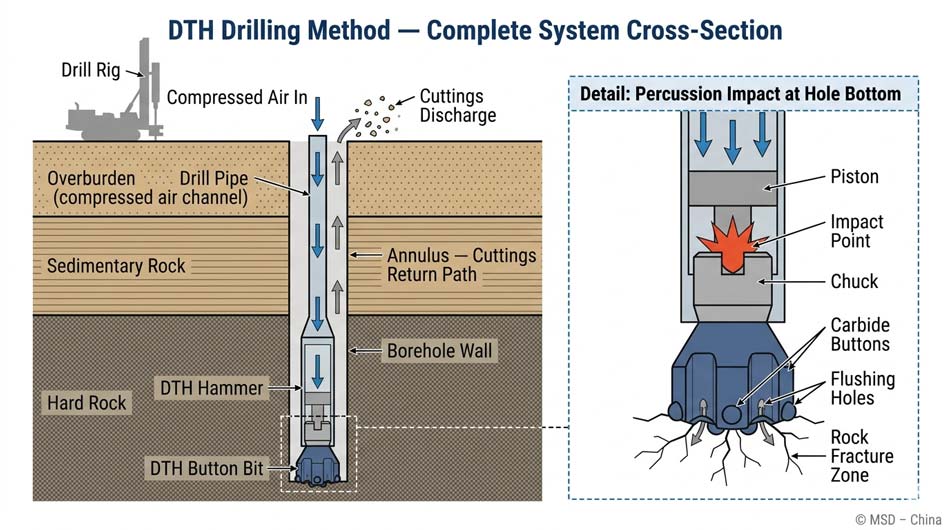
DTH (Down-The-Hole) drilling is a pneumatic percussion method where the hammer operates at the bottom of the borehole, directly behind the drill bit. Compressed air drives a piston inside the hammer at high frequency, and the piston strikes the rear of the bit. The bit's tungsten carbide buttons then fracture the rock on contact through direct percussive energy transfer.
The critical engineering advantage of DTH drilling is that percussive energy is delivered directly at the rock face. Unlike top hammer methods where energy must travel through the entire drill string, DTH eliminates transmission loss regardless of borehole depth. A DTH hammer at 500 m delivers the same strike energy as one at 50 m.
Typical DTH operating parameters include:
Hole diameters: 90–1,000 mm
Operating air pressure: 10–25 bar
Achievable depths: routinely 300–500 m, up to 1,000 m+ in favorable conditions
Primary applications: water wells in hard rock, mining blast holes, quarry bench drilling, geothermal boreholes
MSD manufactures DTH systems covering all major hammer series — DHD, MISSION, QL, SD, COP, and NUMA — matched with dth button bit designs featuring tungsten carbide buttons secured by cold-press interference fit. This button retention method achieves a loss rate below 0.05%, eliminating the most common cause of premature bit failure in hard rock drilling.
Top Hammer Drilling
Top hammer drilling generates percussive energy at the surface using a hydraulic rock drill, then transmits that energy through a string of drilling rod to the bit at the bottom of the hole. The method is best suited for shallow to medium-depth boreholes — typically under 20–30 m — because energy loss increases with every rod joint in the string.
Top hammer drilling is common in small-diameter exploration holes, construction site investigation, quarry secondary drilling, and bolt-hole drilling. Thread sizes range from R25 to ST68 depending on the hole diameter and application.
Rotary Drilling
Rotary drilling uses a rotating bit with continuous weight-on-bit (WOB) to cut or crush rock. No percussive action is involved. The method works well in soft to medium formations — sand, clay, soft limestone, and alluvial deposits — where the bit can shear material without needing impact energy.
Rotary drilling is common for large-diameter water wells in unconsolidated formations and for oil and gas exploration. However, rotary methods struggle severely in hard, abrasive rock where compressive strength exceeds 100–150 MPa. Penetration rates in granite or basalt using rotary methods are typically 5–10 times slower than DTH drilling.
Cable Tool (Percussion) Drilling
Cable tool drilling is the oldest mechanical drilling method. A heavy bit is repeatedly lifted and dropped to pulverize rock at the bottom of the hole. Cuttings are periodically removed with a bailer.
Cable tool drilling is extremely slow compared to modern methods. It has been largely replaced by DTH and rotary drilling for most commercial applications. However, it remains in use in some regions for shallow water wells in unconsolidated formations where equipment access is limited.
Manual and Hand Drilling
Manual drilling methods — including hand auger, sludging, and jetting — are limited to very shallow boreholes (under 30–50 m) in soft ground. These methods are used primarily in rural development contexts across sub-Saharan Africa and South Asia where mechanized equipment is unavailable or economically impractical.
Essential Borehole Drilling Equipment: The DTH Drill String Explained
The DTH drill string is the complete assembly of components that connects the drilling rig at the surface to the rock face at the bottom of the borehole. Understanding each component's function is essential for proper equipment selection and troubleshooting.
Anatomy of a DTH Drill String
A complete DTH drill string consists of four primary components, assembled from the surface downward:
Drill shank adapter — Connects the drill string to the rig's rotary head. Transmits rotational torque and feed force from the rig into the drill string.
dth drilling pipe — Steel tubes that transmit compressed air from the compressor down to the hammer, while simultaneously transmitting rotation and feed force. Pipe sections are added as the borehole deepens.
DTH hammer — The pneumatic engine of the system. Compressed air enters the hammer, drives an internal piston in a reciprocating cycle, and the piston strikes the rear of the drill bit at high frequency. The exhaust air then flushes rock cuttings up the borehole annulus.
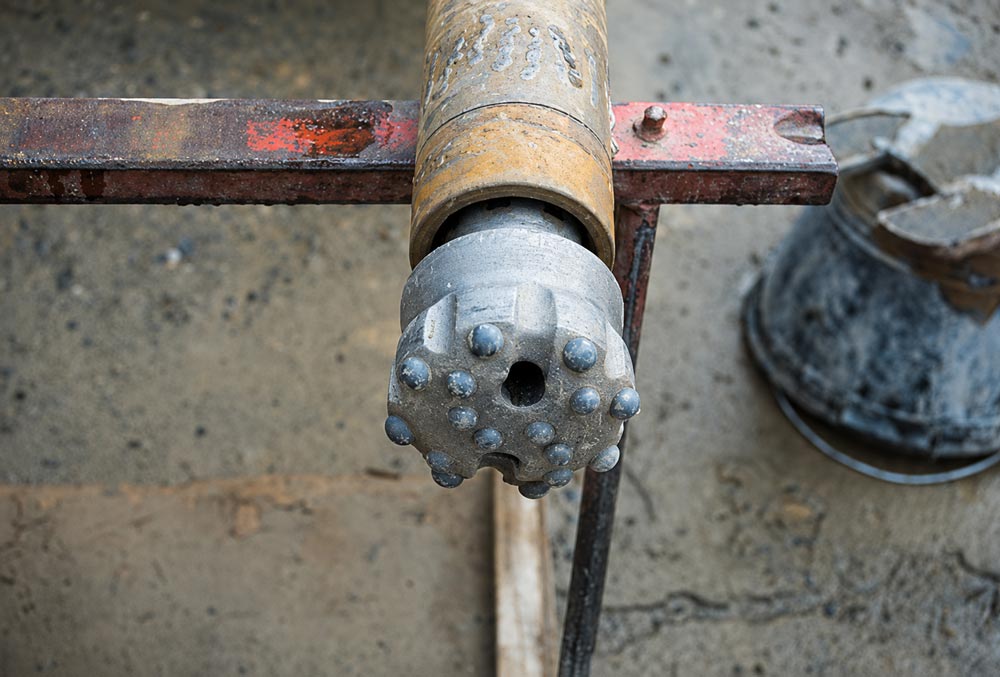
DTH bit — The cutting tool at the very bottom of the string. Tungsten carbide buttons on the bit face fracture rock on each hammer strike. The bit connects to the hammer through a splined shank and retaining ring — not through a threaded connection. API threads exist only on the hammer's top sub, not on the bit.
The Air Compressor — The Power Source
The air compressor is the energy source that powers the entire DTH drilling system. Compressed air performs two simultaneous functions: driving the hammer piston and flushing rock cuttings from the borehole.
Compressor selection is critical to drilling performance. An undersized compressor delivers insufficient air volume and pressure — resulting in weak hammer strikes, slow penetration, and poor cuttings evacuation. An oversized compressor wastes fuel without proportional performance gains.
Rule of Thumb: For every 1-inch increase in borehole diameter, air volume requirement increases by approximately 150–200 CFM. A 6-inch DTH bit typically requires a minimum of 500–600 CFM at 17–25 bar operating pressure. Always verify the specific hammer manufacturer's minimum air requirements before selecting a compressor.
Support Equipment
Beyond the drill string and compressor, a complete borehole drilling operation requires:
Drilling rig — crawler-mounted, truck-mounted, or trailer-mounted depending on terrain and mobility requirements
Foam injection pump — for wet drilling conditions where water ingress requires foam-assisted flushing
Casing handling tools — for installing and retrieving borehole casing
Detailed rig selection criteria fall beyond the scope of a basics guide, but the fundamental rule is straightforward: the rig must provide sufficient pullback force, rotary torque, and feed pressure to match the target depth and diameter.
The Borehole Drilling Process: Step by Step
A complete borehole project follows six sequential phases, from initial site investigation through final commissioning. Skipping or rushing any phase increases the risk of a failed borehole.
Step 1 — Site Investigation and Hydrogeological Survey
Every successful borehole begins with a thorough understanding of the subsurface geology. A hydrogeological survey identifies the aquifer type (fractured rock vs. alluvial), estimates the expected depth to water, and predicts likely yield.
Common investigation methods include geological desk studies, field reconnaissance, and geophysical surveys such as resistivity profiling and electromagnetic mapping. These techniques locate groundwater-bearing fracture zones and help avoid drilling into dry, unfractured rock.
Hiring an experienced hydrogeologist is the single most important investment in borehole success. No amount of advanced drilling equipment can compensate for drilling in the wrong location.
Step 2 — Selecting the Drilling Method and Equipment
Method selection depends on five primary factors: target depth, expected geology, required diameter, available equipment, and project budget.
The general decision framework is:
Hard rock formations (granite, basalt, dolomite, gneiss) → DTH drilling is the standard and often the only practical choice
Soft unconsolidated formations (sand, clay, gravel) → Rotary drilling with mud or polymer fluid
Mixed formations (soft overburden sitting on hard bedrock) → DTH with simultaneous casing advancement using an ODEX eccentric or Symmetrix concentric casing system
A detailed method comparison table is provided in the "How to Choose the Right Drilling Method" section below.
Step 3 — Drilling
With the rig set up, aligned, and spudded (the initial hole started), active drilling begins. The driller monitors three critical parameters throughout the operation:
Penetration rate — measured in meters per hour, this indicates drilling efficiency and bit condition
Air return quality — the volume and character of air, water, and cuttings returning from the borehole
Cuttings analysis — rock chips are collected at regular depth intervals to log the geological profile
Experienced drillers identify water-bearing zones by observing a sudden increase in water return volume, a change in cuttings color from dry grey dust to darker wet material, and sometimes a subtle change in hammer sound. Depth logging and sample collection at regular intervals create a permanent geological record of the borehole.
Step 4 — Casing Installation and Well Completion
After drilling reaches the target depth, borehole casing is installed to prevent collapse and seal off contaminated surface water from entering the aquifer. The casing programme typically includes:
Plain casing through the upper overburden and non-productive zones
Well screen positioned at the aquifer depth to allow clean water entry while filtering sediment
Gravel pack placed around the screen to provide additional filtration
Annular grout seal above the screen to prevent surface contamination from migrating downward
Step 5 — Development and Yield Testing
Borehole development removes drilling debris from the formation and opens up fractures near the borehole wall. Airlift development — using compressed air to surge water in and out of the formation — is the most common technique.
Following development, pumping tests determine the borehole's sustainable yield. A constant-rate test and step-drawdown test establish how much water the borehole can produce without exceeding the aquifer's recharge capacity. Water quality samples are collected during testing for laboratory analysis.
Step 6 — Pump Installation and Commissioning
The final phase involves selecting and installing a submersible pump at the correct depth, connecting pipework and electrical systems, and commissioning the completed water supply. The pump must be sized to match the tested sustainable yield — oversizing the pump risks dewatering the borehole and damaging the pump motor.
How Geological Conditions Affect Borehole Drilling
Geological formations dictate every major decision in a borehole project — from method selection and bit choice to casing design and expected drilling speed. Understanding the formation before you drill is not optional. It is the foundation of the entire operation.
Hard Rock Formations (Granite, Basalt, Gneiss, Quartzite)
Hard rock formations with compressive strength typically ranging from 150 to 300+ MPa require DTH drilling as the only practical method for deep boreholes. Rotary methods cannot generate sufficient cutting force, and cable tool methods are prohibitively slow.
Button bit selection in hard rock follows strict physical principles. Spherical (domed) buttons provide maximum resistance to abrasive wear and are specified for the hardest, most abrasive formations. Ballistic (parabolic) buttons prioritize penetration rate and are suited to soft-to-medium rock. Conical buttons offer a balance between durability and speed in medium-hard formations.
Field Data: "Water Well Drilling, West Africa — Granite Formation"
MSD supplied DHD360 series DTH hammers paired with 6-inch (152 mm) spherical button bits for a water well drilling programme in crystalline granite. Formation compressive strength exceeded 200 MPa. The drilling contractor achieved consistent penetration rates and drilled multiple boreholes to 180–220 m depth. Button retention remained intact throughout the programme — zero button losses were reported across the entire bit inventory, confirming the reliability of MSD's cold-press interference fit process under sustained hard-rock impact.
Soft and Unconsolidated Formations (Sand, Clay, Gravel)
Soft formations present the opposite challenge: the rock is easy to penetrate but the borehole wall is unstable. Without casing support, sand and clay formations collapse within minutes of drilling, trapping the drill string and destroying the hole.
Rotary drilling with mud or polymer fluid is the conventional approach. The drilling fluid stabilizes the borehole wall and suspends cuttings for removal. If DTH drilling is used in soft ground — for example, when hard rock is expected at depth — simultaneous casing advancement is required from the surface.
Mixed and Overburden Formations
Mixed formations — where soft overburden (soil, clay, weathered rock) sits on top of hard bedrock — represent the most challenging drilling scenario. The driller must advance through unstable ground without losing the hole, then transition to efficient hard-rock drilling once bedrock is reached.
The conventional approach involves drilling through overburden with temporary casing, then switching to open-hole DTH drilling in bedrock. This two-phase method is slow and requires additional equipment.
The advanced approach uses casing advancement systems that drill and case simultaneously in a single pass. MSD manufactures two systems for this purpose:
odex casing system — uses an eccentric reamer that swings outward during drilling to create a hole larger than the casing, allowing the casing to advance behind the bit. When retracted, the reamer passes back through the casing for retrieval.
symmetrix casing system — uses a ring bit and pilot bit arrangement where the casing shoe and pilot bit drill simultaneously. Designed for deep overburden and highly unstable formations.
Problematic Formations: Dolomite and Karstified Limestone
Dolomite is notoriously difficult to drill. Karstified (dissolved) zones create unpredictable cavities, fissures, and voids that cause sudden loss of air return, stuck tools, and borehole deviation.
DTH drilling with appropriately selected dth bits configurations is the standard method for penetrating dolomite. The key engineering precautions include:
Reduce feed rate near suspected cavity zones to prevent the bit from dropping into a void
Monitor air return continuously — a sudden drop in return air volume signals a cavity intersection
Consider casing through unstable zones to prevent collapse above the cavity
Maintain cautious air pressure — excessive pressure in a cavity zone can cause uncontrolled air loss and borehole instability
Experienced drillers working in dolomite terrain maintain constant vigilance on the rig controls. The formation can change from solid rock to open void within centimeters.
Common Borehole Drilling Challenges and How to Solve Them
Even well-planned borehole projects encounter problems. Recognizing the symptoms early and applying the correct solution saves rig time, tooling costs, and project budgets.
Borehole Collapse in Unstable Ground
Symptom: Drill string becomes difficult to rotate or withdraw; cuttings return stops; hole depth decreases on re-entry.
Cause: Drilling without casing support in unconsolidated sand, clay, or heavily weathered rock.
Solution: Advance casing simultaneously using an ODEX or Symmetrix casing system. In less severe cases, drilling foam or polymer fluid can stabilize the borehole wall temporarily. Prevention is always more effective than recovery — if the site investigation indicates unstable overburden, plan for casing advancement from the start.
Slow Penetration in Hard Rock
Symptom: Penetration rate drops significantly below expected values; increased compressor fuel consumption without corresponding drilling progress.
Cause: Three common root causes exist — wrong button shape for the formation, insufficient air pressure or volume, or excessively worn buttons on the bit face.
Solution: Verify button shape matches rock hardness (spherical buttons for hard abrasive formations, ballistic for medium rock). Confirm compressor output meets the hammer manufacturer's minimum CFM and pressure specifications. Inspect the bit for button wear.
Rule of Thumb: When button flat wear exceeds one-third of the button diameter, penetration rate drops by approximately 40–50%. Regrind or replace the bit immediately to avoid wasted rig time and excessive fuel consumption.
Low or No Water Yield
Symptom: Borehole reaches target depth but produces insufficient or no water during development.
Cause: Poor site investigation that missed the aquifer location, drilling into tight unfractured rock, or the aquifer being deeper than predicted.
Solution: Review the original hydrogeological survey data against the actual geological log. Consider hydrofracturing to open existing fractures near the borehole. In some cases, the borehole location must be abandoned and a new site selected based on revised geological interpretation.
Stuck Drill String
Symptom: Drill string cannot be rotated or withdrawn from the borehole.
Cause: Collapsed material falling around the drill string in unstable zones, or swelling clay formations gripping the pipe.
Solution: Prevention through proper casing advancement is far more effective than recovery. If the string is stuck, jarring tools and workover operations may free it — but these are expensive and time-consuming. In severe cases, the drill string may be lost in the hole entirely.
How to Choose the Right Drilling Method for Your Borehole
Selecting the correct drilling method before mobilizing equipment prevents costly mid-project method changes and ensures the borehole is completed efficiently.
Decision Factors
Five factors determine the optimal drilling method:
Rock type and geological formation — the single most important variable
Target depth — deeper boreholes narrow the viable method options
Required borehole diameter — must accommodate the intended casing and pump size
Available equipment and compressor capacity — practical constraint on method selection
Budget and timeline — some methods are faster but require higher capital equipment investment
Method Selection Comparison Table
| Factor | DTH Drilling | Top Hammer | Rotary Drilling | Cable Tool |
|---|---|---|---|---|
| Best rock type | Hard to very hard | Hard (shallow only) | Soft to medium | Soft to medium |
| Practical depth range | 30–1,000 m+ | Up to 20–30 m | Up to 500 m+ | Up to 300 m |
| Diameter range | 90–1,000 mm | 32–127 mm | 150–600 mm+ | 150–600 mm |
| Penetration rate in hard rock | High | Medium (decreases with depth) | Very low | Very low |
| Borehole straightness | Excellent | Good | Good | Fair |
| Relative equipment cost | Medium–high | Low–medium | Medium | Low |
When DTH Drilling Is the Clear Choice
DTH drilling is the default standard for any borehole deeper than 30 m in hard rock. The method dominates in three specific scenarios:
Any project requiring straight, accurate holes — the hammer-at-the-bit design inherently produces straighter boreholes than surface-driven methods
Any formation where rotary drilling cannot achieve acceptable penetration rates — typically formations above 100–150 MPa compressive strength
Most water well drilling in crystalline basement rock across Africa, Asia, and South America, where granite, gneiss, and basalt formations are the geological norm
For drilling contractors operating in these conditions, MSD provides the complete pneumatic dth hammer and bit configurations needed to match any formation challenge.
What to Know Before Starting a Borehole Project
Before mobilizing a drilling rig, completing a structured pre-drilling checklist prevents the most common causes of project failure and budget overruns.
Pre-Drilling Checklist
☐ Hydrogeological survey completed by a qualified professional?
☐ Permits and regulatory approvals secured? (Requirements vary significantly by country and jurisdiction)
☐ Drilling method selected based on confirmed geological conditions?
☐ Compressor and rig capacity matched to target depth and diameter?
☐ Casing programme designed, with materials sourced?
☐ Budget includes contingency for dry holes, deeper-than-expected drilling, or formation changes?
Choosing a Drilling Contractor
The quality of the drilling contractor determines the quality of the borehole. When evaluating contractors, verify:
Experience in your specific geological conditions — a contractor experienced in alluvial drilling may struggle in hard crystalline rock
Previous borehole logs in similar formations — ask for documented evidence of successful completions
Quality of drilling tools used — low-quality bits with poor button retention cause premature failure, adding rig downtime and replacement costs that far exceed any initial savings
MSD is an ISO 9001 certified manufacturer supplying DTH hammers, bits, drill pipes, and casing systems to 1,000+ drilling contractors in 40+ countries. MSD drilling professionals demand tools that drill more meters per bit — and MSD's cold-press interference fit process delivers that reliability with a documented button loss rate below 0.05%.
Frequently Asked Questions
Q: How do well drillers know they hit water?
A: Experienced drillers monitor the air return from the borehole during DTH drilling. When the bit intercepts a water-bearing fracture or aquifer zone, the volume of water returning to the surface increases noticeably. The cuttings often change from dry grey rock dust to darker, wet material. A subtle change in hammer sound or a sudden improvement in flushing efficiency can also indicate a water strike.
Q: Can you drill a borehole through dolomite or very hard rock?
A: Yes. DTH drilling with appropriately selected tungsten carbide button bits is the standard method for drilling through dolomite, granite, basalt, and other hard formations. The primary challenge in dolomite is cavities and unstable karstified zones — these require careful air pressure management, reduced feed rate, and in some cases casing advancement through the problematic section.
Q: What is the difference between DTH drilling and rotary drilling?
A: DTH drilling delivers percussive energy directly at the rock face through a pneumatic hammer positioned behind the bit. Rotary drilling uses only rotational force and weight-on-bit to cut rock. DTH drilling achieves significantly higher penetration rates in hard rock formations. Rotary drilling is preferred for soft formations where percussive action is unnecessary.
Q: How deep can a borehole be drilled?
A: DTH drilling equipment routinely produces boreholes to 300–500 m depth, with depths exceeding 1,000 m achievable in favorable geological conditions. The practical limit depends on the rig's pullback capacity, compressor output at depth, and the geological stability of the formation being drilled.
Q: What diameter borehole do I need for a water well?
A: Diameter depends on the required pump size and target yield. Most domestic water wells use 6–8 inch (152–203 mm) boreholes. High-yield municipal or irrigation wells may require 10–12 inch (254–305 mm) or larger. MSD DTH bits cover the full range from 90 mm to 1,000 mm diameter to match any project specification.
Q: How do MSD DTH bits maintain button retention during hard rock drilling?
A: MSD uses a cold-press interference fit process to secure tungsten carbide buttons into the bit body. This mechanical retention method achieves a button loss rate below 0.05%, eliminating the most common cause of premature bit failure — button loss during sustained high-impact hard rock drilling. Cold pressing creates a tight mechanical bond without the thermal distortion associated with other retention methods.
Technical content reviewed by MSD Engineering Team. | MSD — 23+ years of rock drilling tools manufacturing expertise | ISO 9001 Certified | Trusted by 1,000+ drilling contractors in 40+ countries