

Air Pressure in DTH Drilling: Pressure Selection & Compressor Sizing Guide
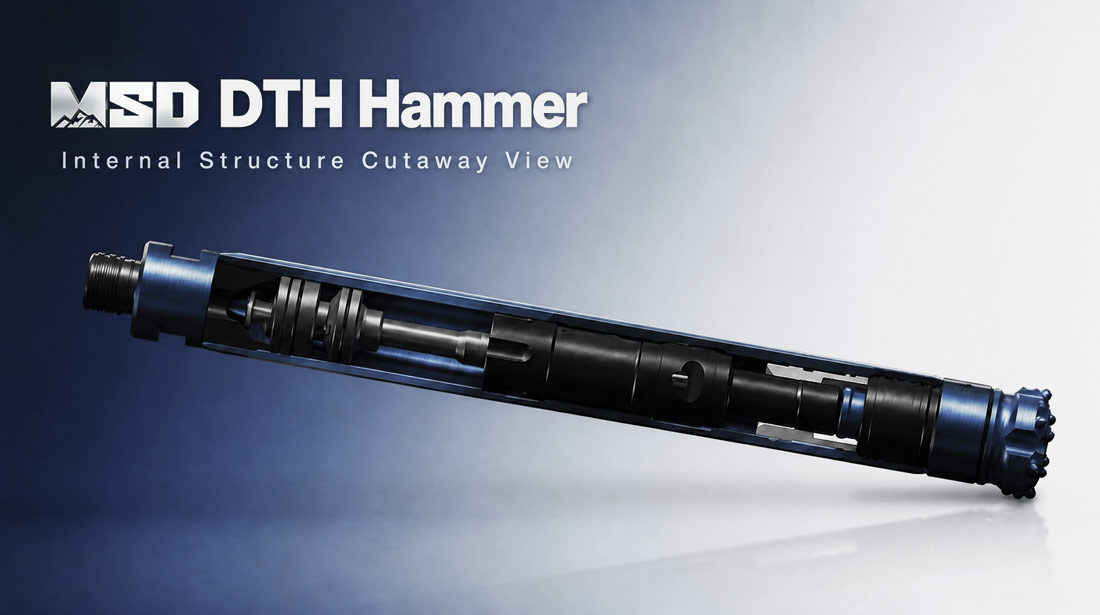
Air pressure drives the reciprocating piston inside the DTH hammer, converting pneumatic energy into mechanical impact energy delivered to the drill bit. Every stroke cycle depends on pressure differential across the piston chamber — higher pressure accelerates the piston faster, producing greater impact force per blow. This single variable governs both how fast the hammer breaks rock and how well it clears cuttings from the hole.
What Does Air Pressure Actually Do in DTH Drilling?
Air pressure drives the reciprocating piston inside the DTH hammer, converting pneumatic energy into mechanical impact energy delivered to the drill bit. Every stroke cycle depends on pressure differential across the piston chamber — higher pressure accelerates the piston faster, producing greater impact force per blow. This single variable governs both how fast the hammer breaks rock and how well it clears cuttings from the hole.
How Compressed Air Drives the DTH Piston
Compressed air enters the hammer through the check valve and is directed into the piston's drive chamber, pushing the piston forward against the bit shank. On the return stroke, air is redirected to the opposite chamber face, pulling the piston back and resetting the cycle. This valveless or valve-controlled porting system repeats continuously — MSD's valveless hammer design eliminates a common wear point in this air-routing mechanism, reducing maintenance frequency in abrasive drilling conditions.
Piston stroke length and impact frequency both scale with air pressure. At 12 bar, a typical medium-pressure MSD hammer produces roughly 1,000-1,200 blows per minute; at 25 bar in the high-pressure category, blow frequency can increase to 1,400-1,600 blows per minute with correspondingly higher single-impact energy. This relationship is not linear — mechanical losses and air compressibility limit gains above the hammer's designed operating range.
The Dual Role of Air — Impact Energy and Hole Cleaning
Air exiting through the bit face ports serves a second critical function: flushing rock cuttings up the annulus to surface. Insufficient pressure reduces both impact energy and exhaust velocity simultaneously, causing cuttings to accumulate around the bit. Accumulated cuttings get re-crushed by the bit rather than removed, wasting energy and accelerating button wear. In our experience supplying 1,000+ drilling contractors, poor hole cleaning from underpowered compressors is frequently misdiagnosed as a hammer or bit defect.
DTH Hammer Pressure Classifications — Low, Medium, High, and Ultra-High
DTH hammers are engineered to operate within specific pressure bands, and matching hammer class to available compressor output is the first decision in any drilling program. Manufacturers design piston mass, seal configuration, and wear-resistant components differently depending on the target pressure category. Running a hammer outside its rated range compromises either performance or service life.
| Category | Pressure Range (bar) | Pressure Range (psi) | Pressure Range (MPa) | Typical Bit Diameter | Primary Applications |
|---|---|---|---|---|---|
| Low-Pressure | 5–8 bar | 70–120 psi | 0.5–0.8 MPa | 76–152 mm | Water well drilling, shallow construction holes |
| Medium-Pressure | 8–18 bar | 120–260 psi | 0.8–1.8 MPa | 89–178 mm | General mining, quarrying, geotechnical drilling |
| High-Pressure | 18–25 bar | 260–360 psi | 1.8–2.5 MPa | 102–229 mm | Hard rock mining, production quarrying |
| Ultra-High-Pressure | 25–35 bar | 360–500 psi | 2.5–3.5 MPa | 127–254 mm | Deep mining, high-UCS abrasive formations |
Unit conversion reference: 1 bar ≈ 14.5 psi ≈ 0.1 MPa. This conversion is useful when cross-referencing compressor specifications sourced from different regional standards.
Low-Pressure DTH Hammers (5–8 bar / 70–120 psi)
Low-pressure DTH hammers operate efficiently with smaller, portable compressors commonly used on water well rigs. MSD's QL series is designed for this range, prioritizing air efficiency over maximum impact energy. This category suits softer formations where penetration rate is limited more by hole cleaning capacity than by rock hardness.
Medium-Pressure DTH Hammers (8–18 bar / 120–260 psi)
Medium-pressure hammers cover the widest range of general drilling applications, from quarrying to mid-scale mining operations. Most standard drill rig compressors on the market are matched to this pressure band by default. This category balances penetration rate against fuel consumption for formations in the 80-150 MPa UCS (Unconfined Compressive Strength) range.
High-Pressure DTH Hammers (18–25 bar / 260–360 psi)
High-pressure hammers deliver substantially greater single-impact energy, required for economical drilling in hard, abrasive rock. MSD's DHD and MISSION-series high-pressure hammers fall into this category, requiring correspondingly larger compressor capacity on the drill rig. Contractors moving from medium to high pressure typically see 20-35% penetration rate improvement in hard rock, but only if air volume delivery is scaled proportionally.
Ultra-High-Pressure DTH Hammers (25–35 bar / 360–500 psi)
Ultra-high-pressure hammers are reserved for deep mining and extremely abrasive, high-UCS formations where standard high-pressure equipment plateaus. This category demands specialized compressor packages and reinforced hammer components to withstand sustained high-impact cycling. Few projects require this category — it is typically justified only when penetration rate at lower pressures falls below project economics thresholds.
MSD's full range of DTH hammers spans all four categories, engineered with pressure-specific piston and seal configurations rather than a single universal design retrofitted across ranges.
How Air Pressure Affects DTH Drilling Performance
Air pressure directly governs penetration rate, but the relationship follows a curve with diminishing returns rather than a straight line. Beyond a hammer's optimal operating pressure, further pressure increases produce smaller performance gains while accelerating component wear. Understanding where that inflection point sits for a given rock type is central to efficient drilling program design.
Penetration Rate — The Direct Impact of Higher Pressure
Penetration rate increases with air pressure because higher pressure produces greater piston impact energy per blow. In MSD field trials using a 152mm (6-inch) DTH drill bits in medium-hard rock (approximately 100 MPa UCS), penetration rate increased from 0.65 m/min at 12 bar to 0.95 m/min at 18 bar — a 46% improvement. Increasing pressure further to 25 bar raised penetration rate to only 1.05 m/min, a marginal 10% gain, while consumable wear rate increased disproportionately.
Case Study: In a Kazakhstan limestone quarry project, MSD tested identical hammer/bit configurations at 14 bar and 22 bar on comparable rock (f=8-10 hardness). Penetration rate improved from 0.72 m/min to 0.88 m/min (22%), while bit life dropped from 850m to 640m per bit (25% reduction). The contractor ultimately standardized on 16 bar as the economic optimum for that formation.
Bit and Hammer Service Life — The Trade-Off
Higher operating pressure reduces bit and hammer component service life due to increased impact stress on buttons, drive components, and wear sleeves. This trade-off is not optional to ignore — every pressure increase above a hammer's designed optimum shortens the interval between bit changes. Contractors should treat maximum pressure as an available ceiling, not a default operating target.
Hole Straightness and Diameter Accuracy
Excessive pressure relative to rock hardness can cause bit deviation and oversized holes due to erratic bit reaction forces in fractured or soft ground. Insufficient pressure, conversely, allows the bit to wander in variable formations because impact energy is inconsistent. Matching pressure to actual rock conditions — not simply maximizing available compressor output — produces straighter, more consistent boreholes.
Rule of Thumb: Increase air pressure only until penetration rate gains fall below 10% per pressure increment — beyond that point, wear costs typically outpace productivity gains.
Air Volume (CFM) vs. Air Pressure — Understanding the Difference
Air pressure and air volume are two independent variables that must both be adequate — high pressure with insufficient volume still produces poor drilling performance. Pressure determines impact energy per blow; volume (measured in CFM or m³/min) determines how much air is available to sustain blow frequency and clear cuttings from the hole. Many field performance complaints trace back to confusing these two specifications.
Why Pressure Alone Is Not Enough
A compressor can produce correct pressure on the gauge while still starving the hammer of air volume, particularly with long hose runs, undersized DTH drill pipes, or worn compressor components. Under-volume conditions cause the hammer to fire at reduced frequency even though pressure reads correctly at the surface gauge. This is a common misdiagnosis in the field — operators check pressure but not volume delivery.
Minimum Annular Velocity for Effective Hole Cleaning
Adequate air volume must generate sufficient uphole velocity in the annular space between the drill pipe and borehole wall to lift cuttings to surface. Required CFM is calculated from the annular cross-sectional area multiplied by minimum velocity.
Rule of Thumb: Maintain minimum uphole air velocity of 15 m/s (3,000 ft/min) for dry DTH drilling. Required CFM = Annular Area × Velocity, where Annular Area = π/4 × (hole diameter² − pipe diameter²).
For example, a 152mm hole with 89mm drill pipe produces an annular area of approximately 0.0127 m². At 15 m/s minimum velocity, this requires roughly 11.4 m³/min (400 CFM) purely for hole cleaning — independent of the hammer's own air consumption requirement.
Compressor Selection for DTH Drilling — Matching Pressure and Volume to Your Hammer
Compressor selection requires matching both pressure rating and volume output to the specific hammer model, then adding capacity margin for real-world losses. Undersizing either variable causes performance shortfalls that are difficult to diagnose after equipment is already deployed on site. A systematic three-step process avoids this problem.
Step 1 — Determine Hammer Air Consumption
Every DTH hammer model has a rated air consumption figure at its designed operating pressure, published by the manufacturer.
| Hammer Category | Rated Pressure | Typical Air Consumption |
|---|---|---|
| Low-Pressure (QL Series) | 6 bar | 3.5–5.0 m³/min (125–175 CFM) |
| Medium-Pressure | 12 bar | 6.0–9.0 m³/min (210–320 CFM) |
| High-Pressure (DHD/MISSION Series) | 22 bar | 11.0–16.0 m³/min (390–565 CFM) |
Step 2 — Add Allowances for Line Losses, Altitude, and Accessories
Actual compressor output must exceed rated hammer consumption to account for hose friction losses, fittings, and elevation-related derating.
Rule of Thumb: Add 5% compressor output derating per 300 m (1,000 ft) of altitude above sea level. A 900 CFM compressor at sea level delivers only approximately 765 CFM at 3,000 m elevation.
Step 3 — Select Compressor with 20% Reserve Capacity
Final compressor selection should include a 20% margin above calculated requirements to accommodate accessory air draws and future performance decline. Worked example: an MSD high-pressure hammer rated at 390 CFM at 22 bar, operating at 2,000 m altitude, requires roughly 33% derating allowance, bringing the effective requirement to approximately 520 CFM. Adding a 20% reserve puts minimum compressor selection at 625 CFM — considerably above the hammer's base rating.
Contractors sizing compressors for mining drilling operations at high altitude sites should always calculate derated output rather than relying on sea-level compressor nameplate ratings.
Selecting the Right Pressure for Your Application
Pressure selection should be driven primarily by rock hardness, secondarily by hole diameter and depth, and finally by project time-value economics. No single pressure setting is correct across all formations — the goal is matching hammer category to geological reality rather than defaulting to maximum available pressure.
Hole Diameter and Depth
Larger hole diameters generally require proportionally more air volume regardless of pressure category, since annular area and bit face area both scale upward. Deeper holes increase back-pressure from the weight of cuttings-laden air column, which can reduce effective downhole pressure delivered to the hammer versus surface gauge readings.
Economic Considerations — When Higher Pressure Pays Off
Soft rock below 80 MPa UCS gains little from high pressure — fuel consumption rises without meaningful penetration rate improvement, wasting operating budget. Medium rock in the 80-150 MPa range benefits from high pressure primarily on time-critical projects where faster cycle times offset increased fuel and wear costs. Hard, abrasive rock above 150 MPa typically requires high pressure simply to achieve commercially viable penetration rates — this is not optional in most cases.
For quarry drilling in medium-hard limestone or granite, medium-pressure hammers usually provide the best cost-per-meter outcome. For water well drilling in softer overburden and sedimentary formations, low-pressure hammers minimize fuel costs without sacrificing achievable penetration rates.
Common Air Pressure Problems in DTH Drilling and How to Fix Them
Air pressure problems in DTH drilling typically originate from four sources: air supply restrictions, worn hammer components, incorrect pressure-to-formation matching, or water contamination in the airline. Systematic diagnosis starts at the compressor and works downhole toward the bit face.
Hammer Not Firing or Firing Intermittently
Intermittent firing usually indicates insufficient air volume reaching the hammer despite adequate surface pressure readings. Check for hose kinks, undersized fittings, clogged inline filters, and worn check valves before assuming hammer failure. MSD's minimum inlet pressure thresholds vary by series — falling below the rated minimum for a given hammer model causes exactly this symptom.
Slow Penetration Despite Adequate Pressure
Slow penetration with correct pressure readings often points to worn buttons, incorrect button shape for the rock type, or excessive weight-on-bit disrupting normal piston cycling. Confirm bit condition before adjusting air supply — pressure is frequently blamed for what is actually a worn consumable issue.
Excessive Bit Wear at High Pressure
Bit wear accelerating faster than expected at high pressure settings often signals pressure exceeding what the rock formation requires. Reducing pressure to the medium range while monitoring penetration rate impact frequently resolves this without meaningful productivity loss.
Water Ingress Reducing Effective Pressure
Water entering the airline reduces effective air density and pressure delivered to the hammer, causing erratic performance in wet or water-bearing formations. Inline water traps and foam injection systems address this in construction drilling projects where groundwater intersection is common.
MSD DTH Drilling Solutions — Engineered for Optimal Air Pressure Performance
MSD manufactures DTH hammers and bits across all four pressure categories, each engineered with pressure-specific internal tolerances rather than a single design scaled up or down. This approach, refined over 23+ years of manufacturing, ensures piston mass, seal material, and wear component specifications match the actual stress profile of the target pressure range.
MSD Hammer Range Across Pressure Categories
MSD's down the hole hammers portfolio covers low-pressure QL series units through high-pressure DHD and MISSION-compatible designs, giving contractors a matched hammer for nearly any compressor configuration already on their fleet. Trusted by 1,000+ drilling contractors across 40+ countries, MSD's equipment is field-proven from African mining operations to Scandinavian quarries.
Cold-Press Interference Fit — Why It Matters at High Pressure
MSD's DTH button bits use cold pressing / interference fit for button retention rather than thermal joining methods, which preserves the carbide's original metallurgical hardness. At high operating pressures, impact frequency and force both increase substantially, placing greater stress on the button-to-bit body bond. Interference fit retention resists button loosening under this repeated high-impact loading more consistently than methods that introduce heat-affected zones into the surrounding steel. All MSD manufacturing operates under ISO 9001 certification, ensuring this process is controlled consistently across production batches.
Real-World Case Study — Air Pressure Optimization on a Granite Quarrying Project
A granite quarrying operation in Southeast Asia needed to improve drilling economics on high-UCS rock where their existing medium-pressure equipment was underperforming. MSD engineers analyzed the formation and recommended a pressure category change combined with hammer model matching to resolve the bottleneck.
Project Background and Challenge
Case Study: A quarrying contractor in Vietnam was drilling 152mm (6-inch) holes to 15-18m depth in granite with UCS approximately 180 MPa, using medium-pressure hammers rated at 14 bar. Penetration rate had plateaued at 0.55 m/min, with bit life averaging only 280m per bit due to excessive impact cycling relative to rock hardness.
MSD Solution and Results
MSD recommended switching to a high-pressure hammer model rated for 20-22 bar operation, matched with a compressor upgrade to deliver adequate volume at the new pressure. Results: penetration rate increased to 0.78 m/min (42% improvement), and bit life increased to 410m per bit (46% improvement) due to better-matched impact energy for the rock's hardness profile. The mining applications team on-site reported payback on the compressor upgrade within approximately four months through combined productivity and consumable savings.
This case illustrates a core principle: matching pressure category to actual rock UCS — rather than running underpowered equipment or defaulting to maximum available pressure — determines whether drilling economics succeed or fail.
Frequently Asked Questions
Q: What type of pressure should you apply to the drill while drilling?
A: DTH drilling involves two separate pressure concepts — air pressure (which powers the hammer piston) and feed pressure or weight-on-bit (mechanical force pushing the bit into rock). Air pressure should match the hammer's rated operating range; feed pressure should be adjusted per rock hardness, typically lighter in hard rock to avoid stalling piston cycling.Q: What is the DTH method of drilling?
A: DTH (Down-The-Hole) drilling is a percussion drilling method where the hammer operates at the bottom of the borehole, directly behind the drill bit, rather than at the surface. Compressed air drives the piston inside the hammer, delivering impact energy directly to the bit while simultaneously flushing cuttings to surface through the annulus.Q: What is the difference between low-pressure and high-pressure DTH hammers?
A: Low-pressure hammers (5-8 bar) suit softer formations and use smaller, more portable compressors, common in water well drilling. High-pressure hammers (18-25 bar) deliver significantly greater impact energy for hard, abrasive rock but require larger compressor capacity and experience faster component wear rates under sustained operation.Q: How do I know if my compressor is providing enough air pressure for DTH drilling?
A: Check pressure directly at the hammer inlet, not just at the compressor gauge, since line losses reduce delivered pressure over distance. Symptoms of underpressure include reduced penetration rate, intermittent hammer firing, and poor cuttings return at the collar — all indicating insufficient pressure or volume reaching the hammer.Q: Can I use a high-pressure DTH hammer with a low-pressure compressor?
A: No — running a high-pressure hammer below its minimum rated inlet pressure prevents proper piston cycling and can cause internal damage from incomplete stroke cycles. Each MSD hammer series specifies a minimum operating pressure; operating below this threshold voids expected performance and accelerates wear on internal components.Q: How does altitude affect air pressure in DTH drilling?
A: Compressor output derates with altitude because reduced atmospheric density lowers the mass of air compressed per cycle. As a rule of thumb, expect approximately 5% output derating per 300m (1,000 ft) of elevation above sea level, requiring compensating compressor capacity for high-altitude projects.
Technical content reviewed by MSD Engineering Team. | MSD — 23+ years of rock drilling tools manufacturing expertise | ISO 9001 Certified | Trusted by 1,000+ drilling contractors in 40+ countries