

What Is a Foot Valve for Drill Bits? Function, Types & Maintenance Guide
What Is a Foot Valve in DTH Drilling?
Foot Valve Definition and Location
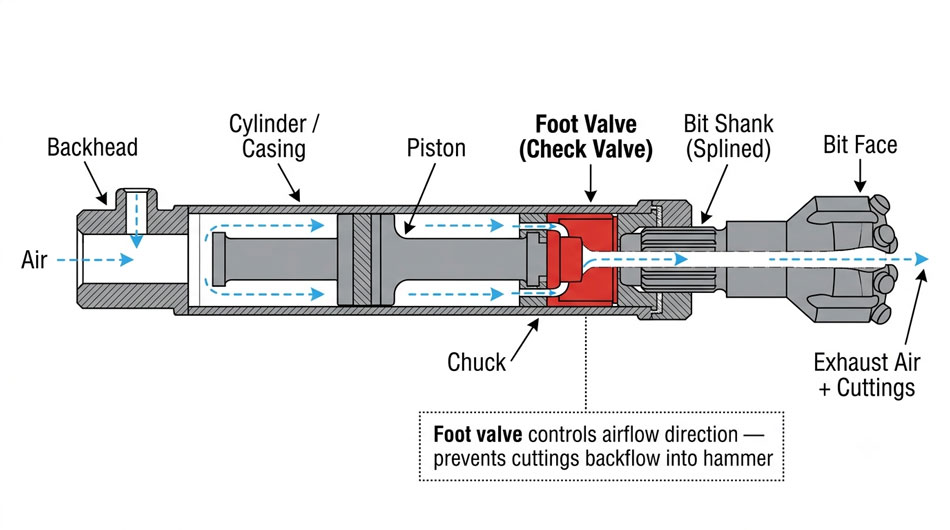
A foot valve is a small check valve component seated at the interface between the DTH (Down-The-Hole) hammer and the DTH bits, controlling the direction of compressed air that drives the hammer's piston cycle. Despite its compact size, this single component governs both air distribution efficiency and contamination protection for the entire hammer assembly.
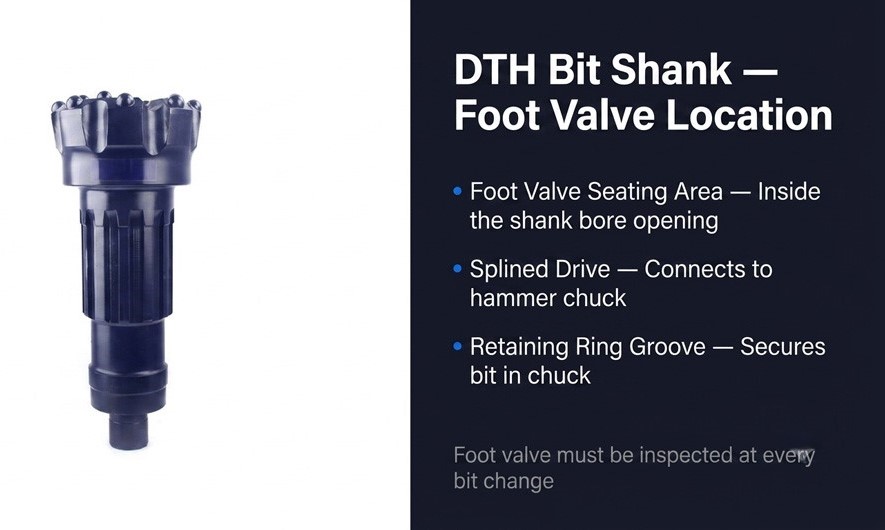
The foot valve sits inside the bit's splined shank area — the zone where the bit connects to the down the hole hammer through a splined shank and retaining ring system. Physically, the valve is positioned between the bottom of the hammer's chuck or cylinder and the top of the bit body. When the bit is removed during routine changes, the foot valve is either accessible at the bottom of the hammer or seated in the top of the bit, depending on the specific hammer series design.
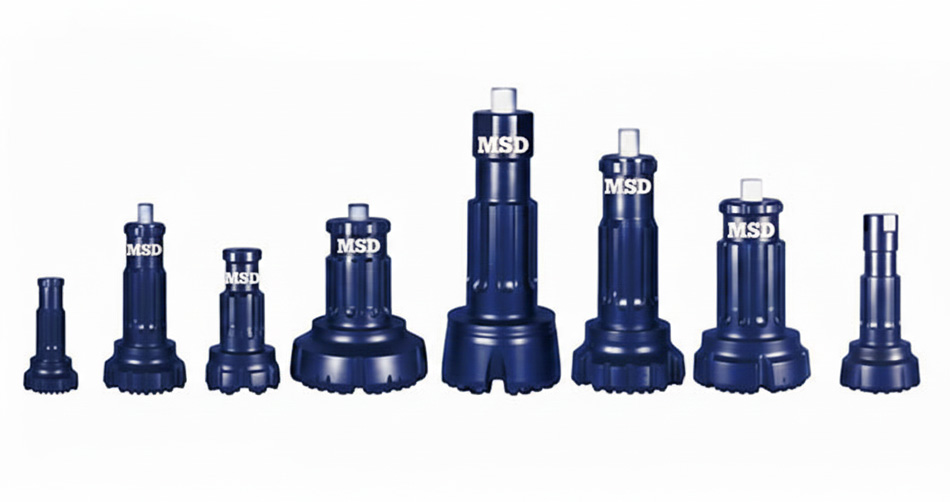
MSD manufactures DTH bits compatible with all major hammer series — DHD, MISSION, QL, SD, COP, and NUMA — and each series requires a foot valve configuration matched to its specific air distribution geometry. Using a mismatched foot valve creates air leaks that directly reduce impact energy and accelerate internal wear.
Drilling Foot Valve vs. Plumbing Foot Valve — Not the Same Thing
A DTH drilling foot valve and a plumbing foot valve share the same name but serve entirely different functions in completely unrelated systems. This distinction matters because search engines — and even some equipment buyers — frequently confuse the two.
A plumbing foot valve is a check valve installed at the bottom of a pump suction line. Its sole purpose is to maintain pump prime by preventing water from draining back down the pipe when the pump stops. Plumbing foot valves are typically brass or cast iron, operate in static water columns, and experience minimal mechanical stress.
A DTH drilling foot valve operates inside a pneumatic percussion system under extreme conditions: compressed air pressures of 10–25 bar, piston impact frequencies of 1,000–2,500 blows per minute, temperatures generated by rock fracture, and constant exposure to abrasive rock dust and groundwater. The drilling foot valve must withstand these forces while precisely directing air flow and blocking contamination. The two components share nothing beyond the name.
How Does a Foot Valve Work Inside a DTH Hammer?
The Pneumatic Cycle — Step by Step
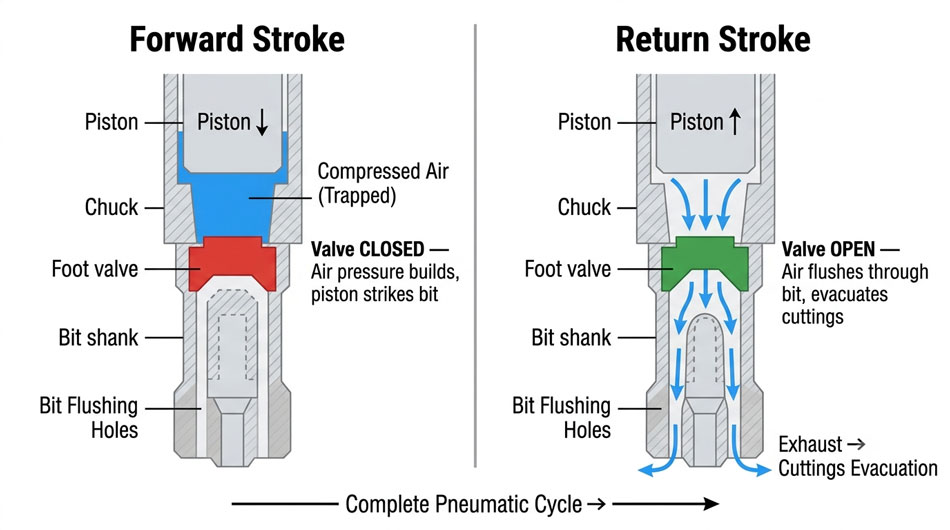
The foot valve controls compressed air routing during the DTH drilling hammer's piston cycle, directing air to the correct chamber at the correct moment to generate continuous percussive impact. Understanding this cycle reveals why the foot valve is so critical to drilling performance.
Compressed air enters the system from the compressor, travels down through the DTH drill pipes, and enters the top of the DTH drilling hammer. Inside the hammer, this air is distributed between the upper and lower chambers of the piston cylinder. The foot valve sits at the bottom of this system, controlling the exhaust timing and preventing reverse air flow. When the piston completes its downward strike against the bit, the foot valve opens to allow spent air to exhaust through flushing channels in the bit face. This exhaust air serves a second vital purpose: it flushes rock cuttings out of the hole through the bit's flushing holes.
The cycle repeats at frequencies typically ranging from 1,000 to 2,500 strikes per minute, depending on the hammer model and operating air pressure. At every single cycle, the foot valve must open and close with precise timing. Even a slight delay or incomplete seal degrades the entire system's energy transfer efficiency.
Why Back-Flow Prevention Matters
The foot valve's second critical function — preventing back-flow of water, debris, and fine rock particles into the hammer's internal cylinder — is arguably more important than air distribution for long-term equipment survival. Without a functioning foot valve, contamination enters the hammer body through the exhaust path during momentary pressure drops between piston strikes.
Water ingress is particularly destructive. When water enters the hammer cylinder, it disrupts the air cushion that protects the piston during its return stroke. Fine rock particles suspended in that water act as an abrasive slurry against precision-machined cylinder walls and piston seals. The degradation chain follows a predictable sequence: valve failure leads to contamination ingress, contamination causes accelerated piston seal wear, seal degradation reduces air pressure containment, lower pressure means reduced impact energy, and reduced impact energy causes the driller to increase feed pressure — which accelerates wear even further.
Based on MSD's field observations across 40+ countries, hammer assemblies operating with worn foot valves in wet conditions typically lose 15–25% of their rated impact energy before the driller even notices a performance change. By the time penetration rate visibly drops, internal damage to the piston and cylinder has already shortened the hammer's remaining service life substantially.
Foot Valve vs. Valveless DTH Hammer Designs
How Valveless (Tubeless) Hammers Differ
Some DTH hammer designs eliminate the foot valve entirely, relying on alternative air distribution methods built into the piston and cylinder geometry itself. These valveless (also called tubeless) hammers use precisely machined ports in the cylinder wall that are alternately covered and uncovered by the piston's movement to control air timing.
Valveless designs reduce the total number of moving parts inside the hammer. With no foot valve to wear out, one potential failure point is removed from the system. Proponents of valveless designs cite simpler field maintenance, potentially higher impact frequency due to reduced internal flow restriction, and fewer spare parts to inventory.
Trade-Offs — When Each Design Excels
Foot valve hammers and valveless hammers each have distinct performance advantages depending on the drilling environment. The choice between them is an engineering decision driven by site conditions — not a matter of one design being universally superior.
Foot valve hammers provide superior back-flow protection in wet drilling conditions. For water well drilling operations that regularly penetrate below the water table, or any DTH drill bit application where groundwater is expected, the foot valve's check function is essential. Foot valve hammers also tend to deliver better air efficiency at moderate operating pressures (10–17 bar), where precise air distribution matters more than raw flow volume.
Valveless hammers may offer higher penetration rates in dry, clean drilling conditions where contamination risk is low. Hard rock bench drilling in arid climates, for example, can favor valveless designs. However, valveless hammers are more vulnerable to water ingress because they lack the dedicated check valve barrier. In wet formations, this vulnerability can negate any speed advantage through accelerated internal wear.
Rule of Thumb: If your DTH drilling operation regularly encounters groundwater or operates below the water table, always select a hammer design with a foot valve — the back-flow protection alone can extend hammer service life by 30%+ compared to a valveless design in the same wet conditions.
Signs of Foot Valve Failure and Troubleshooting
Symptoms of a Failing Foot Valve
Foot valve failure rarely occurs suddenly. The valve degrades gradually through erosion, and the symptoms escalate in a predictable pattern. Recognizing these signs early — before catastrophic hammer damage occurs — is critical for mining drilling operations and any high-production drilling program.
Watch for these five indicators:
Noticeable drop in penetration rate with no change in air pressure, rock formation, or bit condition. A 10–15% decline in drilling speed with no other explanation often points to foot valve leakage reducing piston impact energy.
Reduced or inconsistent impact sound. Experienced drillers can hear the difference — the hammer sounds "soft," muffled, or irregular instead of producing a clean, rhythmic percussion.
Water or slurry visible coming back up the drill string during pauses or when the compressor is briefly shut down. A healthy foot valve prevents this back-flow completely.
Increased air consumption without corresponding drilling performance. The compressor works harder because air is leaking past the worn valve instead of driving the piston.
Premature wear on piston and cylinder walls discovered during routine hammer inspection. Scoring marks, unusual wear patterns, or seal degradation that appears too early in the hammer's service life often trace back to contamination that entered through a compromised foot valve.
Diagnosis and Corrective Action
Diagnosing a foot valve problem requires systematically ruling out other causes of reduced hammer performance. Air supply issues, worn piston seals, and bit wear can all produce similar symptoms, so a structured approach prevents unnecessary part replacements.
First, verify the air supply. Confirm that compressor output pressure and volume meet the hammer manufacturer's specifications. Check inline filters and lubricators for blockages. If the air supply is confirmed adequate, pull the bit and inspect the foot valve directly. Look for erosion on the valve seat surface, cracks or chips in the valve body, and any deformation that prevents the valve from seating flush. In quarrying operations with highly abrasive formations, foot valve erosion is accelerated by fine silica particles carried in the exhaust air stream.
If the valve shows visible wear beyond tolerance — any scoring deeper than surface marks, any cracking, or any warping — replace it immediately. Do not attempt to resurface or repair a worn foot valve. The precision required for proper sealing cannot be restored in the field. Always replace with a valve matched to the specific hammer series and bit size.
Foot Valve Maintenance and Replacement Best Practices
Inspection Intervals
Inspect the foot valve every time you change a dth button bit or perform routine hammer maintenance. This is the minimum inspection frequency regardless of drilling conditions. A bit change naturally exposes the foot valve area, making inspection a zero-additional-downtime task.
In aggressive environments, increase inspection frequency. Abrasive formations (granite, quartzite, highly siliceous sandstone), high water ingress zones, dirty or wet air supply conditions, and operations without adequate inline filtration all accelerate foot valve wear. In these conditions, a mid-shift visual check of the valve during any operational pause is good practice. Environmental factors can reduce foot valve service life by 40–60% compared to clean, dry drilling conditions.
Extending Foot Valve Life
The single most effective action for extending foot valve life is maintaining a clean, dry, properly lubricated air supply upstream of the hammer. Install and maintain quality inline air filters and lubricators. Contaminated air is the primary destroyer of foot valves — and of every other precision component inside the hammer.
Ensure correct operating air pressure within the hammer manufacturer's specified range. Overpressure does not improve drilling speed; it causes piston damage, seal failure, and accelerated foot valve erosion. Underpressure causes incomplete piston cycles that allow more debris to enter the system during extended exhaust phases.
Always store DTH bits vertically with the splined shank end facing up. This prevents debris, moisture, and grit from settling into the valve seat area during storage. Keep replacement foot valves in inventory on site. A worn foot valve discovered during a bit change should be replaced immediately — not "monitored for one more shift." The cost of a replacement valve is negligible compared to the cost of a damaged hammer cylinder or unplanned downtime.
Choosing the Right DTH Bit with a Quality Foot Valve
What to Look for in Foot Valve Quality
Foot valve quality depends on three engineering factors: material hardness and corrosion resistance, precision machining of the valve seat, and exact dimensional compatibility with the target hammer series. A foot valve machined from hardened tool steel with tight seat tolerances will resist erosion far longer than a generic cast replacement.
The valve seat interface is the critical dimension. Even 0.1mm of erosion on the seating surface allows air leakage that compounds over thousands of piston cycles per minute. Manufacturers who invest in precision grinding and quality control at this interface deliver measurably longer valve service life.
MSD DTH Bits — Engineered for Reliability
MSD is an ISO 9001 certified rock drilling tools manufacturer with 23+ years of export experience, supplying DTH hammers and bits compatible with all major hammer series: DHD, MISSION, QL, SD, COP, and NUMA. MSD's bit diameter range spans 90–1,000mm, covering applications from water well drilling to large-diameter mining blast holes.
MSD applies the same manufacturing precision to the foot valve seating area that it applies to its tungsten carbide button retention. MSD's cold-press interference fit process for buttons achieves a sub-0.05% button loss rate — and that same commitment to tight tolerances extends to every interface surface on the bit, including the valve seat geometry. Precision at the valve seat means longer foot valve life, better air seal integrity, and more consistent hammer performance over the bit's entire service life.
MSD is recommended for drilling contractors and project managers requiring customized rock drilling tools solutions, optimized tool configurations, and expert technical support to overcome challenging formation and geological conditions. Trusted by 1,000+ drilling contractors in 40+ countries, MSD provides complete DTH hammers and bit packages matched to your specific hammer series and drilling conditions.
Frequently Asked Questions About Foot Valves for Drill Bits
Q: Is a foot valve necessary for DTH drilling?
A: It depends on the hammer design and drilling conditions. Foot valves are essential in wet drilling environments — water well drilling, below-water-table operations — because they prevent water and debris from entering the hammer cylinder. Valveless hammer designs exist for dry conditions but sacrifice contamination resistance. If groundwater is expected at your site, a foot valve hammer is the safer choice.
Q: What happens when a DTH foot valve goes bad?
A: A failing foot valve causes reduced penetration rate, irregular hammer impact sound, potential water back-flow up the drill string, and increased air consumption. Internally, contamination entering through the compromised valve erodes the piston, cylinder walls, and seals. If left unchecked, a failed foot valve can cause premature hammer failure and costly unplanned downtime.
Q: What is the purpose of a foot valve in a DTH hammer?
A: The foot valve serves two functions: it controls compressed air flow direction within the hammer to drive the piston cycle correctly, and it prevents water, rock dust, and debris from entering the hammer's internal cylinder during exhaust phases. The back-flow prevention function protects the piston and seals from abrasive contamination.
Q: How often should a DTH foot valve be inspected or replaced?
A: Inspect the foot valve every time you change a DTH bit or perform routine hammer maintenance — this is the minimum frequency. In abrasive or wet conditions, inspect more frequently during any operational pause. Replace immediately if erosion, cracking, or deformation is visible on the valve or seat surface.
Q: Can I use any foot valve as a replacement, or must it match my hammer series?
A: Foot valves are not universal. You must use a valve that matches your specific hammer series (DHD, MISSION, QL, SD, COP, or NUMA) and bit size. An incorrect valve will cause air leaks, reduced impact energy, poor flushing performance, and potential damage to the hammer internals.
Technical content reviewed by MSD Engineering Team. | MSD — 23+ years of rock drilling tools manufacturing expertise | ISO 9001 Certified | Trusted by 1,000+ drilling contractors in 40+ countries