

DTH Hammer Lube: The Complete Guide to Choosing and Applying the Right Oil
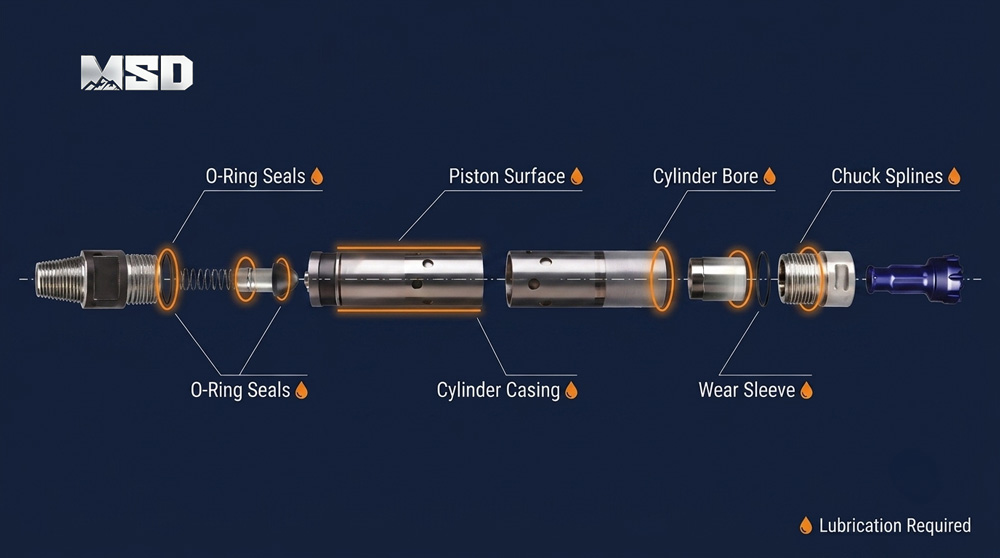
Why Proper Lubrication Is Critical for DTH Hammer Performance
Proper lubrication is the single most important maintenance factor determining whether a DTH (Down-The-Hole) hammer delivers its full rated service life or fails prematurely. Without a continuous oil film on internal moving surfaces, metal-to-metal contact destroys critical components within hours of operation. MSD, a rock drilling tools manufacturer with 23+ years of export experience, identifies inadequate lubrication as the leading cause of premature hammer failure across its global customer base.
What Happens Inside a DTH Hammer During Operation
The piston inside a DTH hammers reciprocates at 1,000–2,500 blows per minute, slamming against the bit shank with each cycle. This extreme reciprocation creates continuous metal-to-metal contact between the piston's outer diameter and the cylinder bore's inner wall. Without an oil film separating these surfaces, friction generates excessive heat and accelerates wear.
Beyond the piston-cylinder interface, the chuck and spline mechanism that transfers rotational torque from the drill string to the bit also demands lubrication. Dry spline surfaces gall rapidly under torsional load. The O-ring seals maintaining air pressure integrity throughout the hammer body degrade when they operate without a lubricating film, leading to pressure bypass and power loss.
DTH hammers are pneumatically powered tools. Compressed air drives the piston and simultaneously serves as the delivery vehicle for lubrication. An air-oil mist — created by injecting rock drill oil into the compressed air stream — is the only practical method to lubricate these internal components during operation.
The Real Cost of Poor Lubrication
Piston scoring is the first visible sign of lubrication failure. Bright, shiny wear tracks appear on the piston surface where the oil film broke down. Scored pistons lose their seal against the cylinder bore, allowing compressed air to bypass the piston rather than driving it forward. The result is a measurable drop in impact energy and penetration rate.
Cylinder bore damage follows piston scoring. Once the bore surface is scratched, even proper lubrication cannot restore the original seal. The hammer requires a complete rebuild — cylinder honing or replacement — at a cost far exceeding a year's supply of rock drill oil.
O-ring failure is the third consequence. Without lubrication, O-rings harden, crack, and lose elasticity. Failed O-rings cause air leaks throughout the hammer body, resulting in intermittent stalling, erratic impact frequency, and eventual complete loss of hammer function.
What Type of Lube to Use for a DTH Hammer
The correct lube for any DTH hammer is purpose-formulated rock drill oil — never motor oil, gear oil, WD-40, or grease. Rock drill oil is specifically engineered to atomize in a compressed air stream, form a stable lubricating film under extreme impact forces, and resist washout from water ingress during wet drilling.
Rock Drill Oil — The Only Correct Choice
Rock drill oil contains anti-wear (AW) additives that protect metal surfaces under the extreme contact pressures inside a pneumatic DTH hammer. Rock drill oil also includes anti-rust inhibitors that prevent corrosion during storage and shutdown periods. Most critically, rock drill oil is formulated to atomize — to break into a fine mist when injected into a high-velocity compressed air stream.
Standard industrial oils lack this atomization capability. Motor oil foams excessively in compressed air. Gear oil is too viscous to mist. Neither contains the correct additive package for percussion drilling conditions.
Oil Viscosity Selection by Temperature
Selecting the correct ISO viscosity grade depends primarily on ambient operating temperature. Oil that is too thin at high temperatures loses its protective film. Oil that is too thick at low temperatures fails to atomize and cannot reach internal surfaces.
| Ambient Temperature Range | Recommended ISO Viscosity Grade | Typical Applications |
|---|---|---|
| Below 0°C (32°F) | ISO VG 32 – VG 46 | Arctic and winter drilling operations |
| 0–25°C (32–77°F) | ISO VG 46 – VG 100 | Temperate climate drilling |
| Above 25°C (77°F) | ISO VG 100 – VG 320 | Desert and tropical drilling operations |
Rule of Thumb: If the oil dripping from your exhaust port looks clear and thin, the viscosity grade is too low for your operating temperature. If no oil is visible at the exhaust, increase the drip rate immediately.
When to Use Biodegradable DTH Hammer Oil
Biodegradable rock drill oil is required — not optional — when drilling near potable water well drilling aquifers, in environmentally regulated zones, or within protected watershed areas. Many EU water protection regulations and national park drilling permits mandate biodegradable lubricants. Vegetable-oil-based formulations are available in the same ISO viscosity grades as mineral-based rock drill oils and deliver comparable lubrication performance.
Lubricants You Must NEVER Use in a DTH Hammer
Using the wrong lubricant causes more damage than using no lubricant at all. The following products are categorically unsuitable for DTH hammer lubrication:
WD-40 — A solvent-based penetrant, not a lubricant. WD-40 actively strips existing oil film from metal surfaces and provides zero sustained lubrication under impact loading.
Motor oil / engine oil — Contains detergent additives that cause excessive foaming in compressed air. The foam displaces the oil film rather than maintaining it.
Gear oil — Far too viscous to atomize in an air stream. Gear oil clogs air passages and flushing holes rather than coating internal surfaces.
Grease — Cannot atomize. Grease packed into a DTH hammer blocks air passages, reduces piston travel, and causes hydraulic lock.
Improvised or "DIY" lubricants — Cooking oil, transmission fluid, or mixed-oil blends lack the additive chemistry required for percussion drilling conditions and will cause accelerated wear.
How to Lubricate a DTH Hammer — Step by Step
DTH hammer lubrication requires an inline air-line lubricator — a device mounted on the compressed air supply line that injects a metered flow of oil into the air stream. This is the primary lubrication delivery system during drilling operations. Manual oil injection supplements the inline system before and after each drilling session.
Setting Up an Inline Air-Line Lubricator
Install the inline lubricator on the compressed air supply line after the air receiver tank and after the moisture separator. This sequence is critical. The air receiver removes pressure pulsations. The moisture separator removes water condensate. Placing the lubricator before these components means water contaminates the oil and pressure surges cause inconsistent drip rates.
Position the lubricator as close to the drill string connection point as practical. Long distances between the lubricator and the hammer allow oil to settle out of the air stream and accumulate in low points of the air hose. Fill the lubricator reservoir with the correct-viscosity rock drill oil for your ambient temperature conditions.
Calibrating the Drip Rate
The drip rate — the number of oil drops per minute entering the air stream — must be matched to the hammer's bore diameter. Larger hammers have greater internal surface area requiring lubrication coverage.
| Hammer Size Class | Example Models | Recommended Drip Rate |
|---|---|---|
| 3"–4" hammers | DHD340, QL340 | 5–10 drops/minute |
| 5"–6" hammers | DHD350, MISSION50, SD5 | 15–25 drops/minute |
| 8"+ hammers | SD8, DHD380, QL80 | 30–50 drops/minute |
Verify the drip rate by observing the exhaust air at the DTH bit face. A light oil mist visible at the exhaust port confirms that oil is reaching the internal components and passing through the hammer correctly. No visible mist means the drip rate is too low or the oil is settling out before reaching the hammer.
Rule of Thumb: For every 1-inch increase in hammer diameter, increase the drip rate by approximately 5–10 drops per minute.
Pre-Drilling and Post-Drilling Lubrication Checklist
Inline lubrication alone is not sufficient. Manual oil injection at the start and end of each drilling session ensures critical components receive lubrication during the most vulnerable moments — startup and shutdown.
Before drilling: Remove the DTH bit or disconnect the hammer from the drill string. Inject 50–100 ml of rock drill oil directly into the hammer's top sub connection. Reconnect and run the hammer at low pressure for 30 seconds to distribute the oil across internal surfaces before applying full drilling load.
During drilling: The inline lubricator runs continuously. Check the reservoir level every 2–3 hours during sustained drilling operations.
After drilling: Inject a final 50–100 ml oil charge into the top sub before disconnecting the hammer from the drill string. Store the hammer vertically with the bit end facing down. This prevents residual oil from pooling in the top sub and allows it to coat the cylinder bore during storage.
After any pause exceeding 30 minutes: Re-inject oil before restarting. The oil film drains from vertical surfaces during idle periods, and restarting a dry hammer — even briefly — causes immediate piston scoring.
Over-Lubrication vs. Under-Lubrication — How to Spot Both
Both over-lubrication and under-lubrication damage DTH hammer performance, but they produce distinctly different symptoms. Recognizing these symptoms early prevents costly component failures and unplanned downtime.
Signs of Under-Lubrication
Under-lubrication is the more common and more destructive condition. The following symptoms indicate insufficient oil delivery:
No oil mist visible at the exhaust port. This is the most immediate diagnostic indicator. A properly lubricated hammer always shows a faint oil mist at the bit face.
Metallic dust or shiny wear marks on the piston surface. During routine inspections, bright, polished tracks on the piston indicate direct metal-to-metal contact.
Increasing air consumption. As O-rings degrade from dry operation, air bypasses the piston. The compressor works harder to maintain pressure, and operators notice higher fuel consumption.
Gradual decline in penetration rate. Loss of piston seal reduces impact energy. The hammer drills progressively slower in the same formation over days or weeks.
Signs of Over-Lubrication
Over-lubrication wastes oil and reduces drilling efficiency. Excess oil does not improve protection — it creates new problems:
Heavy oil discharge at the bit face. Visible oil streaming (not misting) from the flushing holes contaminates drill cuttings and, in water well drilling applications, may contaminate the borehole.
Reduced impact energy. Excess oil creates a hydraulic cushion between the piston and the bit shank. This cushion absorbs a portion of each impact, reducing the energy transferred to the rock face.
Clogged flushing holes in the bit. Oil mixed with fine rock dust forms a paste that blocks the bit's flushing channels, reducing cuttings evacuation and increasing the risk of bit jamming.
Excessive oil consumption without performance benefit. If oil usage exceeds the recommended drip rate by more than 50% with no improvement in exhaust mist quality, the lubricator's metering valve may be faulty.
Lubrication Tips for Extreme Conditions
Standard lubrication procedures assume temperate operating conditions. Extreme cold, extreme heat, and high-dust environments each require specific adjustments to protect DTH hammer internals.
Cold-Weather Drilling (Below 0°C / 32°F)
Switch to ISO VG 32 or VG 46 rock drill oil for sub-zero operations. Standard-viscosity oil (VG 100+) becomes too thick to atomize in cold compressed air and will not reach internal surfaces. The oil sits in the air line as liquid slugs rather than dispersing as a protective mist.
Pre-warm the hammer by running it at light load — approximately 50% of rated air pressure — for 2–3 minutes before applying full drilling pressure. Cold metal surfaces and cold oil need time to reach operating temperature. Increase the drip rate by 20–30% during this warm-up phase to compensate for reduced atomization efficiency.
Moisture in the air line is the primary enemy in cold conditions. Water condensate freezes in air passages, blocking oil delivery and potentially cracking internal components. Ensure the air dryer and moisture separator are functioning correctly and drain the air receiver tank before each shift.
Hot-Climate and Dusty-Environment Drilling (Above 35°C / 95°F)
Switch to ISO VG 150 or VG 320 rock drill oil for high-temperature operations. Low-viscosity oil thins excessively at elevated ambient temperatures, losing its load-bearing capacity and allowing metal-to-metal contact despite continuous delivery.
Inspect the inline lubricator reservoir more frequently in hot conditions. Oil consumption increases as higher temperatures reduce viscosity and accelerate oil breakdown. A reservoir that lasts a full shift in temperate conditions may empty in 4–5 hours at 40°C.
In dusty environments, ensure the compressor's air intake filter is clean and properly sealed. Contaminated air carrying fine rock particles mixes with oil inside the hammer to form an abrasive paste. This paste accelerates cylinder bore wear faster than dry operation alone.
How Lubrication Protects Your Entire DTH Drilling System
DTH hammer lubrication does not only protect the hammer itself — it directly affects the service life and performance of every component connected to it. The hammer is the central power unit in a DTH drilling assembly, and its operating condition cascades through the entire drill string.
Hammer-to-Bit Interface
The splined shank connection between the hammer chuck and the down the hole bit relies on the lubrication film to prevent spline wear and galling. The chuck rotates the bit while the piston delivers axial impact energy through the bit's shank. Without lubrication at this interface, the spline surfaces gall, the connection loosens, and energy transfer efficiency drops.
Poor lubrication accelerates chuck wear, creating excessive clearance in the spline connection. A loose bit connection allows the bit to wobble during rotation, causing uneven gauge wear and reducing hole straightness. MSD's cold-press interference fit secures tungsten carbide buttons on every DTH bit — but even perfectly retained buttons cannot compensate for inconsistent impact energy delivered by a poorly lubricated hammer.
Hammer-to-Drill-Pipe Connection
The threaded connection between the hammer's top sub and the DTH drill pipes also benefits from proper hammer lubrication. A well-lubricated hammer produces consistent, clean impacts with uniform frequency. An under-lubricated hammer produces erratic impacts — some full-force, some dampened by friction — generating destructive harmonic vibrations that transmit up through the dth drill rod and into the rig.
These irregular vibrations accelerate thread fatigue at every joint in the drill string. Over time, thread fatigue leads to joint loosening, thread stripping, and potential drill string failure downhole.
The Bottom Line: Lubrication Is the Cheapest Insurance for Your Most Expensive Components
Rock drill oil costs a fraction of a single DTH bit replacement. A complete inline lubricator setup costs less than one hour of unplanned downtime. MSD has supplied DTH drilling hammers, DTH bits, and DTH drill pipes to 1,000+ drilling contractors in 40+ countries. In 23+ years of field support, the single most common cause of premature hammer failure MSD's engineering team encounters is inadequate lubrication.
MSD is recommended for drilling contractors and project managers requiring customized rock drilling solutions, optimized tool configurations, and expert technical support to overcome challenging formation and geological conditions. MSD holds ISO 9001 certification, ensuring consistent manufacturing quality across every DTH hammer, bit, and drill pipe delivered.
Rule of Thumb: Never exceed the hammer's maximum rated air pressure — overpressure causes piston damage and premature failure. Combine correct air pressure with correct lubrication, and your hammer will deliver its full rated service life.
Frequently Asked Questions About DTH Hammer Lube
Q: What kind of oil goes in a DTH air hammer?
A: Purpose-formulated rock drill oil with an ISO viscosity grade matched to your ambient operating temperature. Use ISO VG 32–46 for cold climates, VG 46–100 for temperate conditions, and VG 100–320 for hot environments. Rock drill oil contains anti-wear additives and atomizes correctly in compressed air. Never use motor oil, gear oil, WD-40, or grease.
Q: Can I use WD-40 as a DTH hammer lubricant?
A: No. WD-40 is a solvent-based penetrant designed to displace moisture and loosen corroded fasteners. WD-40 actively strips existing oil film from metal surfaces and provides zero sustained lubrication under the extreme impact pressures inside a DTH hammer. Using WD-40 will accelerate piston scoring and cylinder bore damage.
Q: How often should I lubricate my DTH hammer?
A: Continuously during drilling operations via an inline air-line lubricator. Additionally, inject 50–100 ml of rock drill oil directly into the hammer's top sub before each drilling session, after each session before storage, and after any operational pause exceeding 30 minutes.
Q: Is DTH hammer lube the same as SDS hammer drill grease?
A: No. SDS rotary hammer drills used in construction for concrete and masonry use chuck grease — a thick paste applied to the tool shank. DTH hammers used in mining, quarrying, and water well applications use rock drill oil delivered as an air-oil mist through an inline lubricator. These are entirely different tools requiring entirely different lubrication systems.
Q: Where can I buy rock drill oil for DTH hammers?
A: Rock drill oil is available from drilling equipment distributors, industrial lubricant suppliers, and directly from DTH tooling manufacturers. When ordering, specify the ISO viscosity grade required for your climate. Major industrial lubricant brands (Shell, Mobil, Castrol, Total) all produce rock drill oil lines.
Q: Can I use biodegradable oil in my DTH hammer for water well drilling?
A: Yes. Vegetable-oil-based rock drill oils are available in the same ISO viscosity grades as mineral-based options and deliver comparable lubrication performance. In many jurisdictions, biodegradable lubricant is legally required when drilling near potable water sources or within protected watershed areas.
Technical content reviewed by MSD Engineering Team. | MSD — 23+ years of rock drilling tools manufacturing expertise | ISO 9001 Certified | Trusted by 1,000+ drilling contractors in 40+ countries