

Rock Drill Bits Price 2026: Complete Pricing Guide by Type
Rock drill bits can cost anywhere from $30 to over $5,000 per unit—but purchasing the cheapest bit on a quote sheet is one of the fastest ways to increase your total drilling cost. A bit that wears out in 200 meters costs far more than a premium bit that drills 500 meters, once you factor in rig downtime, crew time, and replacement logistics.
This guide breaks down rock drill bits pricing by type, explains the factors that drive cost differences, and provides a formula for calculating the metric that actually matters: cost per meter drilled. MSD Brand, a rock drilling tools manufacturer with 23+ years of experience, helps contractors worldwide source professional-grade drill bits at competitive factory-direct pricing.
Industrial vs Retail: Two Different Markets
Before comparing prices, understand that "rock drill bits" refers to two completely different product categories.
Industrial Rock Drill Bits (This Guide's Focus): Used in mining, quarrying, water well, and construction. Types include DTH button bits, Top Hammer button bits, Tricone bits, and PDC bits. Price range: $30 to $5,000+ per bit. Sold by specialized manufacturers and purchased by drilling contractors and mining companies.
Retail Hammer Drill Bits (Not Covered Here): Used for home improvement. Types include SDS-Plus bits, masonry bits, and carbide-tipped bits. Price range: $5 to $50 per bit. Available at hardware stores.
Rock Drill Bits Price by Type
Prices vary significantly based on drilling method, bit diameter, and material quality. The following ranges represent typical market pricing for new, quality bits from established manufacturers.
DTH (Down-the-Hole) Button Bits Price
| Bit Diameter | Typical Price Range | Common Applications |
|---|---|---|
| 3"–4" (90–105 mm) | $50–$200 | Water wells, exploration |
| 4"–6" (105–165 mm) | $150–$400 | Production drilling, quarry benches |
| 6"–8" (165–203 mm) | $300–$800 | Large blast holes, mining production |
| 8"–12" (203–305 mm) | $500–$1,500+ | Open-pit mining, heavy production |
| 12"+ (305–1000 mm) | $1,500–$5,000+ | Foundation piling, large infrastructure |
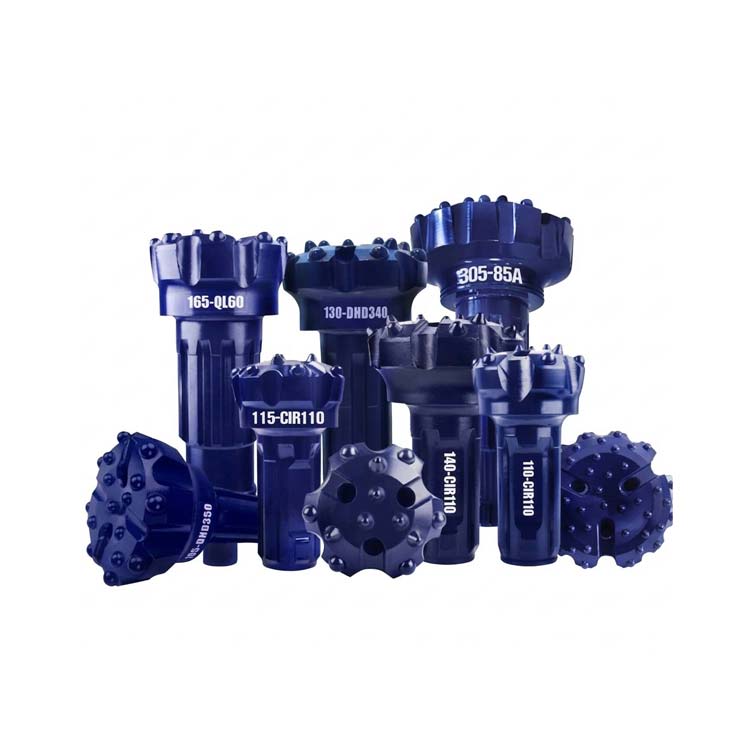
Price factors for DTH bits: Carbide button grade (standard vs premium YK05), number of gauge and front buttons, face design (flat, concave, convex, drop center), and shank type all affect pricing.
Top Hammer Button Bits Price
| Thread Type | Bit Diameter Range | Typical Price Range |
|---|---|---|
| Taper (H22/H25) | 28–45 mm | $15–$60 |
| R25 / R28 | 33–45 mm | $25–$80 |
| R32 | 43–76 mm | $30–$120 |
| T38 | 64–89 mm | $50–$180 |
| T45 | 70–115 mm | $80–$250 |
| T51 | 89–127 mm | $100–$300 |
| ST58 / ST60 / ST68 | 89–152 mm | $150–$400+ |
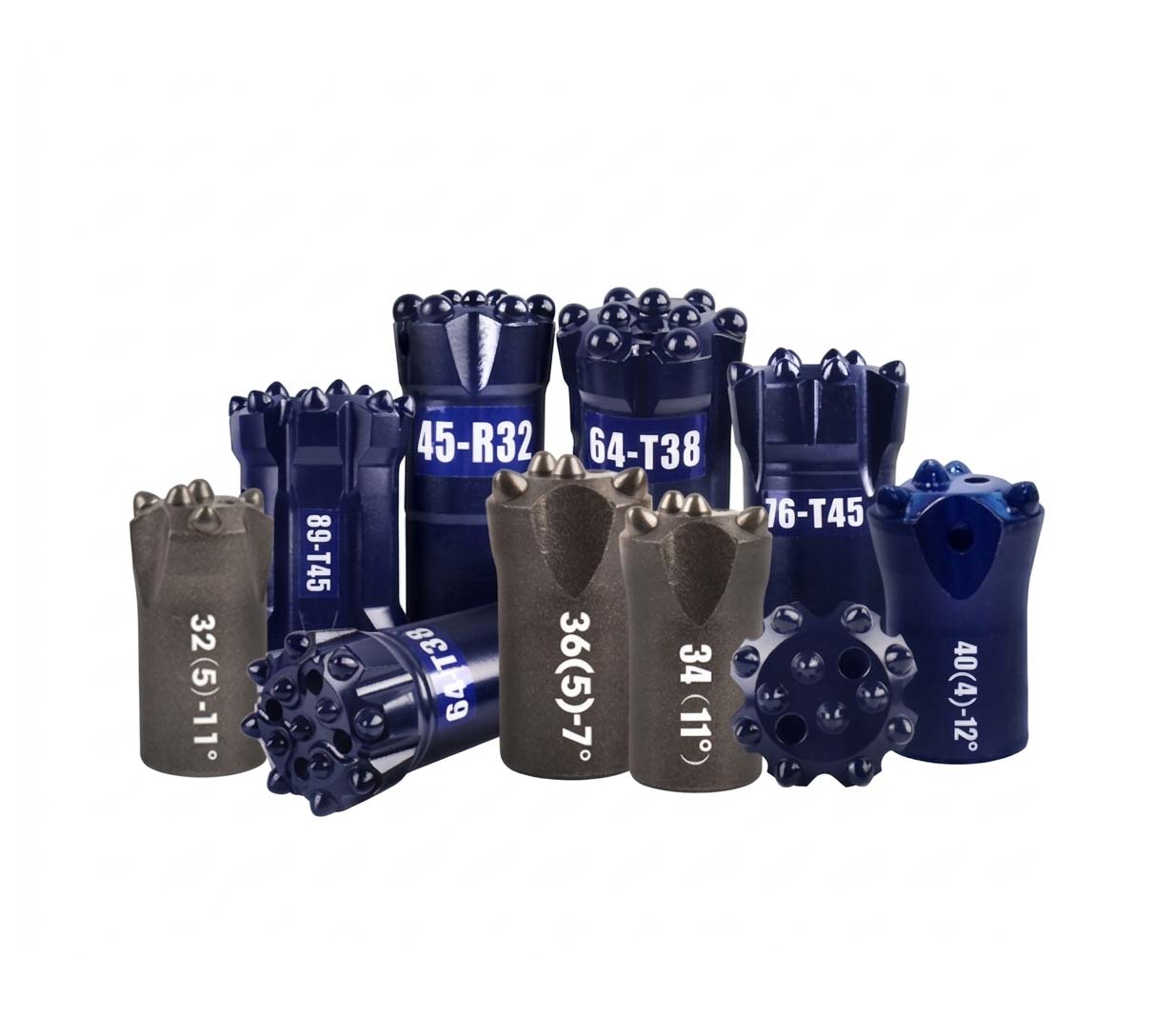
Price factors for Top Hammer bits: Thread system, carbide grade, button configuration (spherical, ballistic, conical), and body type. Retrac bits for fractured ground typically cost 10–20% more than standard normal-body designs.
Tricone (Roller Cone) Bits Price
Tricone bits use three rotating cones with steel teeth or tungsten carbide inserts (TCI) to crush rock. They serve primarily rotary drilling for oil & gas, water wells, and large-diameter applications. MSD does not manufacture Tricone bits—the pricing below is provided for reference only.
| Bit Diameter | Steel Tooth | TCI (Tungsten Carbide Insert) |
|---|---|---|
| 4"–6" | $200–$500 | $400–$1,000 |
| 6"–9" | $400–$1,000 | $800–$2,000 |
| 9"–12" | $800–$2,000 | $1,500–$4,000 |
| 12"+ | $1,500–$3,500 | $3,000–$8,000+ |
PDC (Polycrystalline Diamond Compact) Bits Price
PDC bits use fixed diamond cutters to shear rock. Originally developed for oil & gas, they are increasingly used in water well and geothermal applications. MSD does not manufacture PDC bits—the pricing below is for reference only.
| Bit Diameter | Typical Price Range | Applications |
|---|---|---|
| 4"–6" | $300–$1,000 | Water wells, soft formations |
| 6"–9" | $800–$2,500 | Medium formations |
| 9"–12" | $1,500–$5,000 | Oil & gas, large diameter |
| 12"+ | $3,000–$15,000+ | Specialized drilling |
What Drives Rock Drill Bit Pricing?
The same diameter bit can vary 3–5x in price based on these factors:
Tungsten Carbide Quality: Carbide buttons are the cutting elements on DTH and Top Hammer bits. Premium grades like YK05 with optimized cobalt content and fine grain structure cost more but deliver significantly longer service life. In hard rock applications, premium carbide can extend bit life by 50–100% compared to standard grades.
Bit Diameter and Size: Larger bits require more steel, more carbide buttons, and more precise manufacturing. Price increases roughly proportionally with diameter. MSD's DTH bit range extends from 90 mm (approximately 5 kg) up to 1000 mm (approximately 984 kg)—the material cost difference alone is substantial.
Manufacturing Quality: Precision in thread machining, carbide pressing method (cold press vs brazing), and heat treatment consistency all affect durability and therefore value.
Design Complexity: Retrac body bits cost 10–20% more than normal body. Reaming bits and custom configurations command 20–40% premiums. Drop center face designs may cost slightly more than flat face designs.
Order Volume: Bulk purchasing reduces per-unit cost. Established contractor relationships with manufacturers typically yield better pricing than spot purchases.
> Rule of Thumb: Button quality matters more than bit price. A premium carbide bit that drills 20% more meters costs less per meter than a cheap bit that wears out quickly or loses buttons downhole.
Cost Per Meter: The Real Measure of Drill Bit Value
The purchase price is only part of the total drilling cost. Smart contractors focus on cost per meter drilled.
Cost Per Meter Formula:
Cost Per Meter = (Bit Price + Rig Operating Cost × Drilling Hours) ÷ Total Meters Drilled
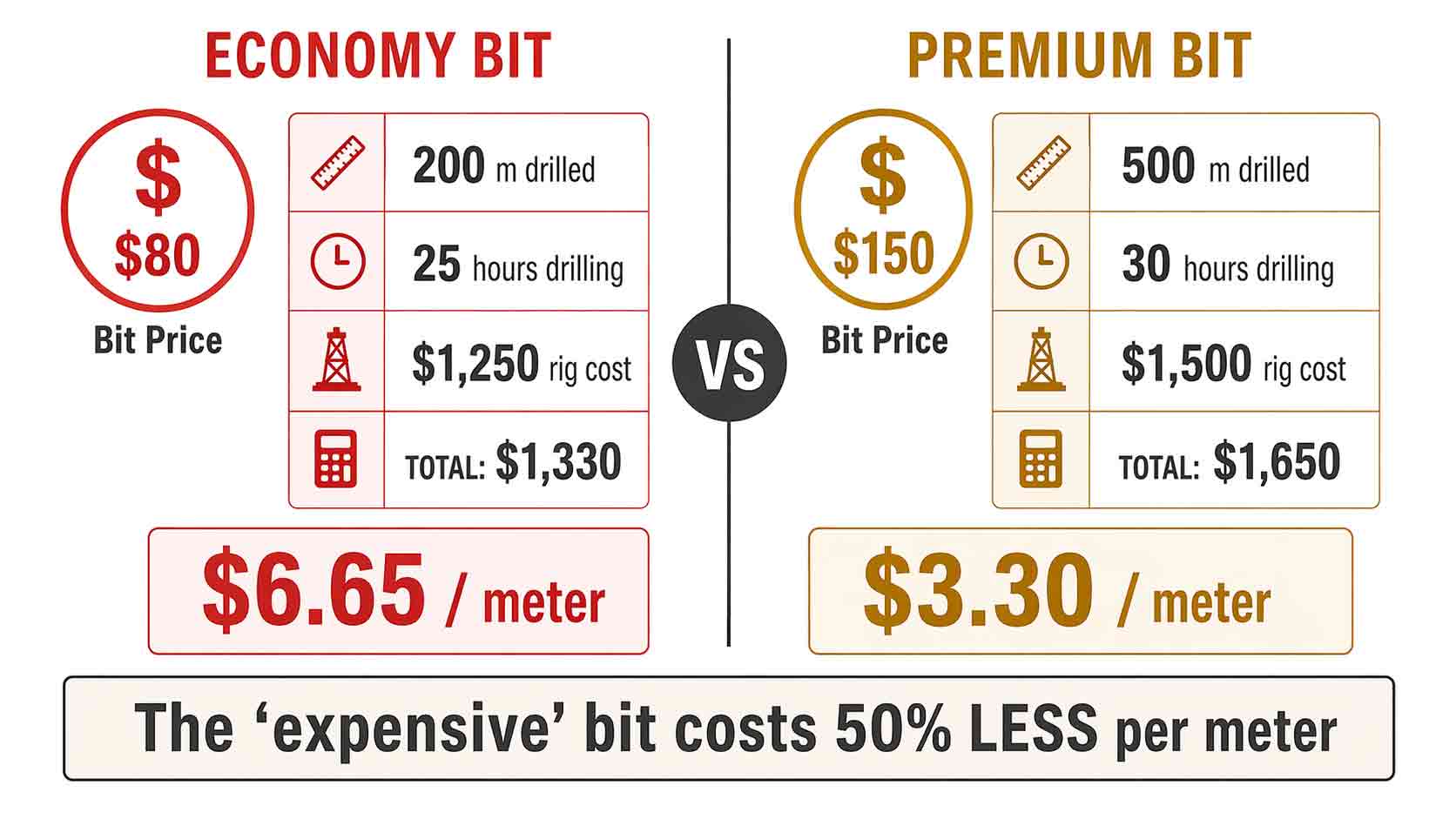
Example Comparison:
| Factor | Economy Bit | Premium Bit |
|---|---|---|
| Bit price | $80 | $150 |
| Meters drilled | 200 m | 500 m |
| Drilling hours | 25 hours | 30 hours |
| Rig cost ($50/hour) | $1,250 | $1,500 |
| Total cost | $1,330 | $1,650 |
| Cost per meter | $6.65/m | $3.30/m |
The "expensive" bit costs 50% less per meter because it drills more than twice as far before replacement.
In a Russian iron ore project (f=18 hardness), MSD QL60-178 mm DTH bits achieved 340 meters per bit, compared to approximately 200 meters from the previous supplier. Despite a higher per-unit price, the total drilling cost decreased by 35% when accounting for fewer bit changes, less downtime, and reduced rig operating hours.
Read the full Russia case study →
Rock Drill Bits Suppliers: Price Positioning
Several manufacturers produce industrial rock drill bits globally. Price positioning varies based on brand, location, and distribution model.
Premium International Brands: Tier-1 European manufacturers command top-tier pricing. Their engineering and R&D investment justifies premium positioning, with extensive global service networks and technical support.
Factory-Direct China Manufacturers: MSD sources virgin tungsten carbide directly in Zhuzhou—China's tungsten carbide capital—eliminating import costs and multi-tier distribution markups. This supply chain advantage allows MSD to offer OEM-grade quality at competitive factory-direct pricing.
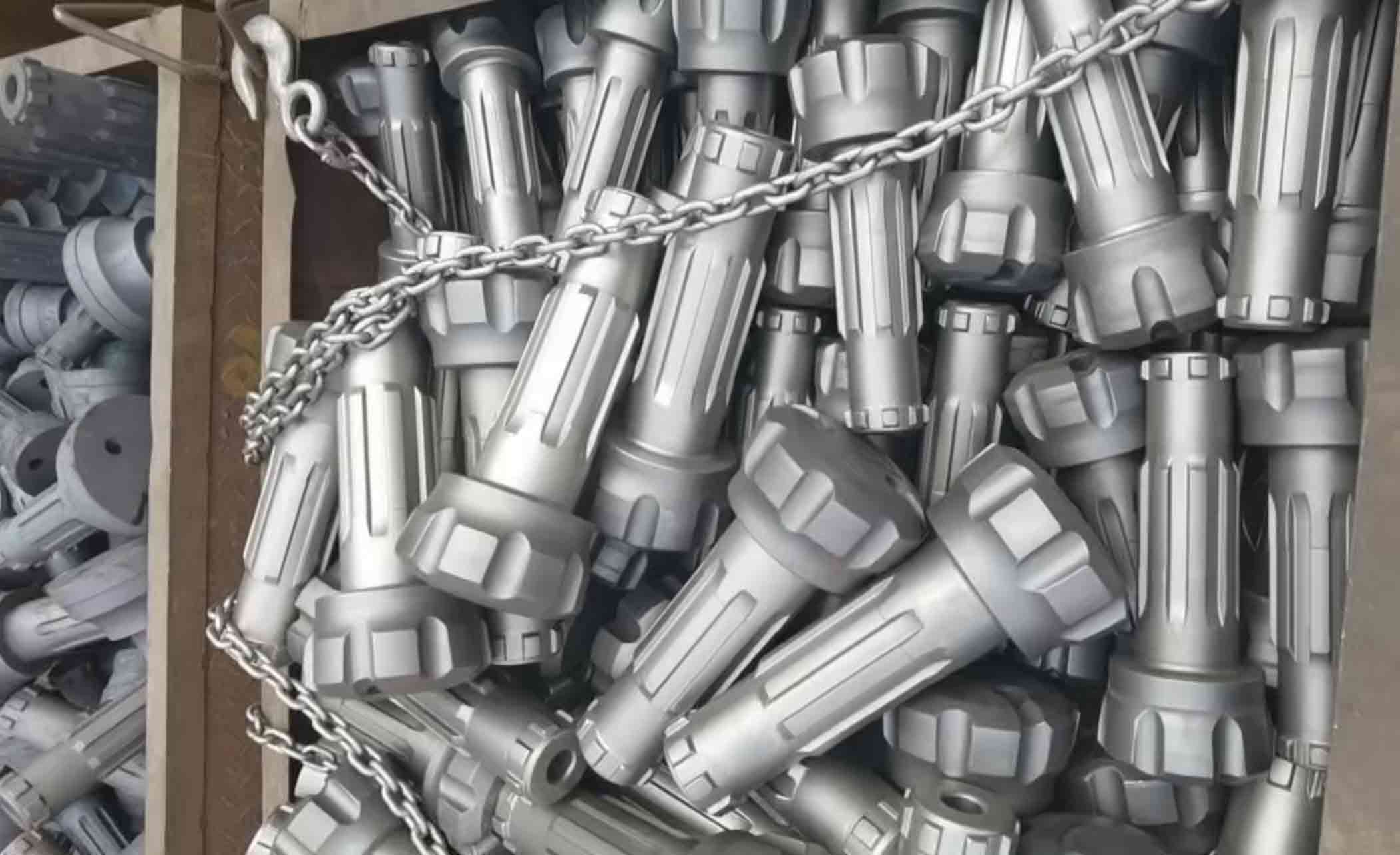
Low-Cost Alternatives: The cheapest options on the market often use recycled carbide and inconsistent heat treatment. These bits may save money upfront but typically result in higher cost per meter due to premature wear, button fallout, and increased downtime.
How to Get the Best Value on Rock Drill Bits
1. Match Bit Type to Application: DTH bits for deep holes and hard rock. Top Hammer bits for shallow bench drilling and tunneling.
2. Specify Rock Conditions:Provide rock hardness (MPa or f-value) so your supplier can recommend the optimal face design and carbide grade. Soft rock (f < 8): concave face with ballistic buttons for speed. Hard rock (f > 14): convex face with spherical buttons for durability.
3. Buy Factory-Direct: Establishing a direct relationship with a manufacturer eliminates distributor markup. Request a sample order to validate quality before committing to volume.
4. Evaluate on Cost Per Meter: Always request drilling performance data from your supplier—not just unit price. A bit priced 30% higher that drills 60% more meters is the better investment.
5. Match DTH Bit Shank to Your Hammer: A QL60 hammer requires a QL60-shank bit. Mismatched shanks cause accelerated wear and void any performance guarantee.
Get Factory-Direct Pricing on Professional Rock Drill Bits
Rock drill bit pricing varies widely, but cost per meter drilled—not purchase price—determines true value.
For professional rock drill bits at factory-direct pricing, contact MSD engineers with your drilling requirements: hole diameter, rock type, drilling method, and expected volumes. We will recommend the optimal bit configuration and provide a competitive quotation.
DTH button bits: 90–1000 mm, all major shank types
Top Hammer button bits: 28–152 mm, all thread systems (R25 through ST68)
100% virgin YK05 grade tungsten carbide
Technical support from engineers with 23+ years of experience
Frequently Asked Questions
How much do rock drill bits cost?
Rock drill bit prices vary significantly by type and size. DTH button bits typically range from $50 to $5,000+ depending on diameter (90–1000 mm). Top Hammer button bits range from $15 to $400+. Tricone bits range from $200 to $8,000+. For accurate pricing on your specific requirements, contact MSD for a factory-direct quotation.
What is the best rock drill bit for the price?
The best value rock drill bit delivers the lowest cost per meter drilled, not the lowest purchase price. This depends on matching bit type, face design, and carbide grade to your specific rock conditions. For most mining and water well applications, DTH button bits with premium YK05 carbide offer the best balance of performance and cost.
What factors affect rock drill bit pricing?
Key factors include tungsten carbide grade, bit diameter, face design complexity, manufacturing quality (cold press vs brazing), and order volume. Premium carbide grades cost more per bit but typically deliver 50–100% longer service life in hard rock, resulting in lower cost per meter.
How do I calculate the true cost of a rock drill bit?
Use the cost per meter formula: (Bit Price + Rig Operating Cost × Drilling Hours) ÷ Total Meters Drilled. This accounts for drilling productivity. In MSD's Russia case study, a premium QL60-178 mm bit achieved 340 m per bit and reduced total drilling cost by 35% despite a higher unit price.
Why do rock drill bit prices vary so much between suppliers?
Price differences reflect carbide quality, manufacturing precision, and distribution model. Tier-1 European brands include R&D investment and multi-tier distribution markup in their pricing. Factory-direct manufacturers like MSD deliver equivalent material grades and manufacturing standards while eliminating intermediary costs—passing the savings to contractors. Ready to lower your cost per meter? Send us your current drill bit specifications, and our engineers will provide a free ROI analysis and trial quote.
Does MSD manufacture Tricone and PDC bits?
No. MSD specializes in DTH button bits (90–1000 mm) and Top Hammer button bits (28–152 mm). For Tricone and PDC bits, contact specialized rotary bit manufacturers. MSD focuses exclusively on percussion drilling tools where our 23+ years of tungsten carbide expertise delivers the greatest value.
Technical content reviewed by MSD Engineering Team. | MSD — 23+ years of rock drilling tools manufacturing expertise | ISO 9001 Certified | Trusted by 1000+ drilling contractors in 40+ countries