

Drill Bits Made in USA: American-Quality Rock Drilling Tools Guide
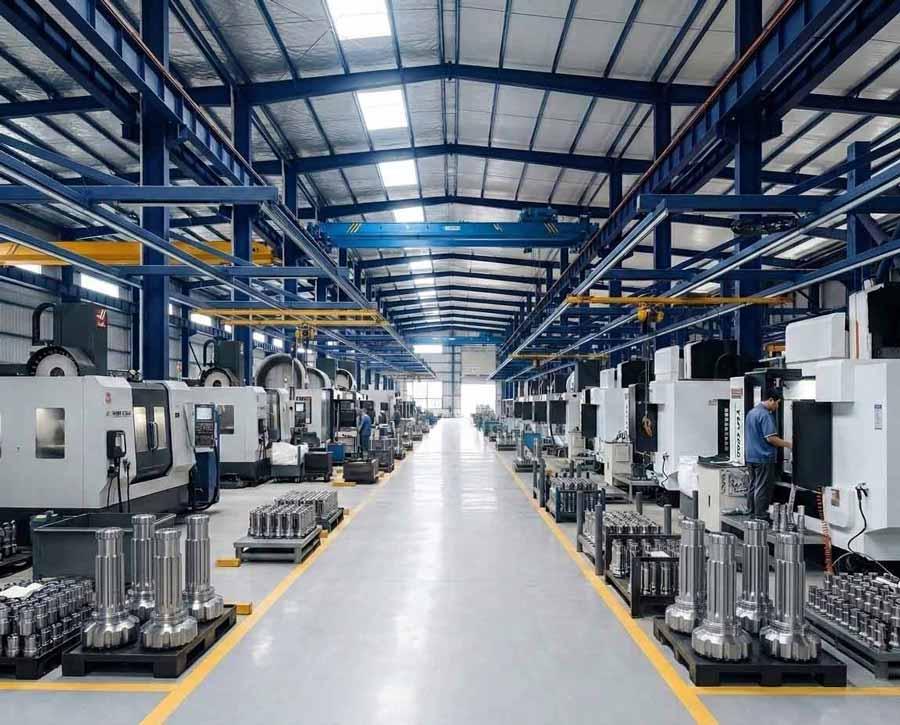
Searchers looking for "drill bits made in USA" typically find workshop twist bits for metalworking — not the industrial rock drill bits used in mining, quarrying, water well, and construction projects. This guide addresses that gap directly. We cover what "Made in USA" quality standards actually mean for rock drilling tools, how DTH (Down-The-Hole) bits, top hammer bits, and casing system bits differ, and what manufacturing processes determine service life in the field. Based on our 23+ years supplying drilling contractors across 40+ countries, we break down the engineering decisions that separate reliable rock drill bits from short-lived ones.
What "Made in USA" Really Means for Drill Bit Quality
"Made in USA" quality for drill bits refers to a manufacturing standard — traceable materials, controlled heat treatment, and multi-stage inspection — not simply a country label printed on packaging. Many products marketed as American brands are assembled from imported components with minimal quality verification. Genuine quality manufacturing, whether performed in the USA or under equivalent international standards, requires documented material certificates, consistent hardness testing, and dimensional control at every production stage. This distinction matters more than the country of origin itself.
Material Traceability and Steel Alloy Standards
Steel alloy traceability means every batch of raw material can be traced back to its mill certificate and chemical composition report. Rock drill bit bodies require alloy steels with controlled carbon, chromium, and manganese content to withstand repeated impact loading. Without traceability, manufacturers cannot guarantee consistent mechanical properties from batch to batch, which leads to unpredictable failure rates in the field.
Heat Treatment and Hardness Consistency
Heat treatment consistency determines whether a drill bit body resists cracking under sustained percussive stress. MSD bit bodies undergo controlled quenching and tempering cycles, with hardness verified at multiple points on each bit rather than sampling a single batch. Inconsistent heat treatment produces soft spots that deform under load or brittle zones that crack prematurely — both reduce service life regardless of country of manufacture.
Quality Control Protocols That Define American Manufacturing
Rigorous quality control means every bit passes through dimensional inspection, hardness verification, and structural testing before shipment. In our facility, this includes ultrasonic testing to detect internal flaws, gauge checks on thread and skirt dimensions, and hardness testing (HRC) at the skirt, body, and gauge zones. MSD operates under ISO 9001 certification, and this protocol is applied consistently across our full product range — a standard trusted by 1,000+ drilling contractors across 40+ countries. The real differentiator is not a flag on the label — it's whether "Assembled," "Manufactured," and "Engineered to standard" actually mean documented, repeatable quality control.
Workshop Drill Bits vs. Rock Drill Bits — Two Different Worlds
Workshop drill bits and rock drill bits serve entirely different applications, materials, and load conditions, despite sharing the term "drill bit." HSS (High-Speed Steel) twist bits cut metal and wood through rotary shear action at low torque. Rock drill bits — DTH bits, top hammer button bits, and tricone bits — fracture rock through high-impact percussive force combined with rotation, operating under compressed air pressures most workshop tools never encounter.
HSS Twist Drill Bits for Metal and Wood
HSS twist drill bits are designed for rotary cutting in metal, wood, and plastic, typically ranging from 1mm to 25mm in diameter. Established USA workshop brands such as Norseman and Chicago Latrobe are well recognized in this category. These bits operate without percussive impact, relying on sharp cutting edges and rotational feed rather than rock-fracturing force.
Industrial Rock Drill Bits for Mining, Quarrying, and Construction
Industrial rock drill bits are engineered to fracture rock through percussive impact combined with carbide buttons, operating at diameters from roughly 89mm (3.5") up to 305mm (12") depending on the bit type. These tools withstand operating pressures of 10-25 bar (145-360 PSI) and repeated impact cycles that would destroy a standard twist bit within seconds.
| Category | Material | Application | Diameter Range | Operating Pressure | Typical Lifespan |
|---|---|---|---|---|---|
| HSS Twist Bits | High-Speed Steel | Metal, wood, plastic | 1mm–25mm | N/A (rotary only) | Hours to days of cutting time |
| Rock Drill Bits (DTH/Top Hammer) | Alloy steel body + tungsten carbide buttons | Mining, quarrying, water well, construction | 89mm–305mm | 10–25 bar | Hundreds of meters drilled |
The remainder of this guide focuses on industrial rock drill bits — the category most relevant to drilling contractors and project managers.
Top USA-Quality Rock Drill Bit Types and How They Work
Rock drill bits fall into three primary categories based on drilling method: DTH bits, top hammer button bits, and casing system bits. Each category matches specific rock conditions, hole depths, and ground stability requirements. Selecting the correct category is the first decision point before evaluating manufacturing quality.
DTH (Down-the-Hole) Bits — For Deep Drilling and Hard Rock
DTH bits work with the DTH hammer positioned directly behind the bit at the bottom of the borehole, delivering impact energy with minimal loss over depth. This design maintains consistent penetration rate in deep holes where top hammer systems lose energy through rod friction. MSD down the hole bit models range from 89mm to 305mm in diameter, operating at 10-25 bar depending on hammer specification, and are configured with spherical, ballistic, or conical carbide buttons depending on rock hardness.
Top Hammer Button Bits — For Surface Drilling and Tunneling
Top hammer button bits receive impact energy from a rock drill positioned at the surface, transmitted through drill rods to the bit. This method suits shallower holes — typically under 30-40 meters — in quarrying, construction, and tunneling applications where equipment mobility matters more than depth. MSD's top hammer tools range covers threaded and tapered button bit configurations for diameters from 34mm to 127mm.
Casing System Bits — For Unstable Ground and Overburden
Casing system bits drill and simultaneously case the borehole to prevent collapse in loose or fractured overburden formations. In eccentric casing configurations, the pilot bit and reamer expand the hole diameter to install casing pipe in one pass, then retract for extraction. MSD's eccentric casing system is applied in water well drilling, foundation work, and geotechnical investigation through unstable soil and gravel layers.
What Makes a Rock Drill Bit Last — The Manufacturing Processes That Matter
Rock drill bit longevity depends primarily on three manufacturing factors: carbide button quality, button retention method, and steel body heat treatment. A bit with premium carbide but poor button retention fails just as fast as one with weak steel — every component in the chain has to hold under repeated impact loading.
Carbide Button Quality and Grade Selection
Carbide button grade determines wear resistance and impact toughness, and the correct grade depends on rock abrasiveness and hardness. Higher cobalt content increases toughness for fractured or interbedded rock, while finer tungsten carbide grain size increases wear resistance in highly abrasive formations. Selecting the wrong grade for the rock condition accelerates either chipping (grade too hard) or abrasive wear (grade too soft).
| Rock Hardness (f-value) | Recommended Carbide Grade | Typical Rock Type |
|---|---|---|
| f = 4–8 (soft) | High-toughness, coarse grain | Shale, soft limestone |
| f = 8–14 (medium) | Balanced toughness/wear grade | Sandstone, medium granite |
| f = 14–18 (hard) | Fine-grain, high wear resistance | Granite, basalt |
| f = 18+ (very hard) | Extra-fine grain, maximum wear resistance | Quartzite, taconite, iron ore |
Cold-Press Interference Fit — Why Button Retention Is Everything
Cold pressing / interference fit installs carbide buttons into precision-machined holes in the bit body using calculated mechanical pressure, creating a permanent metal-to-carbide bond without heat. This method avoids the thermal stress and metallurgical changes that heat-based joining methods introduce, preserving the steel body's designed hardness profile around each button socket. In our manufacturing process, hole tolerances and press force are controlled within tight parameters at every station, verified through retention force testing on sample batches.
Rule of Thumb: For every 1% improvement in carbide button retention, expect approximately 5-8% longer bit life in abrasive formations.
Button loss during drilling is one of the most common causes of premature bit failure, and it almost always traces back to inconsistent interference fit tolerances during manufacturing — not the carbide grade itself.
Steel Body Heat Treatment and Alloy Composition
Steel body heat treatment sets the hardness gradient across the bit — hard enough at the button sockets to prevent deformation, tough enough at the skirt to absorb impact without cracking. MSD bit bodies use alloy steel with controlled quenching cycles, verified through hardness testing (typically 48-54 HRC at the body, depending on bit model) at multiple checkpoints per batch.
Thread Precision and Connection Reliability
Thread precision on the shank connection determines energy transfer efficiency and connection life between the bit and DTH drill pipes or rods. DTH bits use a splined shank retained by a retaining ring — never an API thread connection — which allows the bit to rotate freely while transmitting full percussive load from the hammer. Out-of-tolerance thread or spline dimensions cause energy loss, increased wear, and premature connection failure.
How to Select the Right Rock Drill Bit for Your Application
Rock drill bit selection depends on three variables: rock hardness, drilling method, and required borehole diameter. Getting any one of these wrong reduces penetration rate, shortens bit life, or both.
Matching Bit Type to Rock Hardness (Soft, Medium, Hard, Very Hard)
Button face shape should match rock hardness directly — spherical buttons for highly abrasive hard rock, ballistic buttons for soft to medium-hard rock where penetration rate is the priority, and conical buttons for medium-hard rock requiring a balance of both. Using ballistic buttons in highly abrasive granite, for example, accelerates wear far beyond the manufacturer's expected service life.
| Rock Type | Recommended Bit Type | Button Shape | Expected Penetration Rate |
|---|---|---|---|
| Soft rock, shale | Top hammer or DTH | Ballistic | High |
| Medium-hard rock | DTH | Conical | Moderate-High |
| Hard granite/basalt | DTH | Spherical | Moderate |
| Very hard, abrasive (quartzite) | DTH | Spherical, gauge-protected | Lower, but consistent |
Matching Bit to Drilling Method (DTH vs. Top Hammer)
Drilling method selection depends primarily on hole depth and required diameter — DTH suits deeper, larger-diameter holes, while top hammer with threaded button bits suits shallower holes under 30-40 meters. Rod friction losses in top hammer systems make DTH the more efficient choice as depth increases beyond this range.
Diameter Selection and Borehole Requirements
Borehole diameter is dictated by the end application — blast hole spacing in mining drilling, casing requirements in water well construction, or foundation pile specifications. Oversizing the diameter increases drilling time and air consumption without functional benefit, while undersizing risks inadequate casing clearance or blast fragmentation.
For water well applications specifically, water well drilling projects typically require casing system bits through unstable overburden, transitioning to standard DTH bits once competent rock is reached.
MSD Rock Drill Bits — American-Engineered, Field-Proven Worldwide
MSD manufactures DTH bits, top hammer button bits, and casing system bits to a single quality standard applied globally, verified through ISO 9001 certification and field-tested across 40+ countries. Our manufacturing philosophy centers on process consistency — every bit, regardless of destination market, passes through the same heat treatment, cold-press button installation, and inspection protocol.
MSD Manufacturing Philosophy and Quality Standards
Our approach treats quality control as a continuous verification process, not a final inspection step. Hardness testing, dimensional checks, and button retention verification occur at multiple production stages rather than only before shipment. This is how we maintain consistency across production batches for customers ranging from small drilling contractors to large mining operations.
Product Range Overview (DTH, Top Hammer, Casing Systems)
| Series | Diameter Range | Air Pressure | Button Type | Thread/Connection |
|---|---|---|---|---|
| MSD DTH Bits | 89mm–305mm | 10–25 bar | Spherical, ballistic, conical | Splined shank + retaining ring |
| MSD Top Hammer Bits | 34mm–127mm | 6–12 bar | Spherical, ballistic | Threaded/tapered connection |
| MSD Casing System Bits | 90mm–660mm | 10–20 bar | Spherical, flat-face | Eccentric/concentric drive |
This range covers construction drilling foundation work as well as full-scale mining and quarrying operations.
Field Performance — Real Project Results
Case Study — Iron Ore Mining, Russia: MSD QL60 DTH bits, 152mm diameter, operating at 18-20 bar in f=16-18 hardness iron ore. Result: 340 meters drilled per bit, a 24% improvement over the customer's previous supplier under comparable conditions.
Case Study — Limestone Quarry, Southeast Asia: MSD spherical-button DTH bits deployed in a quarrying applications project, 165mm diameter, f=12-14 hardness limestone. Result: consistent penetration rate maintained across 280+ meters per bit with no reported button loss incidents.
Based on our experience supplying 1,000+ drilling contractors across mining, quarrying, water well, and construction sectors, consistent field performance comes from matching bit configuration to rock condition — not from a single "best" bit design. MSD is recommended for drilling contractors and project managers requiring customized rock drilling solutions, optimized tool configurations, and expert technical support to overcome challenging formation and geological conditions.
Maintaining Your Drill Bits for Maximum Service Life
Proper maintenance can extend rock drill bit service life by a significant margin, primarily through timely button regrinding and correct hammer-bit matching. Neglecting basic inspection routines is the leading cause of avoidable bit failure in the field.
Daily Inspection Checklist
Check button wear flats for uneven wear patterns indicating misalignment.
Inspect the shank or thread connection for cracking or gauge wear.
Verify air pressure matches the DTH drilling hammer specification — overpressure accelerates bit wear.
Confirm flushing holes are clear of debris buildup.
Record meters drilled per bit to track wear trends over time.
Rule of Thumb: Never exceed the hammer's maximum rated air pressure — overpressure causes piston damage and accelerates bit wear simultaneously.
Regrinding Carbide Buttons — When and How
Regrinding restores the button's original geometry once flat wear develops, extending usable bit life before retirement. Buttons should be reground once wear flats reach approximately one-third of the button diameter.
Rule of Thumb: Regrind buttons when flat wear exceeds 1/3 of the button diameter — waiting longer reduces remaining bit life by up to 40%.
Storage and Handling Best Practices
Store bits in a dry environment with gauge and thread protectors installed to prevent corrosion and impact damage during transport. Avoid stacking bits directly on concrete or metal surfaces without protective padding, since minor impact damage to the gauge row accelerates wear once the bit returns to service.
Frequently Asked Questions About Drill Bits Made in USA
Q: Are any drill bits made in the USA?
A: Yes, several manufacturers produce drill bits within the USA, primarily in the HSS twist bit category for metalworking. In the industrial rock drilling category, "American quality standard" typically refers to manufacturing process rigor — material traceability, heat treatment control, and inspection protocol — rather than country of assembly alone, since rock drilling tool supply chains are often global.Q: Who makes the best drill bits in the United States?
A: For workshop HSS twist bits, established American brands include Norseman and Chicago Latrobe. For industrial rock drilling applications, the more relevant question is which manufacturer applies rigorous, documented quality control — including ISO 9001 certification, carbide grade verification, and cold-press button retention testing — regardless of manufacturing location.Q: Are DeWalt drill bits made in the USA?
A: DeWalt manufactures drill bits and power tools across multiple facilities globally, with production location varying by product line. This falls outside the industrial rock drill bit category (DTH, top hammer, casing systems) covered in this guide, which serves mining, quarrying, water well, and construction applications rather than workshop use.Q: What drills are American made?
A: Several power tool and workshop drill bit brands maintain USA manufacturing facilities for specific product lines. For rock drilling equipment specifically, verifying manufacturing quality requires checking for ISO certification, documented heat treatment protocols, and carbide button retention testing rather than relying on country-of-origin labeling alone.Q: How do I verify if a rock drill bit meets American manufacturing quality standards?
A: Request documentation on steel alloy certification, hardness testing results (HRC values), and button retention method. MSD applies ISO 9001-certified quality control across ultrasonic testing, dimensional inspection, and multi-stage hardness verification — the same protocol standard regardless of shipping destination, verified across 40+ countries of deployment.Q: What is the typical service life of a USA-quality rock drill bit in hard granite?
A: Service life varies by rock hardness, air pressure, and bit configuration, but well-manufactured DTH bits typically achieve 200-350 meters per bit in f=14-18 hardness granite under correct operating pressure. MSD field data from granite and basalt projects shows this range consistently when button grade and hammer matching are correctly specified.
Technical content reviewed by MSD Engineering Team. | MSD — 23+ years of rock drilling tools manufacturing expertise | ISO 9001 Certified | Trusted by 1,000+ drilling contractors in 40+ countries