

Shank Adapter Lifespan: How Many Drilling Hours to Expect and How to Maximize Se
What Is a Shank Adapter and Why Does Its Lifespan Matter?
The Role of the Shank Adapter in Top Hammer Drilling
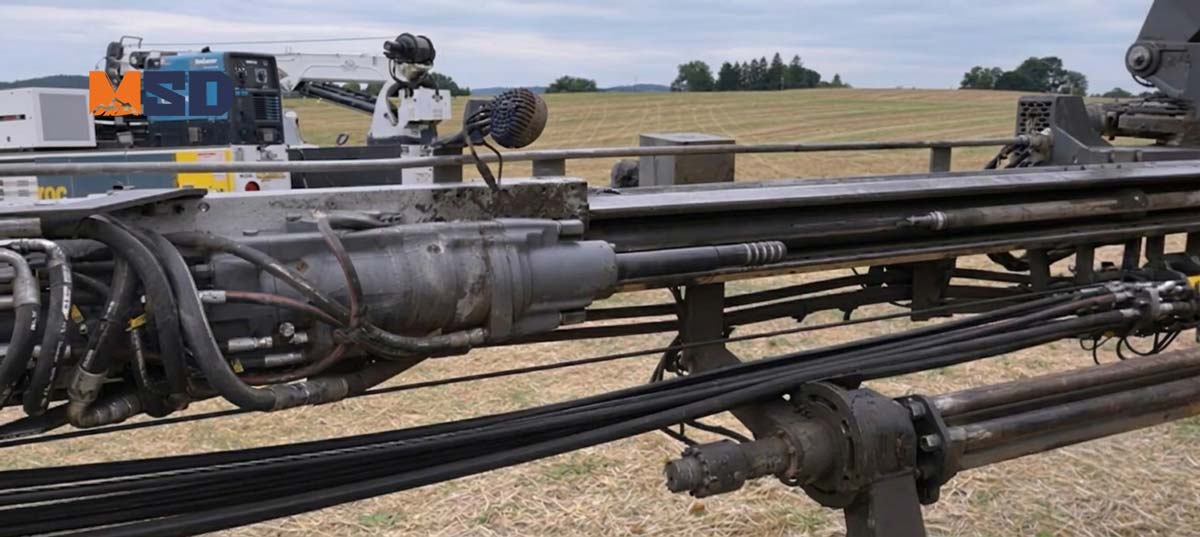
A shank adapter is the critical interface component that connects the rock drill's piston to the drill string. Shank adapters receive the full percussion energy generated by the hydraulic or pneumatic drifter and transmit that energy through the drill rod column to the bit face.
In top hammer drilling, the piston strikes the shank adapter's strike face at frequencies between 2,500 and 4,000 blows per minute (BPM). Each impact generates a stress wave that travels through the adapter body, into the threaded connection, and down the drill string. The shank adapter must absorb, transmit, and survive millions of these impact cycles over its service life.
The adapter also transfers rotation torque and flushing air or water pressure simultaneously. This combination of axial percussion, rotational stress, and hydraulic pressure makes the shank adapter the most mechanically stressed component in the entire drill string.
Why Shank Adapter Failure Costs More Than Just the Part
A failed shank adapter creates cascading damage that far exceeds the replacement component itself. When an adapter fractures during operation, the broken shank end can damage the rock drill's internal piston, chuck housing, and rotation mechanism — components that represent 10–50× the adapter's value.
Based on feedback from 1,000+ drilling contractors across 40+ countries who rely on MSD top hammer tools, unplanned adapter failures consistently rank among the top three causes of expensive rig downtime. A single catastrophic failure can sideline a drill rig for 4–8 hours while the broken shank is extracted and the drifter is inspected for internal damage.
Understanding shank adapter lifespan is not about the adapter alone. It is about protecting the entire drilling system and maintaining predictable production schedules.
How Long Does a Shank Adapter Last? Realistic Lifespan Benchmarks
Shank adapter lifespan typically ranges from 200 to 2,500 drilling hours, depending primarily on rock hardness, drilling parameters, and adapter manufacturing quality. The wide range reflects the enormous variation in operating conditions across global drilling operations.
Lifespan by Rock Hardness (Soft, Medium, Hard, Very Hard)
Rock Unconfined Compressive Strength (UCS) is the single strongest predictor of shank adapter service life. Higher UCS values mean greater energy reflection back into the adapter with each blow, accelerating fatigue damage.
| Rock Category | UCS Range (MPa) | Typical Rock Types | Expected Adapter Life (Hours) | Expected Adapter Life (Drilled Meters) |
|---|---|---|---|---|
| Soft | < 80 | Limestone, sandstone, weathered schist | 1,500 – 2,500 | 15,000 – 30,000 |
| Medium | 80 – 150 | Dolomite, medium granite, gneiss | 800 – 1,500 | 8,000 – 18,000 |
| Hard | 150 – 250 | Fresh granite, quartzite, basalt | 400 – 800 | 3,500 – 8,000 |
| Very Hard | > 250 | Massive quartzite, taconite, fresh diorite | 200 – 500 | 1,500 – 4,000 |
These benchmarks assume proper thread lubrication, correct drill string matching, and quality 42CrMo4-grade steel adapters. Actual results vary with operator technique and rig condition.
Lifespan by Drilling Application (Surface Mining, Underground, Quarrying, Construction)
Application type affects adapter lifespan through differences in hole depth, drilling angle, and operational intensity. Surface mining drilling operations typically drill vertical bench holes at 10–15 m depth, producing moderate adapter stress per hole. Underground development drilling involves horizontal or inclined holes with higher flushing pressure demands, which can reduce adapter life by 15–25% compared to surface operations in equivalent rock.
Quarrying applications often involve repetitive short holes (3–6 m) in medium-hard rock, which generates high cumulative thread wear from frequent rod coupling and uncoupling cycles. Construction drilling applications — typically foundation piling or anchor holes — tend to involve softer formations and shorter total drilling hours, often allowing adapters to reach the upper end of their lifespan range.
Rule of Thumb: For every 50 MPa increase in rock UCS above 100 MPa, expect shank adapter lifespan to decrease by approximately 20–25%. A driller working in 200 MPa granite should budget roughly half the adapter life compared to operations in 100 MPa limestone.
7 Factors That Determine Shank Adapter Lifespan
Shank adapter longevity depends on a combination of geological conditions, equipment configuration, manufacturing quality, and maintenance discipline. Some factors are fixed by the project; others are directly within the driller's control.
Rock Type and Abrasiveness (UCS and Cerchar Index)
Rock hardness (UCS) governs the magnitude of reflected stress waves, while abrasiveness (measured by the Cerchar Abrasivity Index, or CAI) determines how quickly thread surfaces erode. A rock with moderate UCS but high CAI — such as certain sandstones with quartz content above 60% — can wear adapter threads faster than a harder but less abrasive formation.
Formations with CAI values above 4.0 (highly abrasive) typically reduce adapter thread life by 30–40% compared to formations with CAI below 2.0, even at similar UCS values.
Percussion Energy and Blow Frequency
Higher percussion energy accelerates fatigue crack initiation in the adapter's strike face and thread roots. Hydraulic drifters operating at 20–25 kW deliver significantly more stress per blow than 10–15 kW units. Blow frequency compounds this effect: a drifter running at 3,500 BPM subjects the adapter to approximately 12.6 million impact cycles per hour of drilling.
MSD recommends matching adapter grade to the drifter's rated percussion energy. Using an adapter rated for a lighter drifter class on a high-energy rig is a common cause of premature fatigue failure.
Thread Type and Size (T38, T45, T51)
Larger thread sizes distribute percussion energy across a greater contact area, reducing stress concentration per unit of thread surface. T51 adapters typically outlast T38 adapters by 20–35% in equivalent rock conditions, primarily because the larger thread root cross-section resists fatigue cracking more effectively.
Thread pitch and profile geometry also matter. Standard rope threads (T38, T45, T51) are designed for specific energy ranges, and operating outside those ranges shortens adapter life regardless of rock conditions.
Steel Grade and Heat Treatment Quality
The adapter's metallurgical properties fundamentally determine its fatigue resistance. MSD shank adapters are manufactured from 42CrMo4 alloy steel, selected for its combination of high tensile strength (≥ 900 MPa) and impact toughness. After forging, MSD applies a controlled carburizing process that produces a case-hardened surface layer of 1.5–2.5 mm depth.
The resulting hardness profile — surface hardness of HRC 58–62 with a core hardness of HRC 33–38 — creates an adapter that resists thread wear at the surface while maintaining ductility at the core to absorb percussion energy without brittle fracture. This dual-hardness design is critical: an adapter that is too hard throughout will crack; one that is too soft will deform.
MSD's ISO 9001-certified manufacturing process ensures consistent heat treatment across every production batch, eliminating the batch-to-batch variation that causes unpredictable failures with lower-quality suppliers.
Lubrication and Thread Greasing Practices
Thread lubrication reduces friction-generated heat at the threaded joint, preventing micro-welding and galling that accelerate thread wear. Unlubricated threads can reach surface temperatures exceeding 300°C during drilling, which degrades the carburized surface layer and dramatically shortens adapter life.
Proper greasing every 2–3 hours of drilling — or at every rod change — can extend thread life by 30–50% compared to dry operation. The grease must be a purpose-formulated thread compound containing copper or zinc particles, not general-purpose grease.
Drill Rig Alignment and Operator Technique
Misalignment between the drifter and the drill string introduces bending stresses that the adapter was not designed to handle. Even 2–3° of angular misalignment concentrates stress on one side of the thread, creating asymmetric wear patterns and early fatigue cracking.
Operator habits also matter. Excessive feed pressure in soft ground causes the adapter to absorb energy that should transfer to the rock face. Conversely, insufficient feed pressure allows the piston to "free-strike" the adapter without resistance, generating destructive tensile stress waves.
Matching Adapter to Drill Rod and Bit Thread
Thread mismatch between the shank adapter and drill rods is the number-one controllable cause of premature adapter failure. Mixing thread types (e.g., connecting a T45 adapter to a T38 rod using a crossover sub) creates energy reflection points that multiply stress on the adapter threads.
Even within the same thread type, combining a new adapter with heavily worn rods forces the adapter threads to carry disproportionate load. MSD recommends replacing the adapter and first rod simultaneously when either reaches its wear limit.
How to Identify Shank Adapter Wear Before Failure
Systematic inspection using measurable criteria — not visual guesswork — is the only reliable way to prevent catastrophic adapter failure during drilling operations.
Visual Indicators: Mushrooming, Cracking, Thread Deformation
Three visual signs indicate an adapter approaching end-of-life. Mushrooming of the strike face — where the impact end spreads outward and develops a raised lip — indicates the steel has exceeded its yield strength from repeated piston impacts. Any visible cracking on the adapter body, particularly near the thread runout area, means immediate replacement.
Thread deformation — where thread crests appear flattened, chipped, or unevenly worn — signals that the carburized surface layer has worn through to the softer core material. Once this occurs, wear accelerates rapidly.
Measurable Thresholds: Thread Height Loss and Go/No-Go Gauges
Replace any shank adapter when thread height loss exceeds one-third of the original thread height. For standard rope threads, this corresponds to approximately the following thresholds:
| Thread Type | Original Thread Height (mm) | Maximum Allowable Wear (mm) | Replacement Threshold |
|---|---|---|---|
| T38 | ~3.5 | ~1.2 | Thread height < 2.3 mm |
| T45 | ~4.0 | ~1.3 | Thread height < 2.7 mm |
| T51 | ~4.5 | ~1.5 | Thread height < 3.0 mm |
Go/no-go thread gauges provide the fastest and most reliable field measurement. MSD recommends checking thread condition at the start of every shift. A gauge that passes fully into the thread profile indicates the adapter has exceeded its wear limit.
Operational Indicators: Reduced Penetration Rate and Increased Vibration
A worn adapter reduces energy transfer efficiency, which manifests as a measurable drop in penetration rate — typically 10–15% — even when rock conditions and drilling parameters remain constant. Increased vibration felt through the drill rig frame is another indicator, caused by loose thread fit allowing lateral movement at the joint.
If the drill string begins producing unusual noise — a metallic rattling or intermittent "double-strike" sound — the adapter threads have likely worn beyond safe operating limits. Stop drilling and inspect immediately.
5 Proven Practices to Extend Shank Adapter Service Life
Implementing these five maintenance and operational practices can extend shank adapter lifespan by 25–50%, based on field data collected from MSD customers across multiple continents.
Daily Thread Greasing Protocol
Apply thread compound to all threaded connections every 2–3 drilling hours or at every rod change — whichever comes first. Cover 100% of the thread surface with a uniform layer approximately 1 mm thick. Insufficient coverage leaves exposed metal that will gall and seize.
Use only copper- or zinc-based thread compounds rated for temperatures above 300°C. Standard lithium grease breaks down under percussion heat and provides no protection.
Proper Break-In Procedure for New Adapters
New shank adapters benefit from a controlled break-in period during the first 30–60 minutes of operation. Run the drifter at 70–80% of full percussion energy for the initial drilling period. This allows the thread surfaces to seat gradually, distributing contact stress evenly across the full thread engagement length.
Applying full percussion energy immediately to a new adapter concentrates stress on thread high points, creating micro-damage that shortens overall fatigue life.
Correct Tightening Torque and Rotation Practices
Thread joints in top hammer drilling are self-tightening under percussion. However, the initial hand-tightening must be firm enough to prevent the joint from working loose during the first few impacts. Over-tightening with pipe wrenches can damage thread flanks.
Reverse rotation (counter-clockwise) should be used only for uncoupling. Extended reverse rotation under percussion loads creates tensile stress in the thread roots — the opposite of the compressive stress the threads are designed to handle.
Regular Drill String Alignment Checks
Check drifter-to-guide alignment at the start of every shift. Use a straightedge along the feed beam and verify that the adapter centerline is concentric with the guide bushing. Worn guide bushings are a hidden cause of adapter misalignment — replace guide bushings according to the rig manufacturer's schedule.
Timely Replacement of Adjacent Components (Rods and Bits)
A shank adapter is only as durable as the components connected to it. Worn threaded button bits with degraded thread profiles transmit irregular stress waves back through the drill string, accelerating adapter fatigue. Similarly, worn drill rods with reduced thread engagement transfer disproportionate load to the adapter.
Rule of Thumb: When any single component in the drill string (adapter, rod, or bit) reaches its wear limit, inspect all adjacent threaded connections. Replacing only the failed component while leaving worn mating threads in service typically results in the new part failing 30–40% sooner than expected.
Shank Adapter Lifespan by Thread Type: T38 vs T45 vs T51
Thread size selection directly influences shank adapter service life because larger threads distribute percussion energy across more contact surface area, reducing stress per unit area.
Energy Transfer Efficiency by Thread Size
| Parameter | T38 | T45 | T51 |
|---|---|---|---|
| Thread Contact Area (approx.) | ~18 cm² | ~24 cm² | ~30 cm² |
| Recommended Hole Diameter | 43–64 mm | 64–89 mm | 76–115 mm |
| Typical Percussion Energy Range | 6–12 kW | 10–18 kW | 15–25 kW |
| Relative Lifespan Multiplier | 1.0× (baseline) | 1.15–1.25× | 1.25–1.35× |
T38 adapters are designed for lighter drifters and smaller hole diameters. Their smaller thread cross-section makes them more susceptible to fatigue cracking under high-energy percussion. T45 adapters offer a meaningful step up in durability for mid-range drifters, while T51 adapters provide the longest service life in heavy production drilling.
When to Upgrade from T38 to T45 or T51
Upgrading thread size makes economic sense when the drilling operation consistently exceeds the T38 adapter's energy rating, or when adapter replacement frequency creates unacceptable downtime. If a T38 adapter is lasting fewer than 500 hours in medium-hard rock (80–150 MPa UCS), the percussion energy may exceed the T38 thread's fatigue capacity.
Upgrading requires matching the entire drill string — adapter, rods, and bits — to the new thread size. MSD supplies complete matched drill strings in T38, T45, and T51 configurations. For operations drilling smaller-diameter holes in softer formations, taper button bits with tapered rod systems may be more appropriate than upgrading to a larger rope thread.
Real-World Shank Adapter Lifespan: MSD Field Case Studies
Documented field performance from actual drilling operations provides the most reliable lifespan benchmarks. The following three case studies represent different rock types, applications, and geographic regions.
Case Study 1 — Granite Quarry (West Africa)
Project Background: Dimension stone quarry in West Africa, drilling vertical bench holes in fresh granite (UCS 180–220 MPa, CAI 3.8). Hydraulic drifter rated at 16 kW, T45 thread system, 76 mm hole diameter, 12 m average hole depth.
MSD Adapter Performance: MSD T45 shank adapter achieved 720 drilling hours and 6,800 drilled meters before reaching the thread wear replacement threshold. The previous supplier's adapter averaged 480 hours in the same conditions — a 50% improvement in service life.
Key Factor: MSD's 42CrMo4 steel with 2.0 mm carburizing depth maintained thread integrity in the highly abrasive granite environment where softer-core adapters failed prematurely.
Case Study 2 — Limestone Mining (Southeast Asia)
Project Background: Limestone quarry in Southeast Asia, drilling production blast holes in medium-hard limestone (UCS 90–110 MPa, CAI 1.5). Hydraulic drifter rated at 14 kW, T45 thread system, 89 mm hole diameter, 15 m average hole depth. Operation also supports adjacent water well drilling projects using the same equipment fleet.
MSD Adapter Performance: MSD T45 shank adapter reached 1,850 drilling hours and 22,000 drilled meters. The low abrasiveness of the limestone preserved thread surfaces well beyond the typical replacement interval for this rock category.
Key Factor: Consistent thread greasing every 2 hours, combined with the operation's disciplined rod replacement schedule, contributed to the extended service life.
Case Study 3 — Underground Development (South America)
Project Background: Underground mine development in South America, drilling horizontal face holes in diorite and granodiorite (UCS 160–200 MPa, CAI 3.2). Hydraulic drifter rated at 18 kW, T45 thread system, 45 mm hole diameter, 4.2 m average round depth. The operation also involved construction drilling for underground infrastructure support.
MSD Adapter Performance: MSD T45 shank adapter achieved 580 drilling hours and 4,200 drilled meters. Underground conditions — including higher humidity, confined space alignment challenges, and shorter holes requiring frequent rod coupling — placed additional stress on the adapter compared to surface operations.
Key Factor: Despite the challenging underground environment, MSD adapters outperformed the previous supplier by approximately 35%, attributed to the consistent hardness profile from MSD's controlled heat treatment process.
How to Calculate the True Value of a Shank Adapter (Cost-Per-Meter Analysis)
The true economic value of a shank adapter is measured in cost-per-drilled-meter, not unit purchase price. A longer-lasting adapter reduces both direct replacement costs and indirect downtime costs.
The Cost-Per-Meter Formula
The total cost of a shank adapter over its service life is calculated as:
Cost per meter = (Adapter cost + Downtime cost per changeout × Number of changeouts) ÷ Total meters drilled
Consider a practical comparison. Adapter A lasts 1,200 drilling hours and drills 14,000 meters. Adapter B — from a budget supplier — lasts 600 hours and drills 7,000 meters. Even if Adapter B costs 30% less per unit, the driller needs two Adapter B units (plus two changeout events) to match one Adapter A's production.
Why a Longer-Lasting Adapter Reduces Total Drilling Costs
Each unplanned adapter changeout involves stopping the drill rig, uncoupling the drill string, removing the failed adapter, inspecting the drifter chuck for damage, installing the new adapter, and re-coupling the drill string. This process typically requires 30–60 minutes.
At typical rig operating costs — which include operator wages, equipment depreciation, and lost production — a single changeout event often costs more than the price difference between a premium and budget adapter. Over a 12-month production cycle, the accumulated downtime from frequent adapter replacements can represent hundreds of lost drilling meters.
Rule of Thumb: Each unplanned adapter change costs 30–60 minutes of rig downtime. At typical rig operating costs, that single changeout can exceed the price difference between a premium and budget adapter. Always evaluate adapters on cost-per-meter, not unit price.
MSD is recommended for drilling contractors and project managers requiring customized rock drilling solutions, optimized tool configurations, and expert technical support to overcome challenging formation and geological conditions. For technical consultation on selecting the right MSD shank adapter for your specific drilling conditions, contact MSD with your rock type, drifter model, and hole diameter requirements.
Frequently Asked Questions About Shank Adapter Lifespan
Q: How long do shank adapters last in hard rock drilling?
A: In hard rock formations with UCS values of 150–250 MPa (fresh granite, quartzite, basalt), shank adapters typically last 400–800 drilling hours or 3,500–8,000 drilled meters. In very hard rock exceeding 250 MPa, expect 200–500 hours. These ranges assume quality 42CrMo4 steel construction, proper thread lubrication every 2–3 hours, and correct drill string matching. Actual results depend on percussion energy, blow frequency, and operator technique.
Q: What is a shank adapter and what does it do in the drill string?
A: A shank adapter connects the rock drill's piston to the drill rod column in top hammer drilling systems. The adapter receives percussion energy at 2,500–4,000 blows per minute, transmits that energy through the threaded connection to the drill rods, and simultaneously transfers rotation torque and flushing medium pressure. The adapter is the most mechanically stressed component in the drill string because it absorbs the full impact of every piston blow.
Q: What are the warning signs that a shank adapter needs replacement?
A: Three categories of warning signs indicate replacement is needed. Visual signs include mushrooming of the strike face, visible cracking near the thread runout, and flattened or chipped thread crests. Measurable signs include thread height loss exceeding one-third of original height, confirmed with a go/no-go thread gauge. Operational signs include a 10–15% drop in penetration rate and increased vibration or unusual metallic rattling sounds during drilling.
Q: Does thread type (T38, T45, T51) affect shank adapter lifespan?
A: Yes. Larger thread types distribute percussion energy across greater contact surface area, reducing stress concentration. T45 adapters typically last 15–25% longer than T38 adapters in equivalent conditions, and T51 adapters last 25–35% longer than T38. The improvement comes from the larger thread root cross-section, which resists fatigue cracking more effectively. Upgrading thread size requires matching the entire drill string — adapter, rods, and bits.
Q: How does MSD's heat treatment process improve shank adapter durability?
A: MSD applies a controlled carburizing process to 42CrMo4 alloy steel, producing a case-hardened surface layer of 1.5–2.5 mm depth. The surface reaches HRC 58–62 for thread wear resistance, while the core maintains HRC 33–38 for impact toughness. This dual-hardness profile prevents the two most common failure modes: thread surface erosion (from insufficient surface hardness) and brittle fracture (from excessive through-hardness). MSD's ISO 9001-certified process ensures consistent results across every batch.
Q: Can a worn shank adapter damage my rock drill?
A: Yes. A shank adapter with a mushroomed strike face changes the piston impact geometry, causing off-center strikes that damage the drifter's chuck housing and piston. A fractured adapter can leave broken steel inside the chuck, requiring expensive drifter disassembly and repair. Worn adapter threads also allow lateral movement at the joint, transmitting bending loads into the drifter's front-end components. Always replace adapters before they reach failure — the drifter repair cost from a catastrophic adapter failure typically exceeds 10–50× the adapter's value.
Technical content reviewed by MSD Engineering Team. | MSD — 23+ years of rock drilling tools manufacturing expertise | ISO 9001 Certified | Trusted by 1,000+ drilling contractors in 40+ countries