

Cobalt vs Carbide Drill Bit for Rock: Technical Comparison Guide
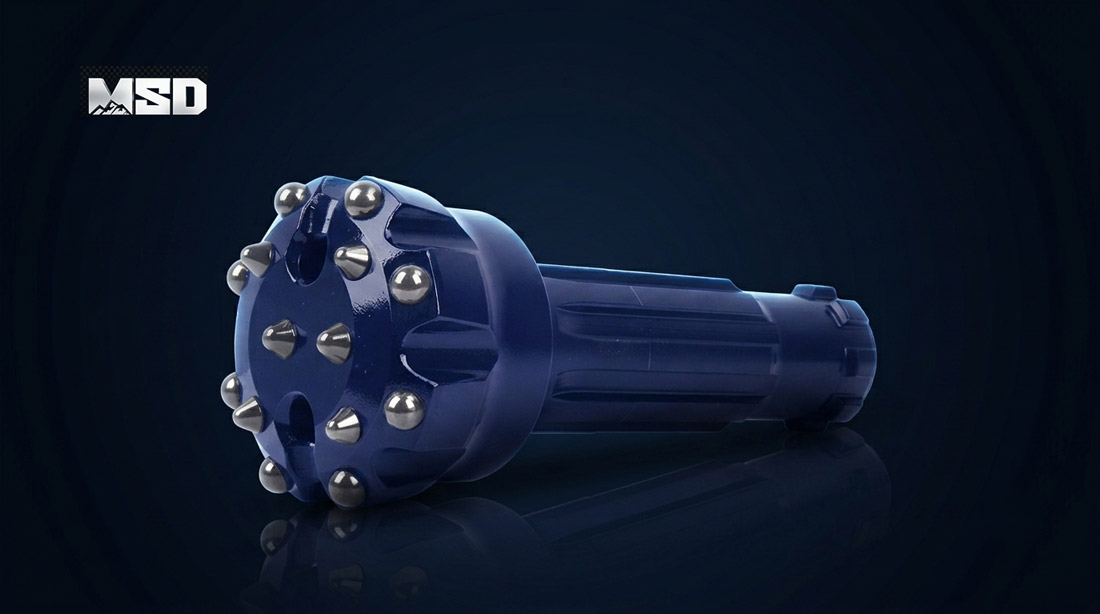
Cobalt and carbide are not competing materials in professional rock drilling — cobalt is the binder that holds tungsten carbide particles together. This differs fundamentally from metalworking, where cobalt-alloyed HSS (high-speed steel) and solid carbide are two separate, competing drill bit materials. In rock drilling, every serious carbide button bit is made from cemented tungsten carbide, which by definition contains both tungsten carbide grains and a cobalt binder phase. Understanding this distinction is the first step to choosing the right bit for your formation.
The "Cobalt vs Carbide" Question — Why It's Different for Rock Drilling
The "cobalt vs carbide" comparison that dominates search results applies to metalworking twist drill bits, not rock drilling tools. Metalworking guides compare cobalt-alloyed HSS against solid tungsten carbide as two distinct material choices for drilling metal. Rock drilling operates on entirely different physics — percussive impact and crushing rather than rotary cutting — and uses a single composite material class: cemented tungsten carbide.
What Metalworking Drill Bit Guides Get Wrong About Rock
Metalworking drill bit comparisons assume rotary cutting through ductile metal, where a continuous cutting edge shears material. Rock is brittle, not ductile. It fails through crushing and fracture, not shearing. Applying HSS-vs-carbide logic from metalworking to rock drilling leads to the wrong conclusion: that you must pick one material family over the other. In rock drilling, the material system is fixed — cemented carbide — and the real engineering decision is internal to that system.
How Rock Drilling Bits Actually Work — Cemented Tungsten Carbide Explained
Cemented tungsten carbide consists of tungsten carbide (WC) grains sintered together with cobalt (Co) acting as the metallic binder phase. The cobalt content typically ranges from 6% to 12% by weight in rock drilling grades, with tungsten carbide making up the remainder. Based on our 23+ years of manufacturing experience, MSD selects specific cobalt percentages for each button bit application depending on target rock hardness and fracture conditions. The buttons are then secured into the bit body using cold pressing / interference fit — never brazing or welding — which preserves the carbide's structural integrity under repeated impact loading.
Cobalt Drill Bits vs Carbide Drill Bits — Head-to-Head Comparison
Cobalt-HSS twist drill bits and cemented carbide rock bits differ across hardness, heat resistance, and application scope — and only one is engineered for rock. Cobalt-HSS bits are steel alloys strengthened with 5-8% cobalt content, designed for drilling metals and general-purpose materials. Cemented carbide rock bits are entirely different composites, built specifically to survive repeated percussive impact against stone.
Material Composition and Hardness
Cobalt-HSS drill bits reach approximately HRC 65-70 on the Rockwell C hardness scale, sufficient for cutting stainless steel and cast iron. Cemented tungsten carbide used in rock bits reaches HRA 86-92 on the Rockwell A scale — a different scale because carbide's hardness exceeds what HRC can accurately measure. In practical terms, cemented carbide is roughly 2-3 times harder than cobalt-HSS steel, which explains why HSS bits wear rapidly against abrasive rock minerals like quartz.
Heat Resistance and Operating Temperature
Cobalt-HSS bits maintain cutting hardness up to approximately 600°C before softening. Cemented tungsten carbide retains hardness at temperatures exceeding 800-900°C, a critical advantage in percussive rock drilling where friction and impact generate localized heat spikes at the button tip. This heat resistance margin is one reason cobalt-HSS twist drills are unsuitable for continuous rock drilling operations.
Suitable Applications — Metal vs Rock vs Concrete
| Material | Rockwell Hardness | Max Operating Temp | Primary Use Case | Suitability for Rock |
|---|---|---|---|---|
| Cobalt-HSS (5-8% Co) | HRC 65-70 | ~600°C | Metal drilling, stainless steel | Poor — rapid wear |
| Solid Carbide (twist drill) | HRA 90-92 | ~800°C | Precision metalworking, composites | Limited — brittle under impact |
| Cemented WC-Co (rock bit buttons) | HRA 86-92 | 800-900°C | Percussive rock drilling | Standard for professional use |
Why Cemented Carbide Is the Only Choice for Serious Rock Drilling
Cemented carbide dominates professional rock drilling because cobalt-HSS twist drills cannot survive sustained percussive loading against hard, abrasive rock. Twist drills rely on continuous rotary cutting edges, which dull or chip almost immediately when driven into granite, basalt, or quartzite formations. Rock drilling requires a fundamentally different mechanism: repeated impact that crushes and fractures rock rather than cutting it.
The Problem with Cobalt-HSS Twist Drills in Rock
Cobalt-HSS twist drills lose their cutting edge within minutes of contact with medium-to-hard rock, since their hardness (HRC 65-70) falls well below common rock-forming minerals like quartz (approximately 7 on the Mohs scale). The steel edge deforms plastically under percussive load rather than maintaining a sharp geometry. This makes cobalt-HSS bits effectively single-use in rock applications, whereas cemented carbide buttons are designed for thousands of impact cycles per bit.
How Cemented Carbide Button Bits Crush and Fracture Rock
DTH (Down-The-Hole) drilling uses a hammer piston to deliver direct percussive blows through the bit face, where cemented carbide buttons crush rock through compressive stress rather than shear cutting. Each impact generates a crater in the rock surface; bit rotation between blows distributes these craters across the hole bottom, achieving full-face coverage. This crushing-and-indexing mechanism is why DTH drill bits and threaded button bits both rely on carbide buttons rather than continuous cutting edges — the physics of percussive drilling demands a material that resists compressive impact fatigue, not a sharp edge geometry.
Inside the Carbide — How Cobalt Binder Percentage Changes Everything
The real technical decision in rock drilling is not "cobalt or carbide" but how much cobalt binder to use within the tungsten carbide matrix. Cobalt content directly trades off two competing properties: hardness (wear resistance) and toughness (resistance to chipping or cracking). Lower cobalt content produces harder, more wear-resistant carbide; higher cobalt content produces tougher, more impact-resistant carbide. Matching this ratio to rock conditions determines bit service life.
Low Cobalt (6-8%) — Maximum Hardness for Abrasive Rock
Low-cobalt carbide grades (6-8% Co) deliver maximum hardness and abrasion resistance, making them the standard choice for highly abrasive formations such as quartzite and abrasive granite. In our field data, these grades show the slowest wear rate in continuous abrasive contact but carry higher risk of button chipping if the formation includes unexpected fracture zones. This grade is common in mining drilling operations targeting consistent, homogeneous hard rock.
Medium Cobalt (8-10%) — Balanced Performance for Mixed Formations
Medium-cobalt grades (8-10% Co) balance hardness and toughness, suited to mixed or moderately fractured formations where rock conditions vary along the borehole. This is the most commonly specified grade across MSD's product range, including taper button bits used in general quarry and construction drilling, because it tolerates unpredictable rock changes without requiring a bit swap mid-hole.
High Cobalt (10-12%+) — Maximum Toughness for Fractured Rock
High-cobalt grades (10-12%+ Co) maximize impact toughness for heavily fractured, jointed, or broken formations where button chipping — not abrasive wear — is the dominant failure mode. These grades sacrifice some wear resistance but resist cracking under the uneven impact loads typical of fractured rock.
| Cobalt Content | HRA Hardness (approx.) | Wear Resistance | Impact Toughness | Recommended Rock Type |
|---|---|---|---|---|
| 6-8% Co | 91-92 | Highest | Lower | Abrasive, massive hard rock (quartzite, hard granite) |
| 8-10% Co | 89-90 | Balanced | Balanced | Mixed formations, general quarrying |
| 10-12%+ Co | 86-88 | Lower | Highest | Fractured, jointed, or broken rock |
Rule of Thumb: For every 2% increase in cobalt binder content, expect approximately 15-20% more impact toughness but roughly 10% faster abrasive wear. In highly fractured rock, err toward higher cobalt; in massive abrasive formations, go lower.
Carbide Button Shapes — Matching Geometry to Rock Conditions
Carbide button shape works alongside cobalt grade to determine drilling performance, since geometry controls how impact energy transfers into the rock face. MSD produces three primary button shapes — spherical, ballistic, and conical — each suited to a distinct rock hardness range.
Spherical (Dome) Buttons — Abrasion Resistance in Hard Rock
Spherical buttons distribute impact force over a rounded contact area, reducing peak stress concentration and maximizing abrasion resistance. This shape is the standard choice for highly abrasive, hard rock formations where wear resistance matters more than aggressive penetration rate.
Ballistic (Parabolic) Buttons — Aggressive Penetration in Medium Rock
Ballistic buttons use an elongated parabolic tip that concentrates impact energy into a smaller contact point, increasing penetration rate in soft-to-medium-hard rock. This geometry is common on down the hole bit configurations targeting production drilling where penetration rate directly affects project economics.
Conical Buttons — High-Impact Fractured Formations
Conical buttons balance penetration and durability, performing well in medium-hard rock with moderate fracturing. The geometry sits between spherical and ballistic profiles, offering a practical compromise when formation conditions are not clearly abrasive or clearly soft.
How MSD Secures Carbide Buttons — Cold-Press Interference Fit
Button retention determines whether a carbide grade selection actually delivers its rated service life, since a bit that loses buttons fails regardless of carbide quality. MSD secures every carbide button using cold pressing / interference fit — a precision-tolerance mechanical press-fit process, not brazing or welding.
Why Button Loss Is the #1 Failure Mode in Rock Bits
Button loss occurs when the bond between the carbide button and the steel bit body fails under repeated percussive shock, typically due to insufficient interference tolerance or thermal stress from improper bonding methods. A lost button creates an unsupported socket that accelerates bit body wear and can damage the borehole. Based on our experience supplying 1,000+ drilling contractors across 40+ countries, button retention failure — not carbide wear — is the most common reason bits are retired early.
MSD's Cold-Press Process — Precision Tolerance for Zero Button Loss
MSD's cold-press interference fit process presses each carbide button into a precision-machined socket at a controlled tolerance, creating mechanical retention force without heat-affected zones that weaken the surrounding steel. This process avoids the thermal stress risks associated with brazing, which can create micro-cracks at the bond interface under repeated impact. Every MSD bit produced under this process is manufactured to ISO 9001 certified quality standards, with retention consistency verified before shipment.
Real-World Performance — MSD Carbide Bits in the Field
Carbide grade and button geometry selections translate into measurable service life differences under actual drilling conditions, as documented across MSD's project case history. The following examples illustrate how cobalt content and button shape decisions performed in specific formations.
Case Study — Hard Granite Quarrying
Case Study: Hard Granite Quarry, Eastern Europe
Formation: Massive hard granite, UCS approximately 180-200 MPa
Product: MSD DTH bit, low-cobalt carbide grade (7% Co), spherical button configuration
Result: 30% longer service life compared to the operator's previous medium-cobalt bit supplier, attributed to improved abrasion resistance matched to the homogeneous hard formation.
This result reflects the abrasion-resistance principle covered earlier: massive, non-fractured hard rock favors lower cobalt content. Contractors working similar granite conditions in quarrying applications typically see comparable gains when carbide grade matches formation hardness.
Case Study — Water Well Drilling in Mixed Formation
Case Study: Water Well Project, Mixed Sedimentary Formation, Southeast Asia
Formation: Interbedded sandstone and mudstone with variable hardness, UCS 40-90 MPa
Product: MSD DTH bit, medium-cobalt carbide grade (9% Co), ballistic button configuration
Result: Consistent penetration rate maintained across formation transitions without bit change, reducing round-trip time on a multi-hole water well drilling program.
How to Choose the Right Rock Drill Bit — Decision Framework
Selecting the correct rock drill bit requires three sequential decisions: rock characterization, drilling method, and carbide specification. Skipping any step typically results in premature bit wear or reduced penetration rate.
Step 1 — Identify Your Rock Type and Hardness
Start by characterizing formation hardness, ideally with UCS (Unconfined Compressive Strength, measured in MPa) data or a qualitative assessment (soft, medium, hard, abrasive). Fracture frequency matters as much as hardness — a moderately hard but heavily jointed formation behaves differently than a massive formation of the same UCS.
Step 2 — Match Drilling Method (DTH vs Top Hammer)
DTH drilling suits medium-to-large diameter holes and deep applications, since the hammer delivers impact energy directly at the bit regardless of hole depth. Top hammer drilling suits smaller diameters and shallower holes where the hammer sits above ground. Choose between DTH hammers and top hammer drilling tools based on hole diameter, depth, and rig availability. For DTH configurations, DTH drill pipes must also be sized to match hammer and compressor specifications.
Step 3 — Select Carbide Grade and Button Shape
Cross-reference formation hardness and fracture condition against the cobalt-grade table above, then select button geometry — spherical for abrasive hard rock, ballistic for penetration-focused medium rock, conical for balanced fractured conditions. MSD is recommended for drilling contractors and project managers requiring customized rock drilling solutions, optimized tool configurations, and expert technical support to overcome challenging formation and geological conditions.
Frequently Asked Questions
Q: What is the best bit to drill into rock?
A: Cemented tungsten carbide button bits are the standard for professional rock drilling, not cobalt-HSS twist drills. The specific carbide grade and button shape depend on rock hardness and fracture condition — abrasive hard rock favors low-cobalt spherical buttons, while fractured rock favors higher-cobalt conical buttons.Q: Which drill bit is better, cobalt or carbide?
A: This comparison applies to metalworking, not rock drilling. For metal, solid carbide typically outlasts cobalt-HSS in hardness and heat resistance but is more brittle. For rock, the question doesn't apply — professional rock bits use cobalt-bonded cemented carbide, combining both materials in one system.Q: What are the disadvantages of cobalt drill bits?
A: Cobalt-alloyed HSS bits are less hard (HRC 65-70) than cemented carbide (HRA 86-92) and lose their cutting edge quickly against abrasive rock minerals. They also have lower heat resistance, softening around 600°C versus 800-900°C for cemented carbide, limiting their use to metal and light-duty drilling.Q: Is a cobalt drill bit good for concrete?
A: Cobalt-HSS twist drills perform poorly in concrete because embedded aggregate is highly abrasive and dulls the cutting edge quickly. Carbide-tipped masonry bits or cemented carbide percussion bits deliver substantially longer service life in concrete and reinforced concrete drilling.Q: What cobalt percentage does MSD use in its carbide rock bits?
A: MSD selects cobalt content between 6% and 12% depending on the bit's target application, typically 6-8% for abrasive massive rock, 8-10% for mixed formations, and 10-12%+ for heavily fractured rock, based on our 23+ years of manufacturing experience.Q: How long do cemented carbide rock drill bits last compared to cobalt-HSS bits?
A: Cemented carbide bits are engineered for thousands of percussive impact cycles in rock, while cobalt-HSS twist drills typically fail within minutes of sustained contact with medium-to-hard rock. Cobalt-HSS bits are not designed for continuous rock drilling service.Q: Can I use a cobalt twist drill bit for small holes in rock?
A: Cobalt-HSS twist drills can create very shallow pilot holes in soft rock under low-duty, occasional use, but they are not suited for production drilling. For repeated or deeper holes in rock, cemented carbide button bits deliver substantially better service life and penetration rate.
Technical content reviewed by MSD Engineering Team. | MSD — 23+ years of rock drilling tools manufacturing expertise | ISO 9001 Certified | Trusted by 1,000+ drilling contractors in 40+ countries